

A smile consultation is a structured appointment where a dentist evaluates your oral health, discusses your aesthetic goals, and builds a personalized treatment plan. It is the recognized starting point for any cosmetic dentistry work, formally called a smile design consultation in clinical practice. Knowing what to expect removes the uncertainty that stops many patients from taking the first step. Cwddentalgroup uses this process to align your vision with what is clinically achievable, combining a full examination with digital tools that show you the outcome before any treatment begins.
What is a smile consultation, and what happens during one?
A smile consultation follows a clear, repeatable structure. Standard consultations include a detailed goals discussion, a full clinical exam, and the creation of a personalized, phased treatment plan that addresses both aesthetics and oral health. That structure exists because cosmetic dentistry is not one-size-fits-all. Every patient brings a different bite, different gum health, and a different idea of what "a better smile" means.
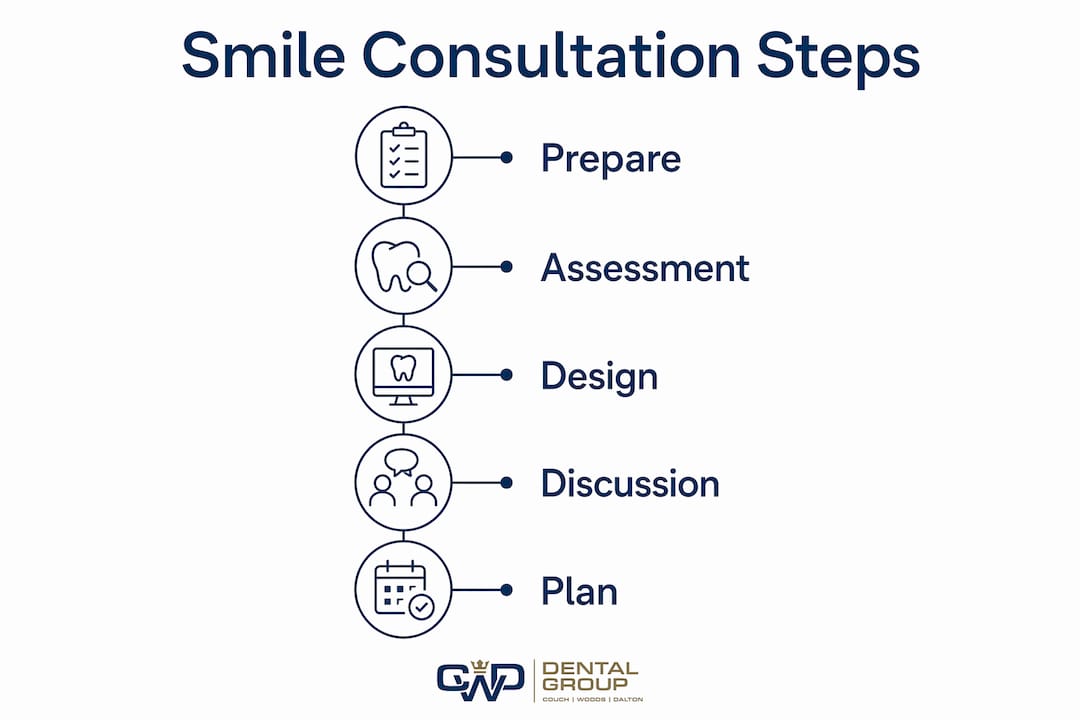
Here is how a typical appointment unfolds:
- Goals discussion. Your dentist asks what bothers you most. Color? Gaps? Chipped edges? Gum visibility? This conversation sets the direction for everything that follows.
- Clinical examination. The dentist checks your teeth for decay, cracks, and wear. Gums, bite alignment, and existing restorations all get assessed. Cosmetic work built on a compromised foundation fails faster.
- Diagnostic records. Most practices take high-resolution photos, digital X-rays, and intraoral scans. These records give the dentist a complete picture of your current state.
- Digital simulation. Many practices use Digital Smile Design (DSD) software to create a visual preview of your proposed outcome. You see the result before committing to treatment.
- Treatment plan presentation. The dentist walks you through a phased plan. Sequencing matters. Whitening before veneers, for example, sets the shade baseline. Orthodontic work before bonding avoids redoing it later.
- Budget and timeline conversation. Patients are encouraged to discuss budget, timeline, and lifestyle factors that affect treatment choices. A well-run consultation fits the plan to your life, not the other way around.
Pro Tip: Ask your dentist to explain why treatments are sequenced in a specific order. Understanding the logic helps you commit to the plan and avoid costly detours later.
How does digital smile design change the consultation experience?
Digital Smile Design transforms the consultation from a verbal description into a visual experience. 85% of patients accepted their proposed cosmetic treatment after seeing a digital simulation of their results. That acceptance rate reflects a simple truth: patients commit more confidently when they can see the outcome rather than imagine it.
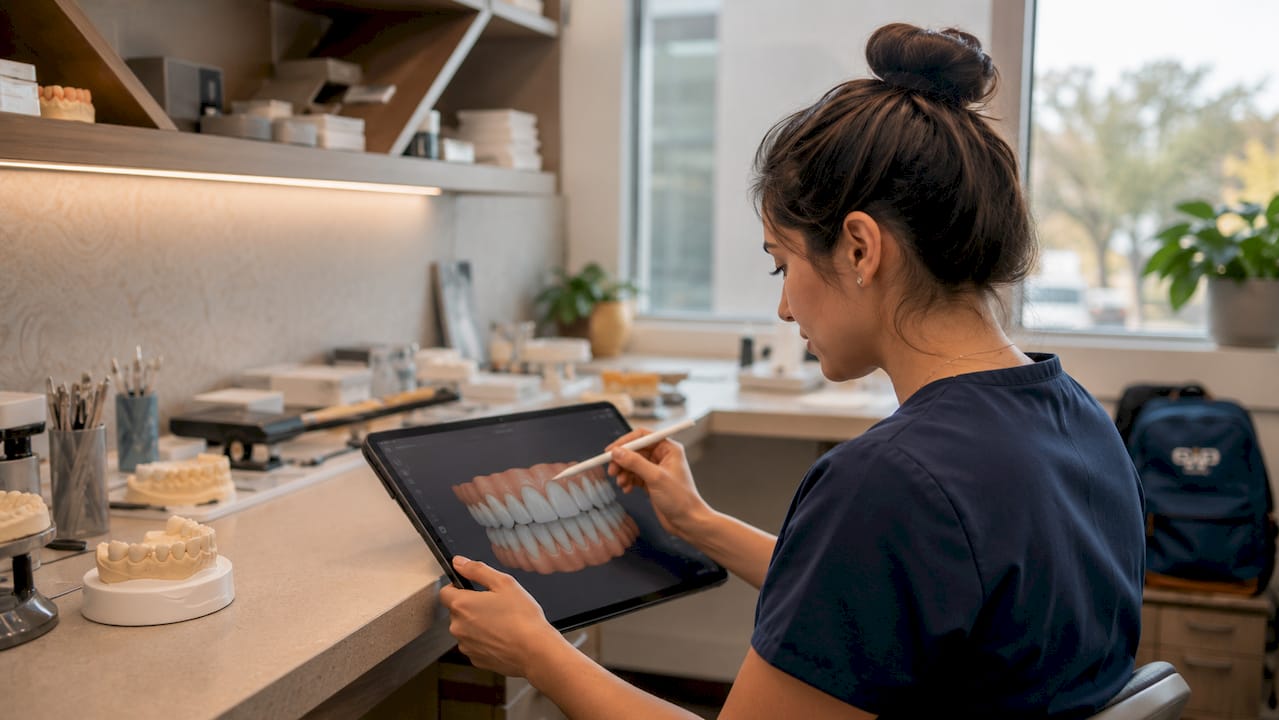
Traditional consultations relied on verbal descriptions, printed photos of other patients, and wax models. Those methods work, but they leave a gap between what the dentist envisions and what the patient pictures. Digital tools close that gap.
Key benefits of digital visualization in a smile design consultation include:
- Realistic previews. DSD software maps your facial proportions and overlays proposed tooth shapes, sizes, and shades directly onto your photo.
- Better-informed decisions. Digital simulation enhances clarity about procedures, duration, costs, and limitations, with statistically significant improvements in patient confidence (p < 0.001).
- Fewer surprises after treatment. When you approve a visual plan, the final result aligns with your expectations.
- Faster treatment acceptance. Patients who see their projected outcome ask fewer hesitation-driven questions and move forward more quickly.
- Shared reference point. The simulation becomes a communication tool between you, your dentist, and any specialists involved.
The role of smile design dentistry has grown significantly as these tools become standard in quality practices. Patients who experienced traditional consultations often describe the digital version as a completely different level of clarity.
Pro Tip: Before your appointment, ask whether the practice uses digital smile design software. If they do, request that your simulation be shown on a large screen so you can examine tooth shape and gum line in detail.
Why oral health assessment comes before cosmetic planning
Cosmetic treatment planned on top of unaddressed oral health problems fails. Skipping oral health checks can compromise cosmetic results and patient satisfaction. That is not a minor risk. Veneers placed over a tooth with hidden decay will need to be removed when that decay progresses.
A thorough oral health assessment covers several areas that directly affect cosmetic outcomes:
- Tooth decay and cracks. Active decay must be treated before any cosmetic work. Cracks affect which restorations are appropriate.
- Gum health. Inflamed or receding gums change the visual outcome of veneers, crowns, and whitening. Gum disease treatment often precedes cosmetic work by several months.
- Bite function. A misaligned bite puts uneven pressure on restorations. Porcelain veneers on a patient with bruxism will chip without a night guard or bite correction first.
- Existing restorations. Old fillings, crowns, and bridges affect what cosmetic options are available and how new work will match in color and shape.
Comprehensive planning during the consultation significantly improves success rates and patient satisfaction in cosmetic dentistry. The oral health assessment is not a detour from your cosmetic goals. It is the reason those goals become achievable and lasting. Patients who skip this step often find themselves back in the chair sooner than expected, paying to redo work that was built on a weak foundation.
You can learn more about evaluating these fundamentals in this guide to cosmetic dentistry before and after considerations.
How to prepare for your smile consultation
Preparation turns a good consultation into a great one. Patients who arrive with clear information and specific questions get more useful treatment plans. Here is what to bring and think through before your appointment.
Gather your records. Bring recent X-rays if you have them, or ask your previous dentist to transfer them. Photos of your smile from different angles also help the dentist understand what you see versus what the clinical exam shows.
Identify your specific concerns. Vague requests like "I want a nicer smile" give the dentist less to work with. Specific concerns like "my upper left incisor looks shorter than the others" or "my teeth look yellow in photos" lead to targeted solutions.
Think through your priorities before you arrive:
- Which concerns bother you most? Rank them.
- What is your realistic budget range?
- Do you have a timeline, such as a wedding or event?
- Are there lifestyle factors like contact sports, teeth grinding, or heavy coffee consumption that affect treatment choices?
Prepare questions for your dentist. The best questions to ask include: What are the alternatives to the treatment you are recommending? How long will each phase take? What maintenance does this require long-term? Understanding maintenance requirements is as important as understanding the initial treatment.
Pro Tip: Bring a photo of a smile you admire, whether from a magazine or a public figure. It gives your dentist a concrete visual reference for your aesthetic preferences and speeds up the goals conversation.
Cwddentalgroup recommends patients also review their preventative dental visit checklist before any consultation to arrive with a clear picture of their current dental health status.
For a broader overview of what cosmetic procedures may come after your consultation, this guide to top cosmetic dentistry treatments covers the most common options and what each one addresses.
Key Takeaways
A smile consultation is the most important step in cosmetic dentistry because it aligns your goals, your oral health, and a realistic treatment plan before any work begins.
| Point | Details |
|---|---|
| Definition of a smile consultation | A structured appointment covering oral health assessment, goals discussion, and personalized treatment planning. |
| Digital Smile Design impact | 85% of patients accepted treatment after seeing a digital simulation, showing visualization drives commitment. |
| Oral health comes first | Decay, gum disease, and bite issues must be addressed before cosmetic work to ensure lasting results. |
| Preparation improves outcomes | Arriving with specific concerns, a budget range, and questions leads to a more targeted and useful treatment plan. |
| Maintenance matters | A quality consultation covers long-term upkeep so patients understand what their results require to last. |
What I have learned about consultations that actually work
A rushed consultation is a red flag. The best results come from assessing how a smile integrates with facial structure through non-rushed, detailed conversations. I have seen patients leave consultations with a printed treatment plan they barely understood, and I have seen others leave with a clear visual, a phased timeline, and genuine confidence. The difference is almost never the technology. It is the dentist's willingness to slow down.
The consultations that produce the best outcomes share one quality: the dentist treats the conversation as diagnostic, not transactional. They ask follow-up questions. They push back gently when a patient's expectation does not match what their anatomy allows. They explain the "why" behind sequencing decisions instead of just listing procedures and prices.
Transparency about long-term maintenance and future dental work is what separates a great consultation from a sales appointment. Patients deserve to know that veneers require replacement over time, that whitening needs periodic touch-ups, and that orthodontic results shift without retention. When a dentist volunteers that information upfront, it builds trust. When they omit it, patients feel misled later.
My honest advice: if your consultation feels like a pitch, ask more questions until it feels like a plan. A good dentist welcomes that.
— Kayle
Cwddentalgroup's approach to your smile consultation
Cwddentalgroup offers smile consultations designed around your specific goals, not a generic treatment menu. The practice uses digital diagnostic tools and personalized treatment planning to give you a clear picture of what is possible before any work begins.
Every consultation at Cwddentalgroup includes a full oral health assessment, a goals conversation, and a phased treatment plan built around your budget and timeline. The team in Tallahassee is known for taking the time to explain every step, so you leave with confidence rather than confusion. If a dental concern comes up that needs immediate attention, Cwddentalgroup also provides same-day emergency dental care to handle urgent issues before cosmetic planning begins. Schedule your consultation and find out exactly what your smile can become.
FAQ
What is the smile consultation meaning in dentistry?
A smile consultation is a formal appointment where a dentist evaluates your oral health, discusses your cosmetic goals, and creates a personalized treatment plan. It is the standard first step before any cosmetic dental procedure begins.
How long does a smile consultation typically take?
Most smile consultations last between 60 and 90 minutes, depending on the complexity of the case and whether digital imaging is included. Practices that use Digital Smile Design software may schedule additional time for the simulation review.
Is a smile consultation the same as a smile consultation for braces?
Not exactly. A general smile consultation covers all cosmetic and restorative options, while a consultation focused on braces or aligners centers on bite correction and tooth alignment. Many patients need both, since orthodontic work often precedes other cosmetic treatments.
What should I bring to my first smile consultation?
Bring recent dental X-rays if available, photos of your current smile, and a list of specific concerns ranked by priority. Being ready to discuss your budget and timeline helps the dentist build a plan that fits your life.
Does a smile consultation cost money?
Fees vary by practice. Some offices offer complimentary consultations, while others charge a standard exam fee. Cwddentalgroup's scheduling page at cwddentalgroup.com has current information on appointment options.