

Smile design dentistry is defined as the scientific and artistic process of crafting a smile that harmonizes with your facial features, dental function, and personal identity. The role of smile design dentistry goes far beyond whitening teeth or straightening a crooked incisor. It analyzes proportions, facial structure, gum visibility, and bite mechanics to produce a result that looks natural and feels right. In 2026, AI-assisted software and digital workflows have expanded what is possible, giving patients a preview of their results before a single tooth is touched. Cwddentalgroup brings this level of precision to Tallahassee, making personalized smile transformation accessible to anyone ready to invest in their appearance and confidence.
What is the role of smile design dentistry?
Smile design dentistry, known in clinical settings as Digital Smile Design (DSD), is a treatment planning framework that evaluates the relationship between your teeth, gums, lips, and face as a whole system. The goal is not a generic Hollywood smile. The goal is a smile that fits you. This distinction matters because a design that ignores your facial proportions or natural tooth color will always look artificial, regardless of how technically perfect the restorations are.
The importance of smile design lies in its ability to connect cosmetic goals with functional realities. A well-designed smile accounts for how your teeth meet when you bite, how your lips frame your teeth at rest, and how your gum line responds when you speak or laugh. Smile design in cosmetic dentistry has evolved into visual identity design, emphasizing harmony between teeth, gums, and facial features rather than focusing solely on whiteness. That shift reflects a deeper understanding of what makes a smile genuinely attractive.
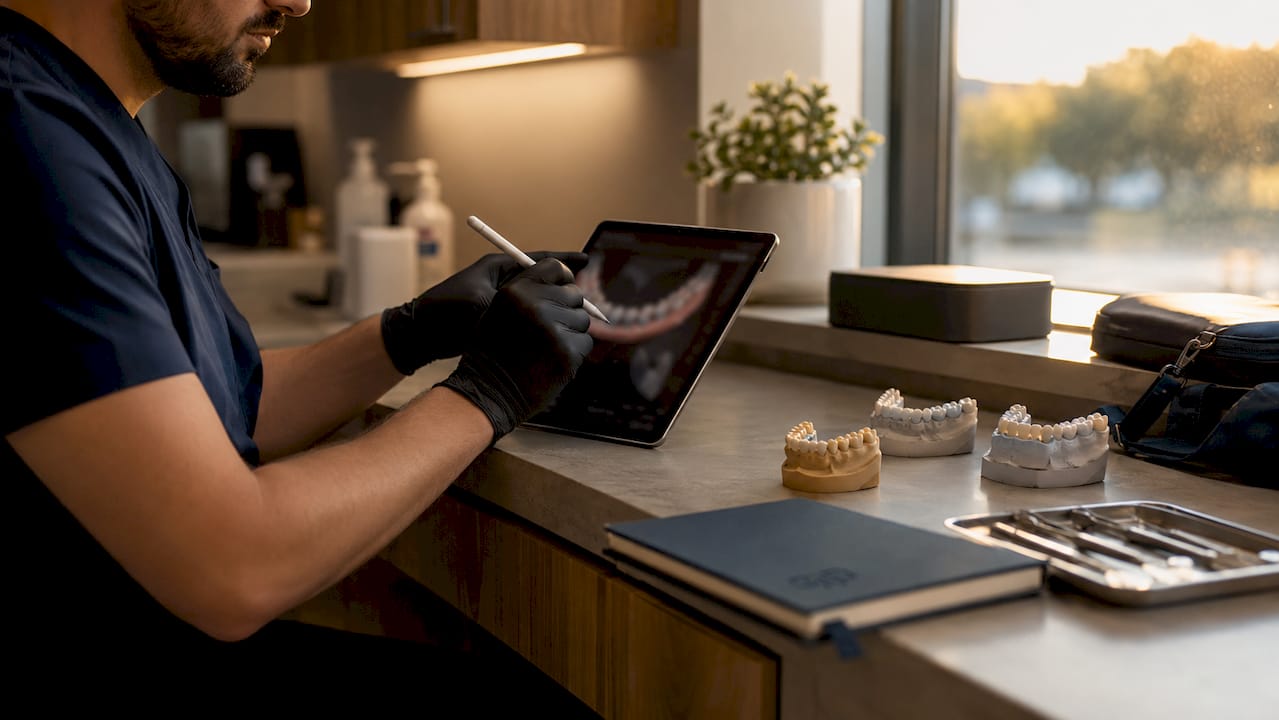
Patients who engage with a structured smile design process report measurably better outcomes. Treatment acceptance increases 25–30% and satisfaction improves by 40% when digital smile designs are used compared to conventional methods. Those numbers reflect a simple truth: when patients can see what they are agreeing to, they commit with more confidence and finish treatment happier.
What elements does smile design analyze?
Smile design analysis starts with measurement. Clinicians evaluate your tooth width-to-length ratio, midline alignment, gum visibility, and the curve your upper teeth follow when you smile. Each element has a clinical standard that guides the design.
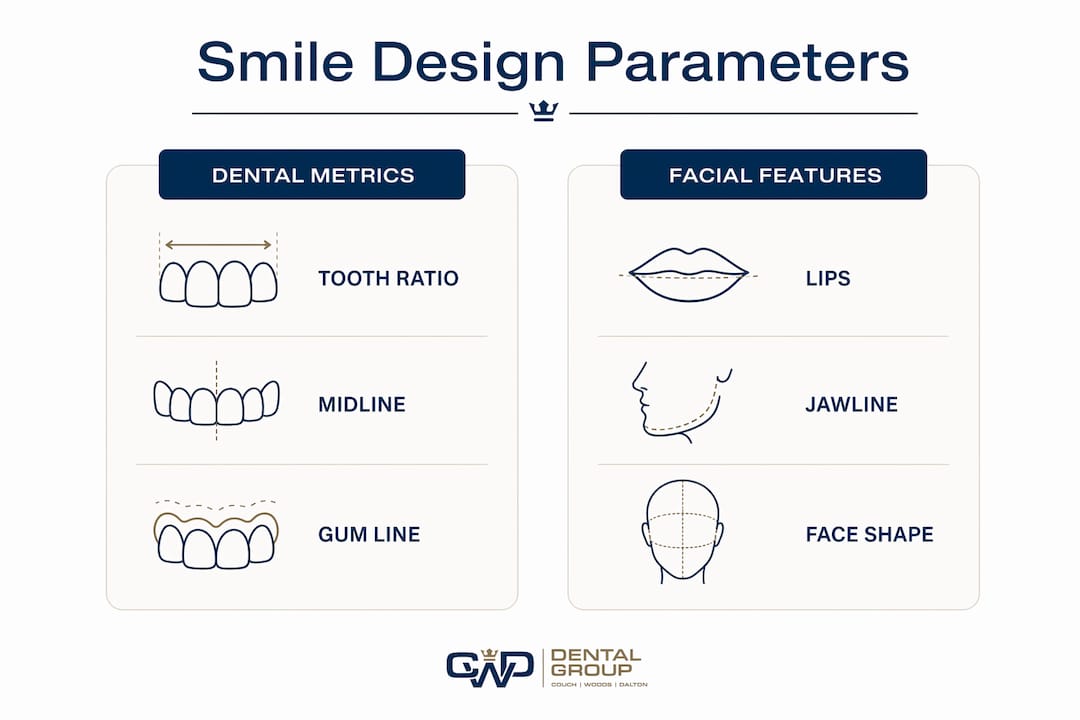
The ideal tooth width-to-length ratio falls between 0.75 and 0.85, and midline alignment should sit within 0.5–1.0 mm of your facial midline. These benchmarks are starting points, not rigid rules. Your clinician adjusts them based on your unique facial structure, skin tone, and personal preferences.
The table below compares the key parameters analyzed during a smile design consultation.
| Parameter | Ideal Standard | Why It Matters |
|---|---|---|
| Tooth width-to-length ratio | 0.75–0.85 | Teeth that are too wide or too short look unnatural |
| Midline alignment | Within 0.5–1.0 mm | Off-center midlines draw the eye and look asymmetric |
| Gum visibility on full smile | 0–2 mm | Excessive gum display reduces perceived tooth size |
| Smile curve | Follows lower lip curve | Creates a youthful, harmonious appearance |
| Facial symmetry tolerance | Up to 5% asymmetry | Small asymmetries add character and prevent an artificial look |
Beyond teeth, the analysis extends to your lips, jawline, and overall face shape. A smile that looks perfect in isolation can look wrong on a particular face if the lip thickness, nose width, or chin projection are not factored in. This is why smile design in cosmetic dentistry requires a full facial assessment, not just dental X-rays.
Pro Tip: Ask your dentist to show you a facial photograph analysis alongside the dental measurements. Seeing both together helps you understand why certain design choices are being recommended for your specific face.
How have digital tools and AI changed smile design?
Digital technology has fundamentally changed what clinicians can plan and what patients can expect. The workflow now begins with high-resolution facial photography and intraoral scans, which feed into AI-assisted design software. The software generates a simulated smile that the patient reviews before any treatment begins.
AI integration reduces planning time and improves communication between dentists, lab technicians, and specialists. It does not replace clinical judgment. The clinician still makes the final call on proportions, shade, and material selection based on what the patient actually needs.
The practical benefits of smile design technology include:
- Digital mock-up previews that show patients their projected results before treatment starts
- CAD/CAM fabrication that produces restorations with precise fit and consistent color matching
- Minimally invasive veneer preparation requiring only 0.2–0.9 mm of tooth reduction compared to older techniques that removed significantly more enamel
- Interdisciplinary communication tools that share design files between orthodontists, periodontists, and restorative dentists
- Digital records storage that preserves your smile data for future replacements or adjustments, a service also offered through platforms like ClearRetain
The shift to minimally invasive techniques is one of the most significant benefits of smile design technology. Thinner veneers preserve more of your natural tooth structure, which matters for long-term dental health. Patients who would have been told they needed crowns a decade ago can now achieve similar aesthetic results with ultra-thin porcelain veneers.
Pro Tip: Digital mock-ups are simulations, not guarantees. Ask your dentist to explain which aspects of the preview are fixed and which may shift slightly during fabrication. Setting realistic expectations early prevents disappointment later.
What does the patient process actually look like?
The smile design process follows a structured sequence. Understanding each phase helps you know what to expect and where your input matters most.
- Initial consultation and facial analysis. Your dentist photographs your face from multiple angles, takes intraoral scans, and records how your teeth look at rest, during speech, and during a full smile. This data forms the foundation of your design.
- Digital prototype creation. The clinical team uses design software to build a virtual version of your new smile. You review this on screen and give feedback on tooth shape, size, and color before anything physical is created.
- Temporary composite mock-up. A physical prototype is placed directly on your teeth using composite resin. You test-drive this mock-up for 1–2 weeks, wearing it in daily life to evaluate how it looks in different lighting, how it feels when you eat, and how others respond to it.
- Refinement sessions. Based on your feedback, the design is adjusted. One to two refinement sessions are standard before the final restorations are fabricated. These sessions are not a sign that something went wrong. They are built into the process to produce a result you will be happy with for years.
- Final restoration placement. Once you and your dentist approve the refined design, the permanent restorations are fabricated and placed. The result reflects weeks of collaborative planning.
The mock-up phase is the most undervalued part of the process. Many patients want to skip it and go straight to permanent restorations. That is a mistake. The mock-up lets you catch issues that no digital preview can fully replicate, including how the new teeth feel against your tongue and how they affect your speech.
Pro Tip: Wear your mock-up to a social event or work meeting. The reactions you get from people who know your smile well are the most honest feedback you can collect before committing to permanent treatment.
How does smile design balance aesthetics, function, and individuality?
The primary goal of smile design is smile harmony, which means balancing dental, gingival, labial, and facial appearance to create results that look natural rather than constructed. This principle separates skilled smile design from cosmetic work that simply makes teeth whiter or straighter without considering the full picture.
Several factors define this balance:
- Natural asymmetry is preserved. A 5% asymmetry in smile design is considered normal and often more attractive than perfect symmetry, which can appear artificial. Your clinician intentionally maintains subtle variations that give your smile character.
- Bite and speech are protected. Restorations that alter tooth length or angle affect how your teeth meet and how you pronounce certain sounds. Smile design accounts for these functional consequences before finalizing any aesthetic changes.
- Gingival health is integrated. Gum contouring, if needed, is planned as part of the overall design rather than as an afterthought. The gum line frames your teeth the way a mat frames a painting.
- Patient preferences drive the outcome. Some patients want a bold, bright smile. Others want subtle refinements that no one will notice except them. Both are valid. The design reflects your goals, not a template.
Understanding cosmetic dentistry's impact on bite and smile reinforces why function cannot be separated from aesthetics in a well-executed treatment plan. A smile that looks perfect but causes jaw discomfort or speech issues is not a successful outcome.
Key takeaways
Smile design dentistry succeeds when it integrates precise facial analysis, digital technology, patient feedback, and functional planning into a single, personalized treatment process.
| Point | Details |
|---|---|
| Digital tools improve outcomes | Patients shown digital designs report 40% higher satisfaction and 25–30% higher treatment acceptance. |
| Measurements guide design | Tooth width-to-length ratios of 0.75–0.85 and midline alignment within 0.5–1.0 mm are the clinical benchmarks. |
| Mock-ups prevent regret | Wearing a temporary composite prototype for 1–2 weeks lets you evaluate the design in real life before permanent changes. |
| Asymmetry is intentional | Up to 5% asymmetry is normal and adds natural character; perfect symmetry often looks artificial. |
| Function and aesthetics are inseparable | Bite mechanics, speech, and gum health must be factored into every smile design plan alongside visual goals. |
What i have learned after watching smile design evolve
I have spent years watching patients walk into consultations with photos of celebrity smiles on their phones, expecting their dentist to replicate them. The honest truth is that copying someone else's smile is the wrong goal entirely. The best smile design outcomes I have seen are the ones where the patient left looking more like themselves, not less.
The technology shift has been real and significant. AI-assisted workflows genuinely reduce errors and improve the precision of veneer fabrication. But the patients who end up happiest are not the ones who had the most advanced technology applied to their case. They are the ones who engaged seriously with the mock-up phase, gave honest feedback, and trusted the iterative process instead of rushing to the finish line.
One thing I would tell anyone considering smile design: do not underestimate the consultation. The consultation before cosmetic treatment is where your dentist learns what you actually want versus what you think you want. Those are often different things, and a skilled clinician will help you find the version that serves you best long-term.
The role of smile design dentistry is not to give you a perfect smile. It is to give you your best smile. That distinction is everything.
— Kayle
See what smile design can do for your smile
Cwddentalgroup brings advanced digital smile design to Tallahassee, combining AI-assisted planning, minimally invasive techniques, and a patient-centered process that puts your preferences at the center of every decision. The clinical team at Cwddentalgroup is experienced in the full spectrum of cosmetic and advanced dentistry, from digital mock-ups to final porcelain restorations.
Whether you want subtle refinements or a complete smile transformation, the process starts with a single conversation. Cwddentalgroup offers same-day appointments and no long wait times, so you can get expert guidance without rearranging your schedule. Visit the Tallahassee dental care page to schedule your consultation and take the first step toward a smile that is genuinely yours.
FAQ
What is smile design in dentistry?
Smile design is a clinical process that analyzes facial proportions, tooth dimensions, gum visibility, and bite function to plan cosmetic dental changes. The goal is a smile that looks natural and harmonizes with your individual facial features.
How long does the smile design process take?
The process typically includes a consultation, digital design review, a 1–2 week mock-up phase, and one to two refinement sessions before permanent restorations are placed. Total timeline varies based on the complexity of treatment.
Does smile design hurt?
Most smile design procedures, especially those using minimally invasive veneers, require very little tooth reduction. Preparation involves as little as 0.2–0.9 mm of enamel removal, which is significantly less than older crown-based approaches.
Is perfect symmetry the goal of smile design?
No. Up to 5% asymmetry is considered normal and often more attractive than perfect symmetry, which can look artificial. Skilled clinicians preserve subtle natural variations that give your smile character.
How do i find a qualified smile design dentist?
Look for a dentist experienced in digital smile design workflows, AI-assisted planning, and cosmetic restorations. Reviewing a guide to cosmetic dentists can help you identify the right qualifications and questions to ask during your consultation.