
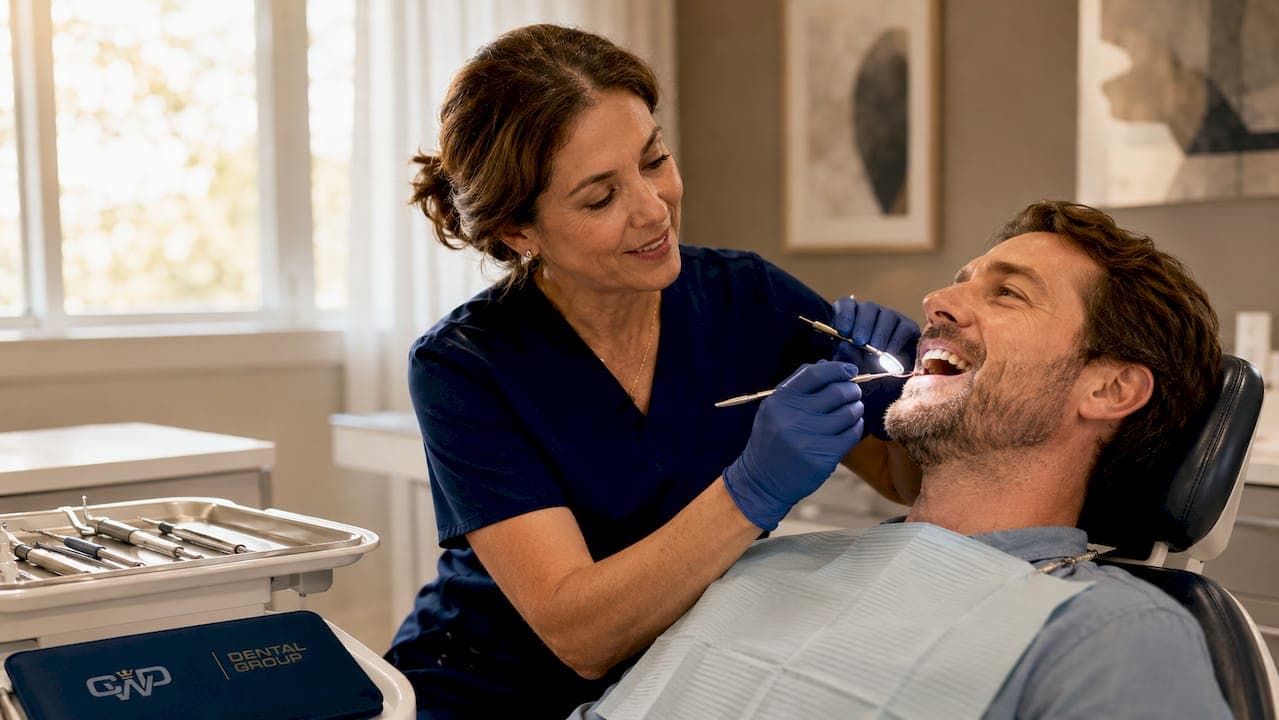
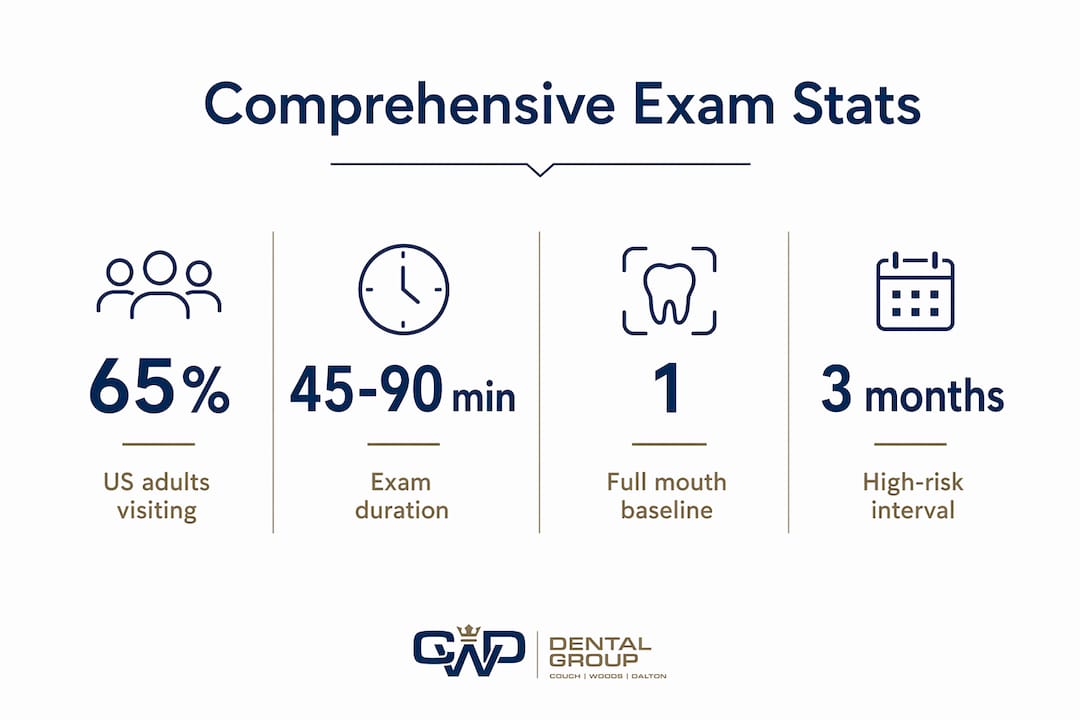
A comprehensive dental exam is a full-mouth evaluation that establishes your oral health baseline, covering teeth, gums, jaw joints, and soft tissues in a single appointment. The American Dental Association recognizes this as the starting point for all ongoing dental care. Unlike a quick check-up, a comprehensive oral evaluation typically runs 45–90 minutes and gives your dentist a complete picture of your mouth before any treatment plan begins. Knowing what to expect makes the experience far less intimidating and helps you get the most out of every visit.
What is a comprehensive dental exam and what does it include?
A comprehensive dental exam is a structured, multi-step clinical process that covers every aspect of your oral health in one sitting. Dentists use it to detect existing problems, identify risks, and create a record they can compare against at every future visit. The exam goes well beyond checking for cavities. It includes six core components that together form a complete picture of your mouth.
-
Medical and dental history review. Your dentist collects information about medications, allergies, past dental work, and any health conditions. Systemic diseases like diabetes directly affect gum health, so this step shapes everything that follows.
-
Full-mouth X-rays. Digital radiographs reveal decay between teeth, bone loss, impacted teeth, and infections that are invisible to the naked eye. New patients almost always receive a full set at their first visit.
-
Periodontal pocket charting. A small probe measures the space between each tooth and its surrounding gum. Pocket depths of 4mm or more signal gum disease, a condition that often causes no pain until it is well advanced.
-
Oral cancer screening. The dentist examines the tongue, cheeks, floor of the mouth, and throat for unusual tissue changes. Early detection of oral cancer dramatically improves treatment outcomes.
-
Bite and jaw joint assessment. The dentist checks how your upper and lower teeth meet and evaluates the temporomandibular joint for clicking, pain, or restricted movement. Bite problems caught early prevent costly restorative work later.
-
Tooth-by-tooth inspection. Each tooth is examined for decay, cracks, worn enamel, and the condition of existing fillings or crowns. This is the step most patients picture when they think of a dental exam, but it is only one part of the full process.
Pro Tip: Bring a list of all current medications to your first appointment. Many drugs cause dry mouth, which raises your cavity risk, and your dentist needs that information to give you an accurate risk assessment.
How does a comprehensive exam differ from a routine dental check-up?

The two exam types serve different purposes, and confusing them leads to missed care. A comprehensive exam creates a clinical baseline, while a routine periodic exam compares your current condition to that baseline. Think of the comprehensive exam as the original map and every routine visit as a progress check against it.
| Feature | Comprehensive exam | Routine periodic exam |
|---|---|---|
| Purpose | Establish full-mouth baseline | Monitor changes from baseline |
| Duration | 45–90 minutes | Approximately 30 minutes |
| X-rays | Full-mouth series | Limited or bitewing X-rays |
| Charting | Complete periodontal charting | Spot checks or updates |
| Typical patient | New patient or returning after long gap | Established patient on regular schedule |
| Billing | Separate exam code | Separate exam code |
A few points worth knowing before you schedule:
- Exams and cleanings are distinct clinical services and are billed separately, even when performed on the same day.
- Patients who have not seen a dentist in several years often need a comprehensive exam before any cleaning or treatment can begin.
- The baseline data collected during a comprehensive exam is what makes future diagnoses accurate. Without it, your dentist is working without a reference point.
Why are comprehensive dental exams important for your overall health?
The true value of a comprehensive dental exam extends well beyond your teeth. Dental exams detect silent conditions like periodontal disease, which affects nearly half of adults and causes no noticeable symptoms in its early stages. Catching these problems early is far less expensive and less invasive than treating them after they progress.
The connection between oral health and the rest of your body is direct and well-documented. Gum disease is linked to cardiovascular disease, diabetes complications, and adverse pregnancy outcomes. A comprehensive exam gives your dentist the information needed to flag these risks and coordinate care with your primary care provider when necessary.
"Dental exams support overall quality of life including nutrition, speech, and social confidence, especially as patients age." — Dr. Susan Pan
The benefits of a thorough oral evaluation include:
- Early cavity detection. Small cavities treated with a simple filling cost a fraction of what a root canal or crown costs later.
- Gum disease prevention. Periodontal disease caught at stage one is reversible with professional cleaning and better home care.
- Oral cancer identification. The five-year survival rate for oral cancer is significantly higher when caught at an early stage.
- Bite and jaw protection. Identifying a misaligned bite early prevents tooth wear, jaw pain, and headaches down the line.
- Personalized risk assessment. Your dentist uses exam findings to tailor advice on diet, brushing technique, and fluoride use to your specific situation.
Only 65% of U.S. adults had a dental exam or cleaning in the past year. That gap means millions of people are living with undetected gum disease, decay, or early-stage oral cancer. Regular exams are the only reliable way to close that gap.
How often should you get a comprehensive dental exam?
Exam frequency is not one-size-fits-all. The American Dental Association recommends that frequency be individualized based on each patient's health history, risk factors, and clinical findings. Dr. Natasha M. Flake notes that high-risk patients may need visits every three months, while lower-risk patients can follow a six to twelve month schedule.
Your dentist determines your risk level based on factors like these:
- Smoking or tobacco use. Tobacco users face significantly higher rates of gum disease and oral cancer, requiring more frequent monitoring.
- Diabetes. Elevated blood sugar weakens the body's ability to fight gum infections, making more frequent exams necessary.
- History of gum disease. Patients who have had periodontal treatment need closer follow-up to prevent recurrence.
- Dry mouth. Reduced saliva flow accelerates decay, so patients on medications that cause dry mouth benefit from shorter intervals between visits.
- Pregnancy. Hormonal changes increase gum inflammation risk, and dental care during pregnancy is safe and recommended.
After your first comprehensive exam establishes the baseline, your dentist schedules periodic exams at intervals matched to your risk profile. Those periodic visits are shorter and focused on changes from the original record. The family dental exam guide from Cwddentalgroup covers how these intervals shift across different life stages, from children to seniors.
Pro Tip: Ask your dentist at the end of each visit to state your current risk level and explain the reasoning. That one question keeps you informed and helps you hold yourself accountable to the recommended schedule.
Key Takeaways
A comprehensive dental exam is the single most effective tool for catching oral health problems before they become expensive, painful, or life-threatening.
| Point | Details |
|---|---|
| Full-mouth baseline | The exam records teeth, gums, jaw, and soft tissues to guide all future care. |
| Six core components | History, X-rays, periodontal charting, cancer screening, bite check, and tooth inspection are all included. |
| Different from routine visits | Comprehensive exams are longer, more detailed, and use separate billing codes from periodic check-ups. |
| Broader health link | Gum disease connects to diabetes, heart disease, and other systemic conditions detected during the exam. |
| Individualized frequency | High-risk patients may need visits every three months; others follow a six to twelve month schedule. |
What I've learned from watching patients skip this exam
Most patients who skip their comprehensive exam do so because they feel fine. That logic is exactly backward. The conditions a comprehensive exam catches best, including early gum disease, hairline cracks, and pre-cancerous tissue changes, produce no pain until they are well advanced. By the time something hurts, the treatment is almost always more complex and more costly.
The other misconception I see constantly is that a cleaning and an exam are the same thing. They are not. A cleaning removes buildup. An exam diagnoses. You can have one without the other, and skipping the exam to save time or money is a false economy. The preventive dental visit checklist from Cwddentalgroup lays out exactly what a full preventive appointment should include, and it is worth reviewing before your next visit.
The patients who get the most value from their exams come prepared. They bring their medication list, they ask questions, and they treat the appointment as a health consultation rather than a chore. That mindset shift changes everything. A comprehensive dental exam is not a reactive measure. It is the most proactive investment you can make in your long-term health, and the cost of skipping it almost always shows up later in a much larger bill.
— Kayle
Cwddentalgroup's approach to your oral health exam
Cwddentalgroup serves families and individuals across Tallahassee with thorough dental exams built around patient comfort and clear communication. Every new patient receives a full evaluation from an experienced team that takes the time to explain findings and answer questions without rushing.

Scheduling is straightforward, and same-day appointments are available for urgent needs. If a dental issue comes up between routine visits, Cwddentalgroup's emergency dental care team is ready to help without the long wait times common at other practices. Whether you are due for your first comprehensive exam or returning after a gap in care, Cwddentalgroup provides the detailed evaluation your oral health deserves.
FAQ
What is the difference between a comprehensive and a periodic dental exam?
A comprehensive exam establishes a full-mouth baseline for new or returning patients and takes 45–90 minutes. A periodic exam is a shorter follow-up that compares your current condition to that baseline.
Does a comprehensive dental exam include a cleaning?
No. Exams and cleanings are separate clinical services billed under different codes. They are often scheduled on the same day but are not the same procedure.
How long does a comprehensive dental exam take?
A comprehensive dental exam typically takes 45–90 minutes, compared to roughly 30 minutes for a routine periodic check-up.
How often should I get a comprehensive dental exam?
Frequency depends on your individual risk level. High-risk patients may need visits every three months, while lower-risk patients typically follow a six to twelve month schedule, as recommended by Dr. Natasha M. Flake.
Can a dental exam detect health problems beyond my teeth?
Yes. Comprehensive exams screen for oral cancer, identify signs of gum disease linked to diabetes and heart disease, and assess jaw joint function, making them a meaningful part of your overall health monitoring.