
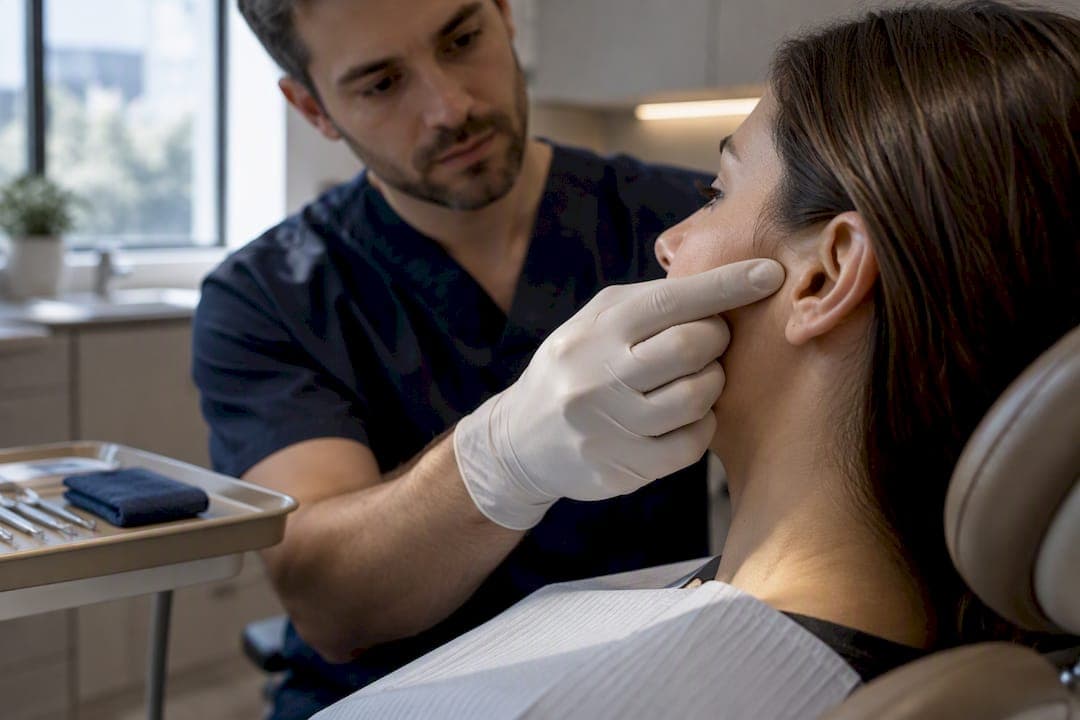
Yes, TMJ dysfunction routinely causes ear pain, along with fullness, popping, and ringing. If your ear hurts but you have no fever, drainage, or sudden hearing loss, short-term self-care and a jaw checkup are reasonable first moves. If you spot those red flags, skip the wait-and-see approach and get evaluated sooner.
TL;DR:
- Most cases of TMJ-related ear pain respond well to conservative treatments like cold packs, soft foods, habit changes, and physical therapy, without immediate need for surgery.
- Ear symptoms caused by TMJ, such as tinnitus or pressure, typically worsen with jaw movement or clenching, helping distinguish them from ear infections.
- A simple jaw-palpation test during movement can quickly identify whether ear pain stems from TMJ or an ear infection, guiding appropriate care.
- Red flags such as fever, drainage, sudden hearing loss, or severe pain require urgent evaluation to rule out ear infections or other serious issues.
- Immediate evaluation at an emergency dental or ENT clinic is recommended if symptoms worsen or include facial swelling, persistent severe pain, or unsanitary ear discharge.
Table of Contents
- Ear Symptoms That Usually Trace Back to a TMJ Problem
- Why a Jaw Problem Can Feel Like an Ear Problem
- TMJ Ear Pain vs. an Ear Infection: How to Tell Which One You Have
- Treating TMJ Ear Pain: Start Conservative, Escalate Only If Needed
- When to See a Doctor or Dentist, and What Happens at the Exam
- How CWD Dental Group Approaches TMJ-Related Ear Pain
- What This Guide Gets Right That Most Advice Skips
- Ready to Get Your Jaw and Ear Pain Checked?
- Sources
- FAQ
Ear Symptoms That Usually Trace Back to a TMJ Problem
Temporomandibular joint dysfunction rarely announces itself with jaw pain alone. It shows up in the ear because the joint sits directly in front of the ear canal, and patients often describe a cluster of complaints that seem more "ear" than "jaw":
- A dull, aching ear pain that doesn't spike or throb like an infection
- Ringing or buzzing (tinnitus) that comes and goes
- A sensation of fullness or pressure, as if the ear needs to "pop"
- Clicking, popping, or grinding sounds when opening or closing the mouth
- Occasional dizziness or a vague sense of imbalance
The pattern matters more than any single symptom. Pain that worsens with chewing, yawning, or wide mouth opening, or that's noticeably worse in the morning if you clench or grind at night, points toward the jaw rather than the ear itself.
TMD commonly occurs in adults aged 20 to 40 years, according to the Cleveland Clinic, and bruxism, chronic stress, and past jaw injury all raise the odds of developing it.
Why a Jaw Problem Can Feel Like an Ear Problem
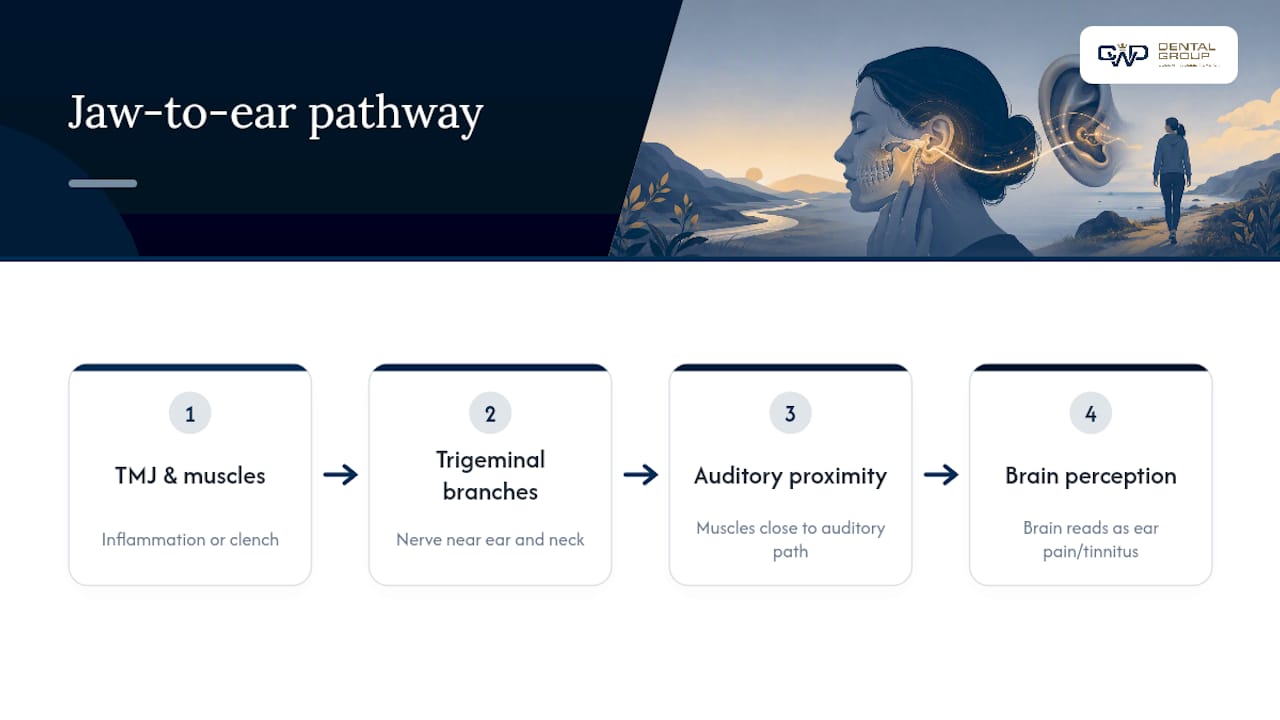
The temporomandibular joint sits just below and in front of the ear canal, close enough that inflammation or muscle strain there can radiate straight into it. The trigeminal nerve, which handles sensation across the jaw and face, also branches near the ear and upper neck, so pain signals get crossed and the brain reads jaw irritation as ear pain.
Tight jaw muscles or an inflamed joint capsule can also trigger what's known as somatic tinnitus. Because jaw and neck muscles sit so close to the auditory pathway, clenching or spasm can change how the brain perceives sound, producing ringing that has nothing to do with the inner ear itself. That's part of why some patients notice their tinnitus gets louder or quieter when they clench their jaw. The Mayo Clinic lists earaches and tinnitus among the standard symptoms of TMJ disorders for exactly this reason.
TMJ Ear Pain vs. an Ear Infection: How to Tell Which One You Have
Ear infections and TMJ-related ear pain can feel similar, but a few clues usually separate them fast.
- Check for infection markers first. Fever, sudden severe pain, drainage from the ear, or a noticeable drop in hearing point toward a true ear infection, not TMJ.
- Press on the jaw joint. Gently touch the area just in front of your ear canal while opening and closing your mouth. If that reproduces or worsens the pain, TMJ is far more likely than an ear problem.
- Watch how chewing affects it. TMJ pain typically flares with chewing tough or crunchy foods and eases with rest. Ear infection pain usually doesn't change much with jaw movement.
- Listen for joint noise. Clicking, popping, or a grinding sensation when you open wide is a jaw signal, not an ear signal.
If you're still unsure, don't guess. Clinicians often recommend ruling out primary ear disease first, and once an ENT clears the ear itself, attention shifts to the jaw joint and chewing muscles.
Pro Tip: Try this simple test tonight: bite down firmly on a soft object like a cotton roll for a few seconds. If that reproduces the ear ache, you're looking at a jaw issue, not an infection.
Treating TMJ Ear Pain: Start Conservative, Escalate Only If Needed
Most cases respond to a stepped approach rather than jumping straight to injections or surgery.
Immediate self-care:
- Cold packs for acute flare-ups and swelling; moist heat for a dull, chronic ache
- A soft-food diet for a few days, cutting out gum, ice, and anything crunchy
- Better posture and dropping the habit of cradling a phone against your shoulder, which strains the jaw and neck together
Behavioral and habit changes:
- Conscious effort to stop clenching during the day
- Stress management, since clenching and grinding often track stress levels closely
Noninvasive therapies:
- Physical therapy and manual therapy aimed at the jaw and neck muscles
- Guided jaw stretches and range-of-motion exercises
- A night guard or oral splint, used short-term to interrupt the clenching cycle rather than as a permanent fix
Medical and procedural options for tougher cases:
- NSAIDs or short-term muscle relaxants
- Corticosteroid injections into the joint
- Botox for select, persistent muscle-tension cases
- Arthrocentesis, arthroscopy, or open surgery, reserved for patients who don't improve with everything above
The evidence for conservative care is genuinely encouraging. A pilot study on a somatosensory intervention targeting TMD and daytime clenching found a mean reduction in Tinnitus Functional Index scores that was clinically relevant, with a majority of participants reaching meaningful improvement, according to research published in PMC. A separate systematic review found physical therapy can reduce tinnitus intensity tied to TMD, though it flagged the certainty of that evidence as low. The takeaway: treating the jaw often calms the ear, even if researchers are still working out exactly how much.
When to See a Doctor or Dentist, and What Happens at the Exam
Certain signs mean don't wait it out at home.
- Fever, spreading facial swelling, or visible drainage from the ear need prompt evaluation, not a few more days of ice packs.
- Sudden hearing loss or severe, unrelenting pain should be checked the same day rather than monitored.
- Mild to moderate symptoms with no red flags can reasonably get a few days to two to four weeks of self-care before booking an appointment, depending on severity.
At the exam, expect a straightforward process: a focused history, an ear exam to rule out infection, jaw palpation, and range-of-motion testing to see how far you can open and whether movement is smooth or catches. If the picture isn't clear from the exam alone, imaging comes next. X-rays check the bone, while an MRI shows the disc and surrounding soft tissue, according to Mayo Clinic's diagnostic guidance. When symptoms sit in a gray zone between ear and jaw, ENT and dental evaluation together is often the fastest path to an answer. Read more on when dental pain crosses into emergency territory.
How CWD Dental Group Approaches TMJ-Related Ear Pain
At CWD Dental Group, TMJ evaluation starts with listening. Patients describing ear pain, popping, or ringing get a focused history and a hands-on jaw exam before any treatment plan gets built. Because same-day emergency appointments are part of the practice's standard offering, patients with sudden or worsening symptoms don't have to sit on a waitlist to get looked at.
A typical visit covers a jaw exam, bite assessment, and a conservative first plan. That might mean a custom night guard, habit coaching, or a referral if something outside the jaw needs attention. TMJ treatment sits alongside the practice's broader dental services, so escalation to further care happens under one roof rather than through referral limbo.
What This Guide Gets Right That Most Advice Skips
Most articles on TMJ ear pain stop at "yes, TMJ can cause ear symptoms" and hand you a generic stretching routine. That's not wrong, it's just incomplete. The more useful question is the one people actually search Google at 2 a.m. trying to answer: is this an infection or my jaw? Getting that distinction right changes what you do next, and getting it wrong means weeks of treating the wrong problem.
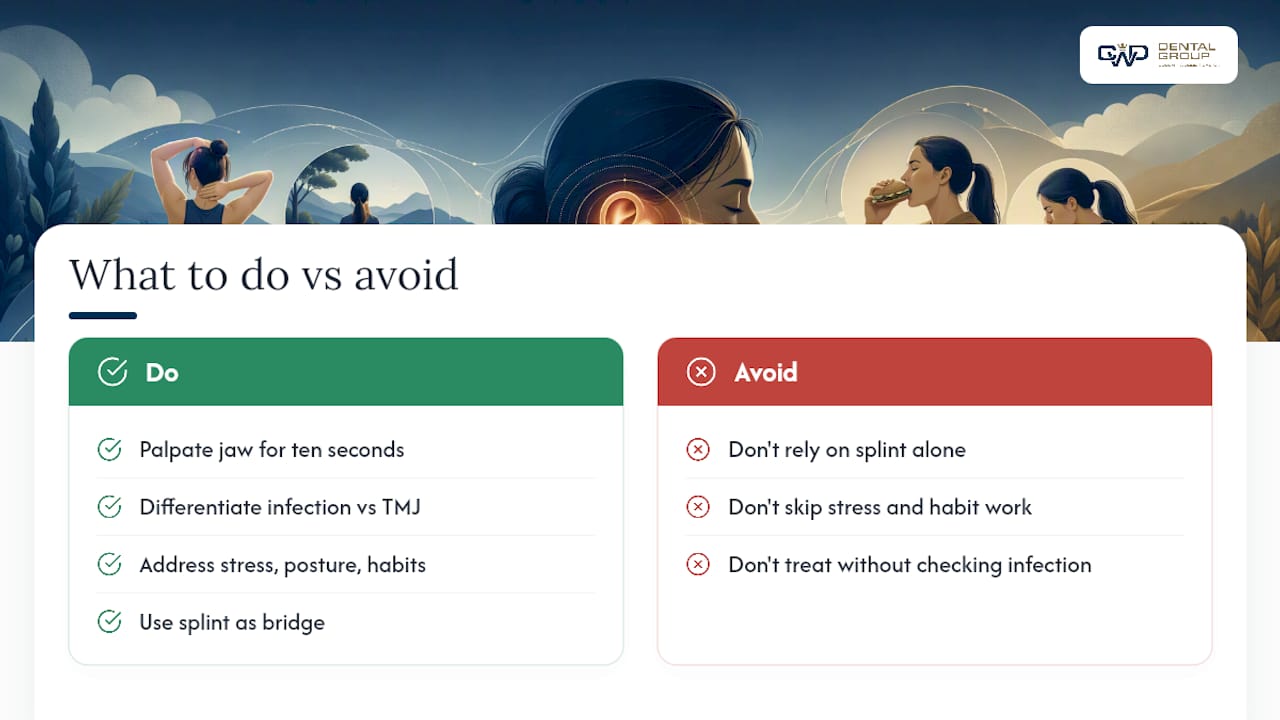
The conventional wisdom oversells splints as a fix rather than a bridge. A night guard interrupts clenching; it doesn't address why you're clenching in the first place. Skip the stress, posture, and habit piece, and the ache tends to come right back once the splint comes off.
If there's one thing to prioritize, it's the simple jaw-palpation test before anything else. It costs nothing, takes ten seconds, and tells you more about where the pain is actually coming from than a week of guessing.
— Kayle
Ready to Get Your Jaw and Ear Pain Checked?
If self-care hasn't settled things after a couple of weeks, or your symptoms are getting worse instead of better, Cwddentalgroup gives you a faster path than the usual routine dental scheduling grind. Emergency dental appointments mean persistent jaw and ear pain doesn't have to wait while you keep guessing.

TMJ treatment starts with a real exam, not a generic mouth guard sold over the counter. A focused jaw exam, bite assessment, and a conservative treatment plan tailored to what's actually going on gets you answers instead of more uncertainty. Browse TMJ and emergency dental services or head straight to the emergency dentist page to book an evaluation if your symptoms are severe or sudden.
This article is general information, not a substitute for advice from a qualified doctor. Consult a qualified healthcare professional about your own circumstances before acting on anything here.
Sources
- Temporomandibular disorders (TMD) overview — Cleveland Clinic
- TMJ disorders — Mayo Clinic
- Somatosensory intervention targeting TMD and awake bruxism reduced subjective tinnitus — PMC (NCBI)
FAQ
How Can I Relieve Ear Pain Caused by TMJ?
Start with moist heat for a chronic ache or a cold pack for acute swelling, stick to soft foods, and consciously stop clenching your jaw during the day. If pain persists past a couple of weeks, a jaw exam and possibly a night guard from a dentist or TMJ specialist is the next step.
Can TMJ Disorder Become Permanent?
TMJ symptoms can become chronic if the underlying cause, like bruxism or joint damage, goes untreated, but most cases respond well to conservative care. Long-standing joint damage caught late sometimes needs more advanced treatment like injections or surgery to manage.
What Causes Pain in the Front of My Ear and Jaw Together?
Pain in that exact spot usually points to the temporomandibular joint itself, since it sits directly in front of the ear canal. Clenching, teeth grinding, jaw injury, or joint inflammation are the most common culprits, and pressing on that area during jaw movement usually reproduces the pain.
Can TMJ Cause Swelling in the Ear Canal?
TMJ dysfunction can cause a sensation of fullness or pressure that feels like swelling, but it doesn't typically cause visible or measurable swelling of the ear canal itself. Actual ear canal swelling with drainage or redness points toward an infection and needs evaluation to rule that out.