
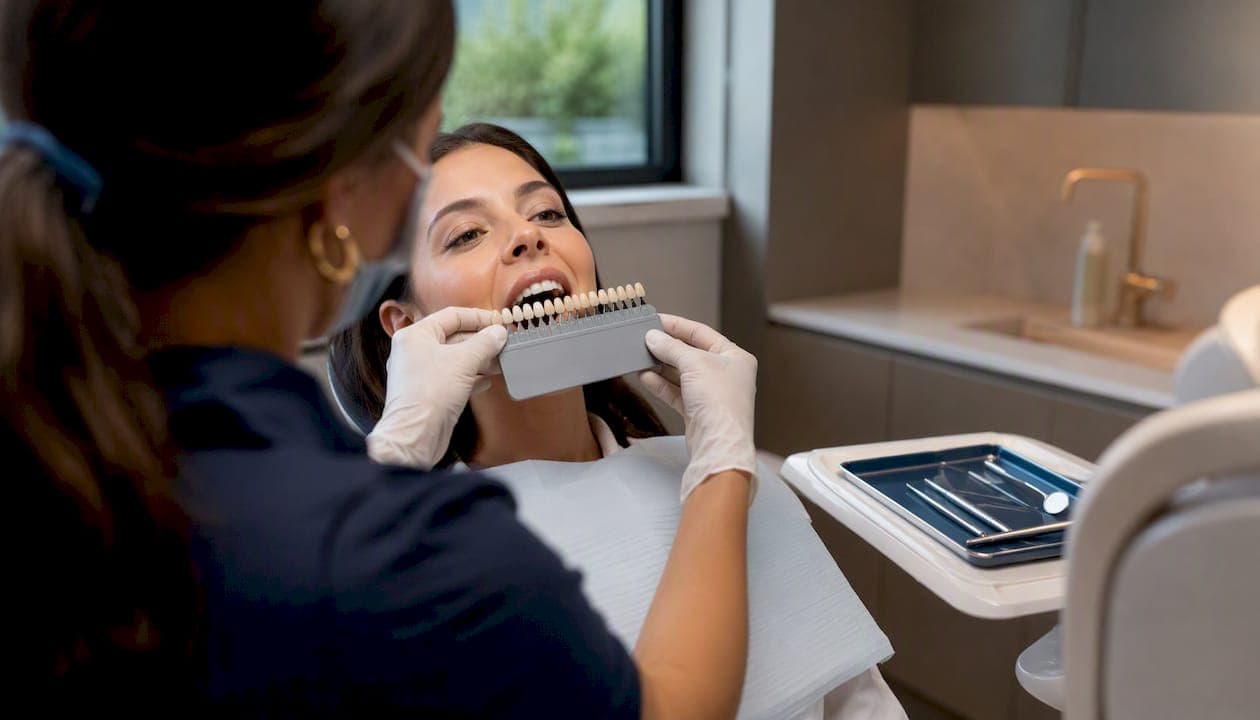
Smile makeover treatment options include professional teeth whitening, composite bonding, porcelain veneers, crowns and bridges, clear aligners, dental implants, and gum contouring or grafting. Each addresses a different problem, and most comprehensive makeovers combine two or more of them. The URMC Eastman Institute for Oral Health describes a smile makeover as a customized blend of cosmetic and restorative treatments designed to improve both appearance and function. Americans spend more than $4 billion annually on cosmetic dental procedures, which reflects how seriously people take this investment.
The most important early step: book a consultation with a cosmetic dentist who uses digital smile design and mock-ups so you can preview results before committing. Cwddentalgroup in Tallahassee offers exactly that kind of personalized planning.
Quick reference:
- Whitening — fastest, most affordable entry point
- Composite bonding — repairs chips and gaps in a single visit
- Porcelain veneers — reshapes color, size, and form for 10–15 years
- Crowns and bridges — restores damaged or missing teeth
- Clear aligners — corrects alignment before final restorations
- Dental implants — permanent tooth replacement, lasting 15–25 years
- Gum contouring/grafting — balances the gum line for proportion
Key Takeaways
Smile makeover results depend on sequencing: stabilize oral health first, complete alignment and implants before final restorations, and whiten before any shade-matched crown or veneer is ordered.
| Point | Details |
|---|---|
| Sequence matters most | Treat gum disease and decay first; align teeth before placing veneers or crowns. |
| Whiten before shade-matching | Set your final tooth color with whitening before any restoration is fabricated. |
| Budget by path | Quick refreshes run —; full transformations can reach $50,000+. |
| Longevity varies widely | Implants last 15–25 years; bonding 5–10 years; whitening needs touch-ups every 6–12 months. |
| Cwddentalgroup | Offers digital smile design, full makeover services, and same-day access in Tallahassee. |
Table of Contents
- How clinicians group smile-makeover treatments
- Treatment-by-treatment quick guide
- How clinicians combine procedures into a customized plan
- What affects cost and how long different paths take
- Risks, recovery, and how to protect your results
- Who is a good candidate for each major option?
- How to choose a dentist and what to ask at your consultation
- Psychological benefits and patient satisfaction outcomes
- What a smile makeover actually feels like, step by step
- Cwddentalgroup's approach to smile makeovers in Tallahassee
- Sources
How clinicians group smile-makeover treatments
Dentists organize procedures into five practical buckets. Understanding which bucket your concern falls into helps you ask better questions at your consultation.
Cosmetic treatments (whitening, bonding, veneers) address color, shape, and surface texture. They are minimally invasive and primarily aesthetic. Restorative treatments (crowns, bridges, implants) fix structural damage or replace missing teeth; they serve function as much as appearance. Orthodontic options (clear aligners, traditional braces) correct alignment and bite, and they almost always come before cosmetic restorations when misalignment is present. Periodontal and surgical procedures (gum contouring, grafting, bone grafts) address the foundation — gum tissue and bone — that everything else sits on. Finally, adjunctive services like night guards, retainers, and periodic whitening maintenance protect the work after it's done.
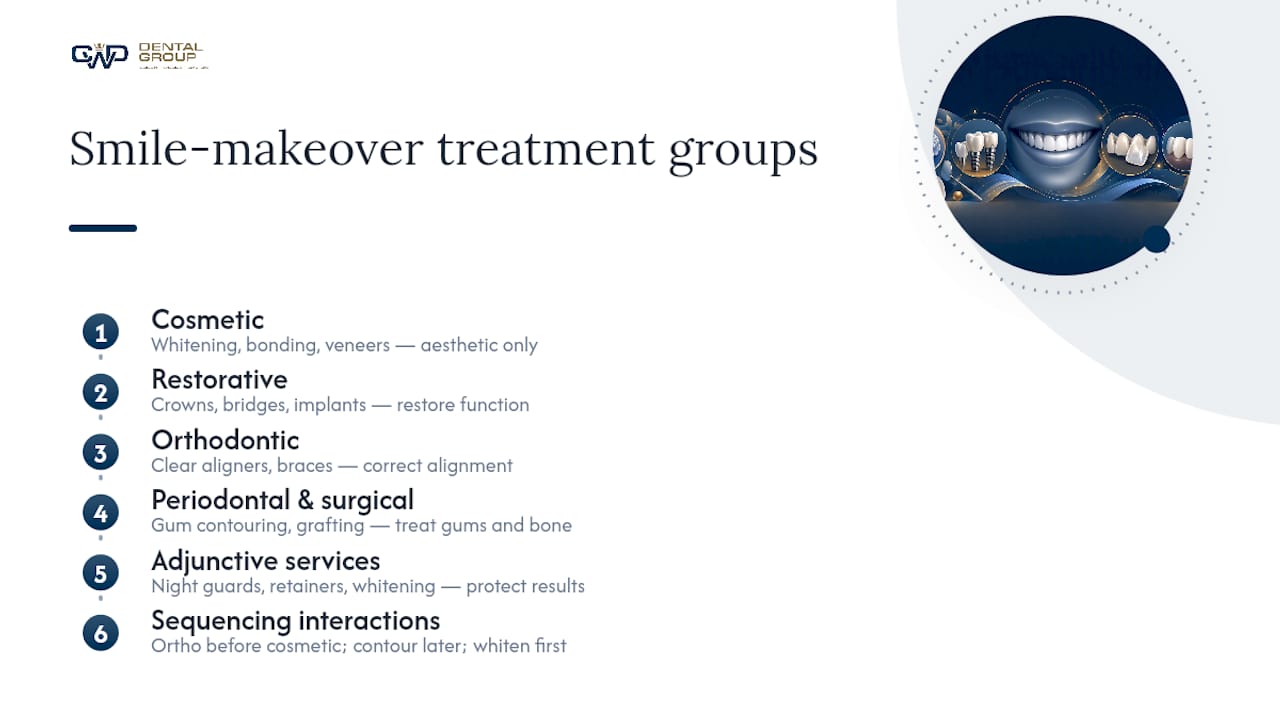
Categories interact constantly. Orthodontics often precedes veneers because placing veneers on crooked teeth wastes tooth structure and produces a less natural result. Gum contouring typically follows restorations so the clinician can see the final tooth proportions before trimming tissue.
Pro Tip: If your primary concern is color, start with whitening before any shade-matched restoration is placed. Veneers and crowns are fabricated to match your teeth at the time of shade selection — whiten first, then match.
Treatment-by-treatment quick guide
The table below covers the core cosmetic dental procedures most clinicians use in makeover planning.
Timeline ranges come from Ethos Modern Dental's clinical sequencing guide, which notes whitening takes 1–3 visits, bonding a single visit, and full makeovers involving orthodontics or implants often run 3–12 months or longer.
Bonding vs. veneers — the common confusion:
- Bonding uses tooth-colored resin applied directly; veneers are lab-fabricated porcelain shells
- Bonding is reversible and cheaper; veneers require enamel removal and are permanent
- Bonding chips more easily; veneers resist staining better and last roughly twice as long
Pro Tip: Ask your dentist for a digital smile design preview before committing to veneers. Clinics use digital scans and mock-ups so you can see the shape and shade before any enamel is touched — this step alone prevents the most common source of patient regret.
How clinicians combine procedures into a customized plan
Sequencing is where most DIY smile planning falls apart. The SMILE framework — Stabilize, Map, Individualize, Layer, Elevate — captures the logic: treat oral health first, then sequence alignment, whitening, and restorations in an order that protects each step's results.
A typical comprehensive plan follows this order:
- Stabilize oral health — treat active decay, gum disease, or infection before anything cosmetic begins
- Restore broken teeth — crowns or fillings on structurally compromised teeth
- Alignment (if needed) — clear aligners or orthodontics to correct bite and spacing
- Implants (if needed) — placed after alignment; bone integration takes 3–6 months
- Whitening — done after alignment, before any shade-matched restoration is ordered
- Gum contouring — refines proportions once tooth positions are finalized
- Final restorations — veneers or crowns fabricated to match the whitened shade
- Protection and maintenance — night guard for grinders, retainer after aligners, periodic whitening touch-ups
Dentistry 32's step-by-step planning guide recommends gum assessment and targeted X-rays before any restorative work, and notes that minor alignment changes before cosmetic restorations preserve more natural tooth structure.
Pro Tip: Use digital mock-ups at the planning stage to lock in shade and shape decisions. Clinics that use provisional restorations let you wear temporary versions of your final result for weeks before anything is permanently bonded — a step that catches problems before the lab bill arrives.
What affects cost and how long different paths take
Cost drivers include the materials chosen (porcelain vs. composite), how many teeth are treated, whether implants replace bridges, lab fees, the clinician's experience, and geography. A single-tooth bonding job in a mid-size city costs far less than a full-arch veneer case in a major metro.
Timeline categories align with Starry Smile's sequencing guide, which maps quick makeovers at 1–3 weeks, mid-range at 4–10 weeks, and full transformations at 3–12+ months.
Payment options worth knowing:
- Dental insurance rarely covers purely cosmetic work but often covers restorative components (crowns, implants when medically necessary)
- FSA and HSA funds can apply to restorative procedures
- Most practices offer third-party dental financing (CareCredit, Sunbit) with 0% promotional periods
- Staged care — starting with whitening or bonding, then progressing to veneers 12–18 months later — spreads cost without sacrificing the final result
Risks, recovery, and how to protect your results
Every procedure carries trade-offs. Knowing them upfront prevents surprises.
- Days 1–3 after whitening: sensitivity to cold is common; avoid staining foods and drinks
- Days 1–7 after bonding or veneers: mild sensitivity; avoid biting hard foods directly
- Days 1–14 after gum contouring: swelling and tenderness; soft diet, no vigorous rinsing
- Weeks 1–12 after implant placement: osseointegration (bone bonding) in progress; no smoking, no hard foods on the surgical site
- Ongoing: wear a night guard if you grind, keep aligner retainers in as directed, and schedule whitening touch-ups every 6–12 months
Durability benchmarks to plan around: veneers typically last 10–15 years, implants 15–25 years, bonding 5–10 years, and whitening results often need touch-ups every 6–12 months. Habits that shorten restoration life include grinding without a night guard, smoking, and skipping regular hygiene appointments.
The single biggest maintenance mistake is skipping the night guard. Porcelain veneers and crowns can chip under bruxism forces that natural enamel would absorb.
Who is a good candidate for each major option?
Before scheduling, run through this self-assessment:
- Oral health stable? Active gum disease or untreated decay must be resolved first — no exceptions
- Adequate bone for implants? Bone loss from missing teeth or gum disease may require grafting before implant placement; learn more about implant candidacy
- Realistic expectations? Veneers improve but don't create perfection; photos of desired outcomes help clinicians calibrate
- Committed to maintenance? Bonding and whitening need periodic upkeep; implants require the same hygiene discipline as natural teeth
- Non-smoker or willing to quit? Smoking significantly raises implant failure rates and slows gum healing
- Bruxism under control? Uncontrolled grinding is a contraindication for veneers until a night guard protocol is established
If you have active periodontal disease, uncontrolled systemic conditions affecting healing, or significant bone loss, address those first. Whitening or bonding often makes sense as a low-commitment first step — both are reversible and show you what's possible before you invest in permanent restorations. You can also explore options for fixing an uneven smile as a starting point.
How to choose a dentist and what to ask at your consultation
Credentials matter, but so does workflow. Look for a DDS or DMD with documented cosmetic and restorative experience, a before-and-after portfolio you can review, and in-office use of CAD/CAM or digital scanning. Ask whether lab work is done in-house or sent out — external labs add 2–3 weeks between prep and placement. A smile consultation guide walks through what to expect step by step.
Questions to bring to your first appointment:
- What sequence do you recommend for my specific concerns, and why?
- How long will each phase take, and what's the total timeline?
- Will I need orthodontics or gum work before restorations?
- Can I see a digital mock-up or wear provisionals before final bonding?
- What's the expected lifespan of each procedure you're recommending?
- What happens if a veneer chips or an implant fails — what's your aftercare policy?
- Do you offer sedation, and what are my options for managing anxiety?
- What's the written cost estimate, and what payment plans do you accept?
A dentist who answers these questions clearly, shows you real patient photos, and provides a written treatment plan with costs is worth trusting with the work.
Psychological benefits and patient satisfaction outcomes
The confidence shift after a smile makeover is well-documented in patient-reported outcomes. People who complete cosmetic dental treatment consistently report improvements in social comfort, willingness to smile in photos, and self-assessed attractiveness. The effect is strongest when the result matches what was previewed during planning — which is one reason digital mock-ups matter beyond aesthetics. When patients can see and approve the outcome before it's permanent, satisfaction rates climb and post-treatment anxiety drops.

Smile changes also affect first impressions in professional settings. Research in social psychology consistently links perceived dental health with judgments of competence and approachability. For many patients, the practical payoff — feeling comfortable in a job interview or on a first date — is as motivating as the aesthetic result itself.
What a smile makeover actually feels like, step by step
Most patients describe the process as more gradual and less dramatic than they expected — in a good way. The early appointments feel clinical: X-rays, scans, photographs, and a lot of conversation about goals. The middle phase, especially with aligners or implant healing, requires patience. Then the final restorations go in, and the shift is immediate.
What catches people off guard is how staged decisions reduce anxiety. Choosing whitening first, seeing the result, then deciding whether to proceed to veneers feels far less risky than committing to a full plan on day one. That incremental confidence is part of what makes the cosmetic dentistry process work emotionally, not just clinically.
Cwddentalgroup's approach to smile makeovers in Tallahassee
Cwddentalgroup delivers personalized smile makeover planning in Tallahassee with a patient-centered process that starts with digital scans, photographs, and a written treatment plan before any procedure begins. The team covers the full range of makeover services in-house: professional whitening, composite bonding, porcelain veneers, crowns, dental implants, gum care, and Invisalign. Same-day emergency appointments mean that if something goes wrong mid-treatment, you're not waiting weeks for a follow-up.
The consultation process at Cwddentalgroup includes digital smile design previews so you can see proposed changes before committing. Treatment plans come with clear timelines and cost estimates — no vague ranges, no surprises. If you're ready to map out your options, book a consultation and get a plan built around your specific goals, timeline, and budget.
Sources
- Smile Makeover — URMC Eastman Institute for Oral Health
- Smile makeover proven techniques & expert advice — Ethos Modern Dental
- How to plan a full smile makeover, step by step — Dentistry 32
- Smile makeover planning: timeline and sequencing — Starry Smile
- Smile makeover planning — London Smile Clinic
- 9 Best smile makeover treatments, ranked by results — Dentist Decoded
This article is general information, not a substitute for advice from a qualified doctor. Consult a qualified healthcare professional about your own circumstances before acting on anything here.