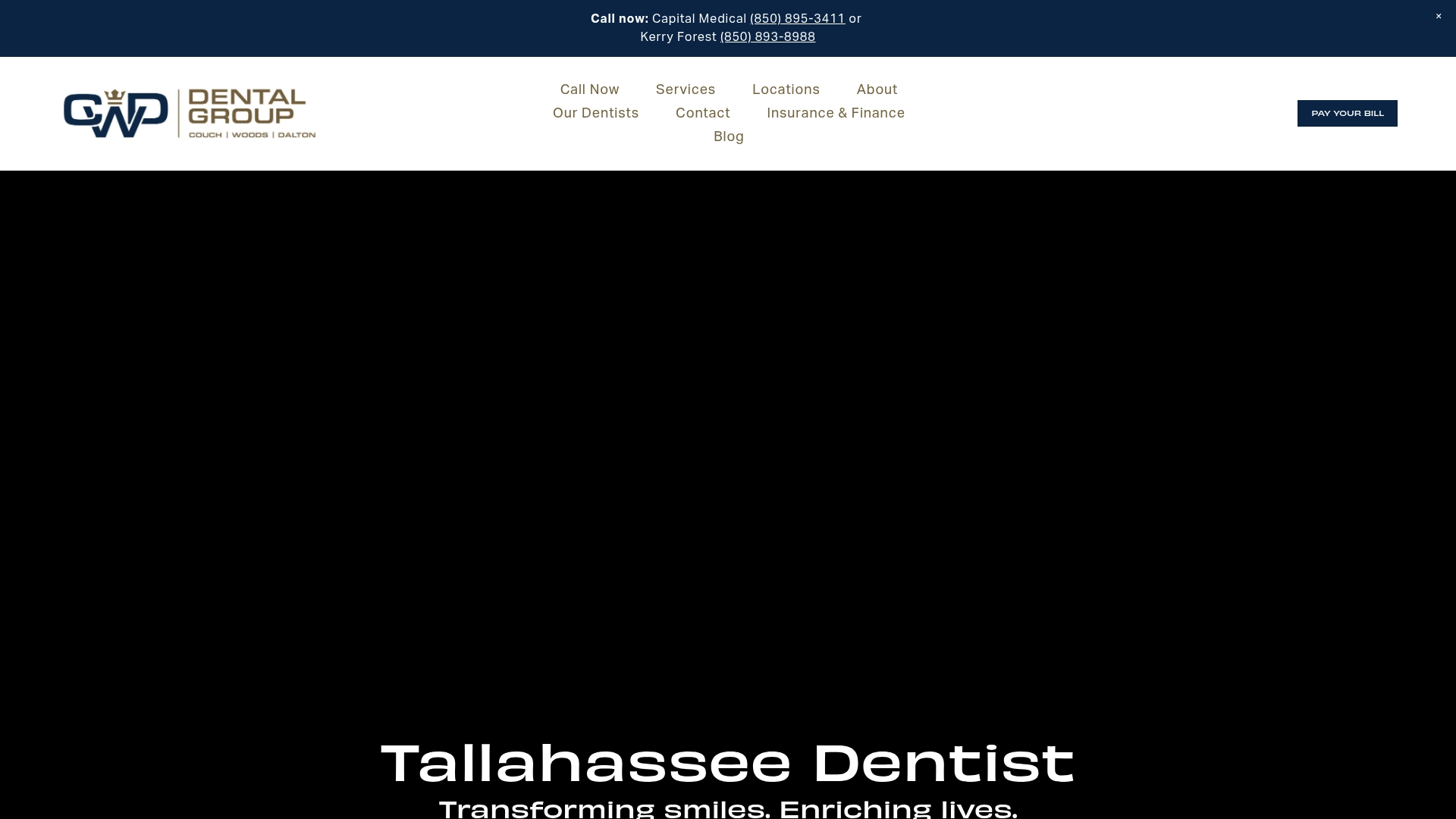
Porcelain veneers, dental bonding, clear aligners, braces, tooth contouring, gum contouring, and Botox are the primary options to fix an uneven smile that cosmetic options cover today. Each targets a different root cause, so the right choice depends on whether your asymmetry comes from tooth shape, alignment, gum levels, or muscle activity. Here is a quick summary of what each approach does:
- Porcelain veneers: Thin ceramic shells bonded to the front of teeth for durable, uniform shape and color
- Dental bonding: Tooth-colored resin applied in a single visit to correct minor chips, gaps, or length differences
- Clear aligners: Removable trays that gradually shift teeth over months to years
- Braces and ceramic braces: Fixed orthodontic appliances for moderate to complex misalignment
- Tooth contouring: Gentle reshaping of enamel edges for subtle symmetry improvements
- Gum contouring: Reshaping gum tissue to balance the frame around your teeth
- Botox: Injections that relax overactive facial muscles contributing to a lopsided smile
What causes an uneven smile, and how do you know you need help?
Tooth misalignment is the most common culprit, but it is rarely the only one. Crowding, rotations, size differences between teeth, worn edges from grinding, and missing teeth all shift how the smile looks from the front. Gum asymmetry compounds the problem: gumline balance plays a direct role in perceived smile symmetry, so even well-aligned teeth can look uneven when gum levels differ across the arch.
Muscle imbalances add another layer. Reduced activity in the lip elevator muscles on one side pulls the mouth unevenly when you smile, a pattern that dental work alone cannot fully correct. Bite problems, jaw asymmetry, and prior dental work that does not match surrounding teeth also contribute.
Signs worth acting on include visible asymmetry in photos, self-consciousness that makes you smile less, difficulty chewing comfortably, or speech changes. A professional evaluation is especially important when asymmetry appears suddenly, since sudden facial drooping can signal nerve palsy or stroke rather than a cosmetic issue.
Detailed cosmetic dental treatments to fix an uneven smile
Porcelain veneers
Porcelain veneers cover multiple uneven teeth and give precise control over shape, size, and color. They are the go-to when asymmetry involves several teeth with noticeable differences in proportion or surface texture. The tradeoff is irreversible enamel reduction and higher cost, and the process takes multiple visits including impressions and a temporary phase.
Dental bonding
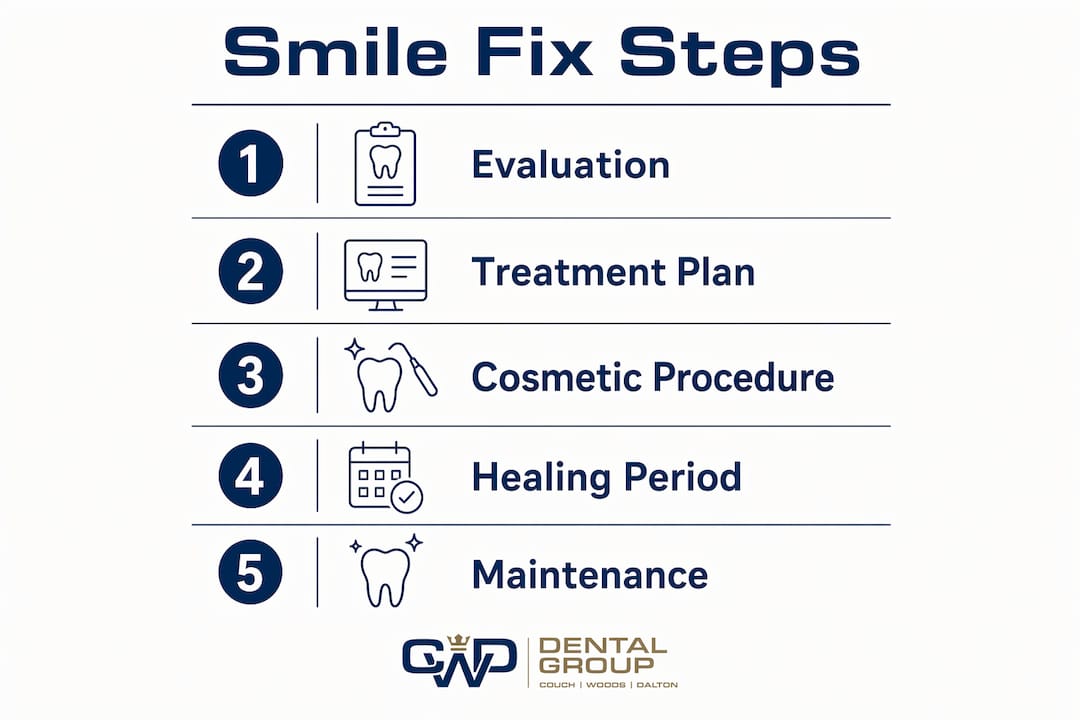
Dental bonding is minimally invasive and typically done in one appointment. Composite resin is shaped and polished directly on the tooth to fix small chips, length differences, or minor gaps. The material can stain or chip over time, so it suits patients who want a fast, conservative fix rather than a permanent overhaul.
Clear aligners and braces
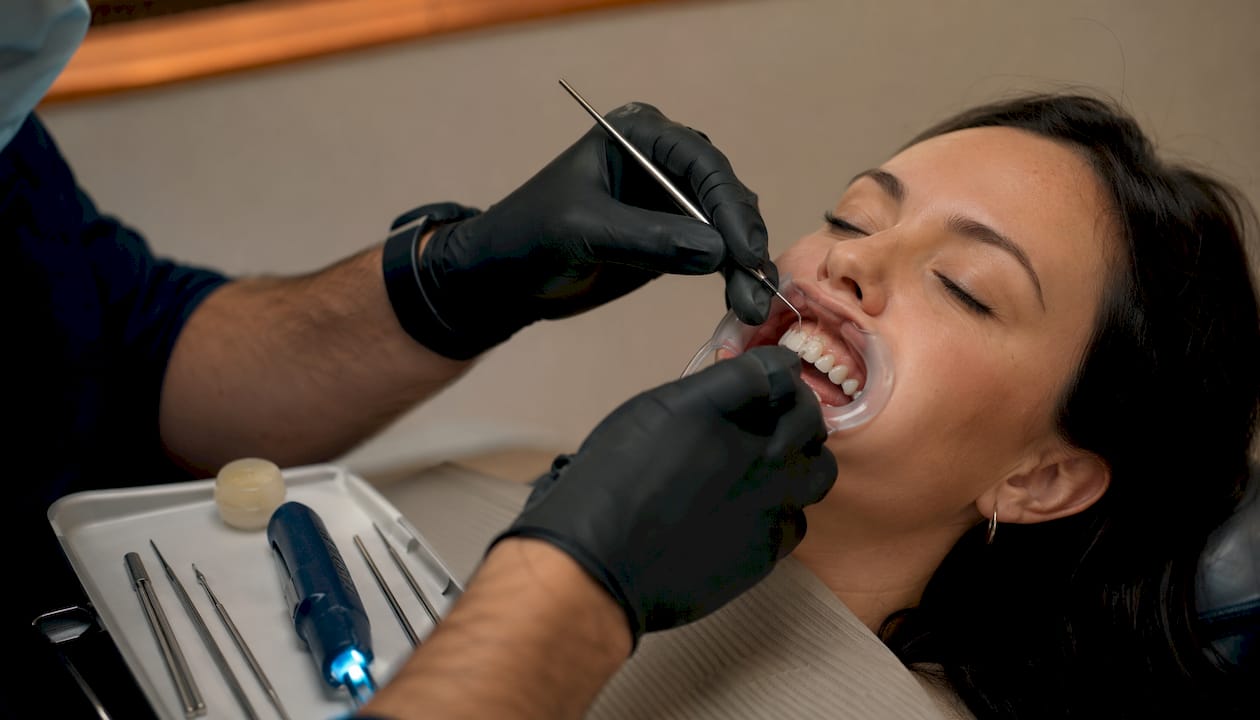
Clear aligner therapy addresses root alignment issues with gradual tooth movements, improving both appearance and function. Treatment runs 6 to 36 months depending on case complexity. Traditional braces handle more severe misalignment, while ceramic braces use tooth-colored brackets for a less conspicuous look, improving patient acceptance without sacrificing correction power.
Tooth contouring
Enamel contouring removes tiny amounts of tooth surface to smooth sharp edges, even out minor length differences, or reduce a slightly oversized tooth. It is often combined with bonding for more precise results. The procedure is quick, painless, and permanent, but it only works when the correction needed is genuinely small.
Gum contouring
Gum contouring reshapes gum tissue to better frame the teeth, correcting a gummy smile on one side or uneven tissue levels across the arch. Laser techniques make recovery faster than older surgical methods. Patients should distinguish cosmetic gum contouring from surgical crown lengthening, which is a more invasive procedure reserved for structural needs.
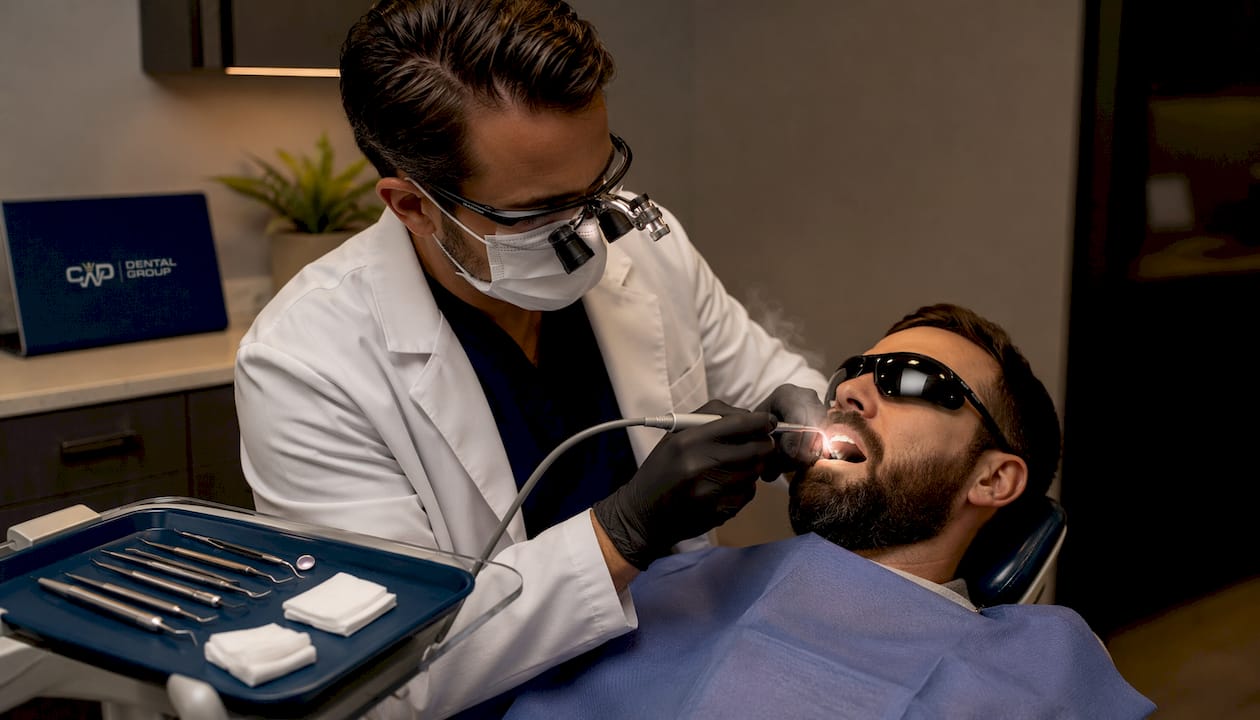
Pro Tip: Before committing to veneers or bonding, ask your dentist for a digital preview or temporary mock-up. Seeing the proposed shape on your actual teeth before any enamel is touched prevents surprises and helps you communicate exactly what looks natural to you.
Non-dental cosmetic options that complement smile correction
Botox works on a completely different mechanism than any dental procedure. Injections relax overactive facial muscles that pull the mouth unevenly, temporarily reducing a lopsided appearance. Effects last several months, so repeat treatments are part of the commitment. This is the right tool when the asymmetry is muscular rather than structural.
Electrical muscle stimulation is an emerging noninvasive option. In one documented case, a patient with reduced activity in the left lip elevator muscles completed 10 sessions over 10 weeks, with improvements in symmetry persisting for at least 3 months. It is not yet mainstream, but it shows real promise for patients who want to avoid injections.
Dermal fillers can address volume loss around the mouth that makes one side appear lower or flatter, while skin-tightening procedures using lasers or ultrasound stimulate collagen and improve overall facial balance. These options work best as complements to dental correction, not substitutes, since they do not change tooth or gum position.
How treatment gets personalized to your situation
A thorough evaluation covers dental health, bite alignment, gum levels, facial proportions, and your specific aesthetic goals. A foundational bite evaluation matters before any cosmetic work begins, because underlying jaw asymmetry or malocclusion can undermine restoration durability over time. Restorations placed without addressing grinding or bite imbalance tend to fail earlier.
Treatment plans often sequence multiple procedures. A common path pairs clear aligners first to move teeth into better position, then finishes with bonding or veneers to refine shape and color. Moving teeth before restoring them reduces how much enamel needs alteration later. Understanding the full smile makeover approach helps patients see why sequencing matters as much as the individual procedures.
Key factors to weigh before you commit:
- Time: Orthodontic treatment runs months to years; bonding and contouring can finish in one visit
- Cost: Ranges vary widely across procedures (see the cost section below)
- Maintenance: Bonding needs periodic touch-ups; veneers last longer but require careful oral hygiene; retainers are mandatory after orthodontics
- Reversibility: Bonding and contouring preserve more tooth structure; veneers involve permanent enamel removal
Psychological benefits are real and well-documented in clinical practice. Patients consistently report greater confidence in social settings and less self-editing of their expressions after treatment. The goal is a smile that feels like yours, just more balanced.
How long does each treatment take?
| Treatment | Typical timeline |
|---|---|
| Dental bonding | one appointment |
| Tooth contouring | one appointment |
| Gum contouring | one appointment plus healing time |
| Porcelain veneers | multiple visits over several weeks |
| Clear aligners | 6–36 months |
| Traditional or ceramic braces | 6 to 36 months |
| Botox | one appointment; repeat every 3–4 months |
Smile makeovers that combine orthodontics with restorative work take the longest, but the sequencing protects the final result. Rushing the order often means redoing work.
What does each cosmetic option cost?
Costs vary by geography, provider experience, and case complexity. General ranges in the U.S. market:
| Treatment | Approximate U.S. cost range |
|---|---|
| Dental bonding | — |
| Tooth contouring | — |
| Gum contouring | — |
| Porcelain veneers | — |
| Clear aligners | — |
| Traditional braces | — |
| Ceramic braces | — |
| Botox (smile-related) | — |
Dental insurance rarely covers purely cosmetic procedures, though orthodontics may receive partial coverage when functional bite correction is documented.
Risks and side effects to know before you start
Every treatment carries tradeoffs. Dental bonding and veneers can cause temporary tooth sensitivity after placement. Veneers require irreversible enamel removal, so they are a lifelong commitment to some form of restoration on those teeth. Clear aligners and braces may cause mild discomfort during adjustment periods, and teeth can relapse without consistent retainer use afterward.
Gum contouring involves minor surgery and a healing period; not every gum type is suitable, and removing too much tissue can expose sensitive root surfaces. Botox carries a small risk of unintended muscle weakness in adjacent areas if placement is imprecise, which is why provider experience matters considerably. Electrical muscle stimulation is still experimental, with limited long-term data outside small case studies.
How long do results last, and what does upkeep look like?
Maintaining cosmetic dental results requires consistent oral hygiene, retainer use after orthodontics, and lifestyle habits that protect restorations. Bonding typically lasts 3–7 years before needing touch-ups, especially in patients who grind their teeth. Porcelain veneers last 10–20 years with proper care. Gum contouring results are generally permanent once tissue heals. Orthodontic results hold indefinitely with retainer compliance.
Botox effects are temporary, requiring patients who choose it for smile symmetry to plan for repeat treatments as part of their ongoing routine. Across all treatments, avoiding staining foods and drinks, wearing a night guard if you grind, and keeping up with professional cleanings extend results considerably.
Key Takeaways
Porcelain veneers, clear aligners, dental bonding, and gum contouring each target a different cause of smile asymmetry, so the right fix depends on a thorough bite and aesthetic evaluation first.
| Point | Details |
|---|---|
| Match treatment to cause | Dental, gum, and muscle causes each require a different approach for lasting results. |
| Bonding is the fastest fix | Dental bonding completes in one visit and suits minor chips or length differences. |
| Aligners take 6–36 months | Clear aligner therapy corrects root alignment issues over months to years. |
| Veneers are permanent | Porcelain veneers involve irreversible enamel removal and can last many years with proper care. |
| Botox addresses muscle asymmetry | Injections relax overactive facial muscles but require repeat sessions every few months. |
Ready to explore your options with a team that takes the time to get it right? Cwddentalgroup offers comprehensive cosmetic care in Tallahassee, with same-day appointments and a patient-centered approach that covers everything from quick bonding fixes to full smile makeovers.