
For contact and collision sports, a dentist-made custom mouthguard is the best choice for protection and fit; a boil-and-bite guard is the acceptable budget alternative for lower-contact play. Worth checking out on the market: GuardLab for digital custom fitting, Shock Doctor for retail boil-and-bite, SISU Sports for thin-profile designs, and DC Mouthguards for combat sports. Guards reduce orofacial injury risk substantially; the case for concussion prevention remains weak.
TL;DR:
- Custom mouthguards made by dentists provide the best fit, retention, and protection for collision sports, but are more costly and take longer to produce.
- Boil-and-bite guards are suitable for moderate-contact sports and lower budgets but tend to lose material integrity with repeated remolding.
- Athletes in high-contact sports like football, hockey, or boxing should prioritize custom or high-end boil-and-bite guards to prevent dentofacial injuries.
- Proper fit depends on correct molding, especially for youth and orthodontic patients, with regular checks recommended to accommodate growth and dental work.
- Mouthguards significantly reduce the risk of orofacial injuries but do not have a proven effect on concussion prevention, which requires a layered safety approach.
Table of Contents
- Sports Mouthguard Types and Brands Compared
- How Do You Choose the Right Mouthguard for Your Sport?
- What Does the Custom Mouthguard Process Look Like at a Dentist?
- Cleaning, Storage, and Replacement Basics
- What Does the Evidence Actually Say About Mouthguards and Injury?
- What Dentists See Go Wrong With Mouthguard Fit
- Get a Custom-Fit Mouthguard Before the Next Season Starts
- Sources
- FAQ
Sports Mouthguard Types and Brands Compared
Every mouthguard on the market falls into one of three categories, and the IADT/ASD guideline treats that classification as the starting point for any fit conversation: stock, boil-and-bite, and custom-made. Stock guards come pre-shaped in a handful of generic sizes. You can't adjust them, they rarely stay put, and most dentists consider them a last resort for anyone playing an actual contact sport. Boil-and-bite guards get heated in hot water, then bitten down on to form a rough mold around your teeth. They're the guard you'll find at any sporting goods store, and they work reasonably well when molded correctly, though molding errors like biting down too hard or remolding repeatedly tend to thin out the material and cut into the protection it's supposed to give.
Custom-made guards are fabricated from a dental impression or digital scan, then built in a lab with controlled thickness and material layering. They cost more and take longer to get. They also fit better, stay in place better, and hold up better over a season than anything you mold yourself at home.
Here's how the type breakdown lines up against real sport scenarios, along with where the major U.S. brands land:
| Brand/type | Type offered | Typical price range | Best for | Fit/retention |
|---|---|---|---|---|
| Stock guards | Stock | an inexpensive range suitable for casual, low-contact recreation | Casual, low-contact recreation | Poor, no customization |
| Shock Doctor | Boil-and-bite, sport-specific prefabricated | $10–$20 | Budget-conscious athletes, widely available OTC needs | Moderate; depends on careful molding |
| SISU Sports | Boil-and-bite (thin-profile) | a moderate cost range favoring thin-profile designs | Athletes prioritizing low bulk and easy breathing | Good when properly molded; thinner material trades some cushioning for comfort |
| GuardLab | Custom, boil-and-bite | a higher price range for scanned, clinic-or-tech-enabled custom fits | Athletes wanting a scanned, clinic-or-tech-enabled custom fit with team colors | Strong; 3D-scan workflow improves retention |
| DC Mouthguards | Custom | a premium price range catering to combat and high-contact sports | Combat sports, hockey, and other very high-contact activity needing custom thickness | Strong; layered thickness options for heavy contact |
| Dentist-fabricated custom | Custom | Varies by practice | Collision sports, braces, prior dental trauma | Strongest; lab-controlled fit and multilayer lamination |
A few things worth knowing before you buy:
- Look for products carrying the ADA Seal of Acceptance or built to meet the pending ANSI/ADA Standard No. 99 specifications for hardness and tear strength.
- Boil-and-bite guards from retail brands are fine for practice sessions or lower-contact sports, but they lose material integrity faster with repeated remolding.
- Multi-layer laminated EVA designs, common in custom fabrication, combine a soft inner layer for shock absorption with a firmer outer shell, a combination stock and boil-and-bite guards simply can't replicate.
- Thin-profile designs like SISU's trade some material bulk for breathability. That's a real advantage for endurance sports but a tradeoff worth weighing for full-contact collision sports.
How Do You Choose the Right Mouthguard for Your Sport?
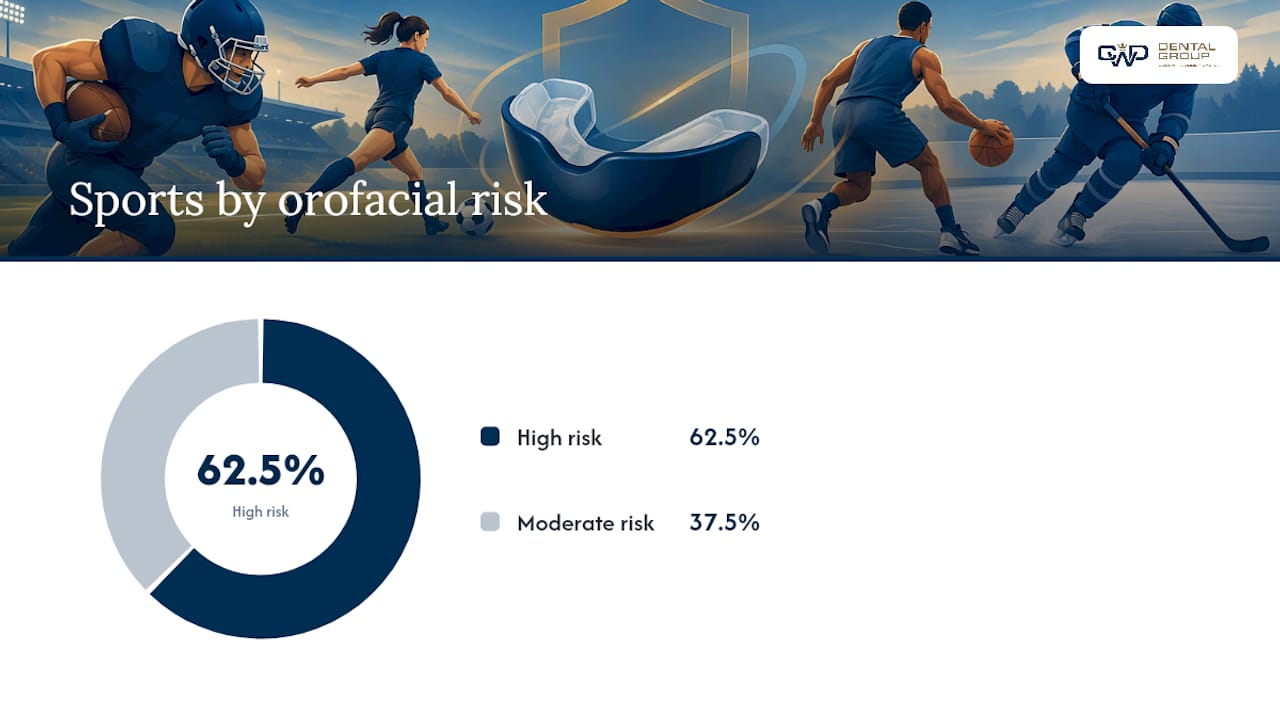
Not every sport carries the same orofacial risk, and that risk level should drive your decision more than price or brand name. Football, hockey, lacrosse, boxing, and wrestling sit at the high end, and many of their governing leagues actually mandate mouthguards as a condition of play. Basketball, soccer, and field hockey carry moderate risk. Guards aren't always required, but dentists still recommend them given how often elbows and stray equipment find a face mid-game.
Here's a practical sequence for narrowing down your choice:
- Identify your sport's contact level. Collision sports (football, hockey, boxing) call for custom or high-end boil-and-bite guards. Moderate-contact sports can often get by with a well-molded retail boil-and-bite guard.
- Check your league's rules. Some youth leagues specify guard type or color; find out before you buy.
- Consider age and growth. Youth athletes lose baby teeth and shift bite alignment fast, so a guard that fit perfectly last season may not fit this one. Recheck sizing at the start of every season.
- Flag orthodontic appliances. Athletes with braces need a guard designed with clearance zones that accommodate tooth movement; trimming a standard guard to fit around brackets is not a safe workaround, since the IADT/ASD guideline points out that shifting teeth change the fit constantly.
- Ask about the return or refit policy before you commit, especially for a custom guard where you're paying more upfront.
Parents supervising a young athlete's first mouthguard should watch the molding process closely if going the boil-and-bite route, and should plan on replacing the guard as new teeth erupt or old ones fall out, not just when it looks worn.
Pro Tip: If your child's guard smells sour no matter how often you clean it, or they keep pulling it out mid-practice to "fix" it, that's your sign it no longer fits. Don't wait for it to crack.
What Does the Custom Mouthguard Process Look Like at a Dentist?
Getting a custom guard made isn't complicated, but it does involve a few more steps than grabbing one off a shelf. The process typically runs through four stages: an exam to check your bite and any dental work that might affect the mold, an impression or digital scan of your upper arch, lab fabrication using multi-layer EVA material, and a fit check where the dentist adjusts the guard before you leave. Digital intraoral scanning has shortened this turnaround considerably compared to traditional impressions, and it gives the lab more consistent quality control over the final product.
Cost climbs with complexity. A single-layer basic custom guard costs less than one with multi-layer lamination, team colors, or extra thickness built in for a lineman or a hockey defenseman who takes checks against the boards every shift. Coverage area matters too. A guard that only protects the front teeth costs less than a full-arch design, though most dentists will steer collision-sport athletes toward full coverage regardless of price.
Custom is the better call when:
- You play a collision sport where a stock or boil-and-bite guard's shortcuts start to show under real contact.
- You wear braces or another fixed orthodontic appliance.
- You've had prior dental trauma, an existing implant, or crown work that a generic mold could damage.
- A boil-and-bite guard keeps slipping no matter how carefully you follow the molding instructions.
Before your appointment, bring a list of any current dental work, note your sport and position (a goalie's needs differ from a forward's), and ask what materials and thickness the practice recommends for your specific contact level.
Cleaning, Storage, and Replacement Basics
A mouthguard is only as protective as its condition, and hygiene habits are simple enough that there's no excuse for skipping them. Rinse the guard in cool or lukewarm water after every use, since hot water can warp the material. Brush it gently with a soft toothbrush and a neutral soap, or use a denture cleaning tablet on the schedule your dentist recommends.
Storage matters just as much as cleaning:
- Keep it in a ventilated case, never sealed in a damp bag where bacteria build up.
- Keep it away from direct heat, including a hot car dashboard or gym bag left in the sun.
- Keep pets away from it entirely; a chewed-up guard is a common and entirely avoidable replacement trigger.
Replace the guard the moment you notice cracks, a persistent odor that survives cleaning, visible distortion, or a fit that's gone loose. Youth athletes and anyone with braces should have fit rechecked more often, since growth and orthodontic movement change the mold underneath faster than adults realize.
Pro Tip: Smell it before you wear it each week. A guard that's starting to smell off, even after cleaning, is already past its useful life. Bacteria buildup doesn't reverse itself.
What Does the Evidence Actually Say About Mouthguards and Injury?
Mouthguards work, and the data on orofacial injury is not close. A 2024 systematic review and meta-analysis found that athletes who skip a mouthguard face roughly 2.33 times the risk of orofacial injury compared to athletes who wear one, a wide enough margin that the confidence interval never even approaches "no effect." That's the strongest, cleanest signal in this entire category.
Concussion protection is a different story. The same body of research puts the concussion risk ratio at 1.25, with a confidence interval that crosses 1.0, meaning the result doesn't reach statistical significance. An umbrella review of dentofacial injury and performance studies reached a similar conclusion: custom guards clearly outperform other types for injury prevention, but claims about performance or concussion benefits don't hold up consistently across studies.
Mouthguards belong in a layered protection strategy, not as a standalone answer to head injury. A well-fitted guard, a properly worn helmet, sound tackling or checking technique, and active concussion protocols all have to work together. None of them substitutes for the others.
The ADA and the IADT/ASD both frame their fabrication recommendations the same way: proper thickness, full arch coverage, and comfortable retention matter more than any single material claim on a package label. If a brand markets its guard primarily on concussion reduction, treat that claim skeptically. The injury-prevention case for mouthguards is real and well-supported. The concussion case isn't there yet.
What Dentists See Go Wrong With Mouthguard Fit
The fit mistakes are predictable once you've seen enough of them. Boil-and-bite guards molded with too much bite pressure, or remolded two or three times after the first attempt didn't feel right, both thin the material past the point of real protection. Heat damage from a hot glovebox or a dishwasher cycle shows up constantly too, warping a guard that fit fine the week before.
Braces cases are where a dentist's involvement actually changes the outcome. A clinic-made guard can leave clearance for tooth movement that a trimmed OTC guard never accounts for, and a repeat fit check catches problems before they become a broken guard mid-season. When an impact does cause a chipped tooth or knocked-out crown, same-day emergency appointments exist for exactly that reason. Don't wait out the pain until Monday.
— Kayle
Get a Custom-Fit Mouthguard Before the Next Season Starts
A local dental practice offers a direct path to a properly fitted custom mouthguard, removing the guesswork of molding one yourself at home. They build custom guards through a standard exam, impression, and fit-check process, and coordinate with braces cases and other orthodontic appliances that off-the-shelf guards can't accommodate safely.

Booking is straightforward: bring your sport, position, and any relevant dental history (crowns, braces, prior injuries) to your visit, and we'll walk you through material and thickness options suited to your level of contact. Families juggling multiple young athletes can pair a mouthguard fitting with a routine preventative dental visit to save a trip. And if an impact happens mid-season, whether it's a chipped tooth or a knocked-loose crown, our same-day emergency appointments mean you're not stuck waiting days for care. Visit our services page to see the full range of care we offer, or reach out to schedule a custom mouthguard consultation before your next practice.
This article is general information, not a substitute for advice from a qualified doctor. Consult a qualified healthcare professional about your own circumstances before acting on anything here.
Sources
- Athletic mouth protectors (mouthguards) | American Dental Association
- Position statement and recommendations for custom-made sport mouthguards (EA4SD)
- Impact of mouthguards on the prevention of dentofacial injuries and sports performance — umbrella review
FAQ
What Is the Best Type of Mouthguard for Sports?
For collision and high-contact sports, a dentist-made custom mouthguard offers the strongest fit and protection because it's built from an impression or digital scan of your exact bite. Boil-and-bite guards from brands like Shock Doctor or SISU Sports are a reasonable lower-cost option for moderate-contact sports when molded carefully.
What Are the Three Types of Mouthguards?
The three recognized types are stock (pre-made, no customization), boil-and-bite (heated and molded at home), and custom-made (fabricated by a dentist from an impression or scan), according to the IADT/ASD guideline. Each step up in type generally improves fit, retention, and durability.
What Is the Best Mouthguard for Kids to Use in Sports?
Youth athletes generally do well with a properly molded boil-and-bite guard for moderate-contact sports, but growing mouths and changing teeth mean fit should be rechecked every season. For collision sports, braces, or a history of dental trauma, a custom guard fitted by a dentist holds up better as teeth shift.
Why Do Some NFL Players Not Wear Visible Mouthguards?
Visible nonuse among some professional players usually comes down to personal habit, equipment choices, or facemask attachment style, not evidence that guards are unnecessary, according to ADA commentary on the topic. The injury-reduction data for mouthguard use applies regardless of what any individual pro chooses to wear on camera.