

A family dentist is a general practitioner licensed to treat patients of every age, from an infant's first tooth through a grandparent's crown replacement, under one roof. Knowing how to choose a family dentist for all ages means evaluating credentials, service range, comfort, and accessibility before you ever sit in the chair. The right choice delivers continuity of care across generations, which strengthens oral health outcomes for every family member over time. This guide walks you through each factor so you can make a confident, well-informed decision.
How to choose a family dentist for all ages: qualifications first
Credentials are the non-negotiable starting point. A licensed family dentist holds a Doctor of Dental Surgery (DDS) or Doctor of Dental Medicine (DMD) degree, plus state licensure. Beyond the degree, look for active membership in the American Dental Association (ADA) and adherence to 2026 clinical standards for infection control, digital imaging, and patient safety protocols.
Experience with every age group matters as much as the degree itself. A dentist who mainly treats adults may lack the behavioral techniques needed to put a nervous five-year-old at ease. Ask directly: what percentage of their patient base is under age 12, and what percentage is over 65? A true family practice serves a wide spread across both ends.
Continuing education credits signal that a dentist stays current. The ADA recommends ongoing training in areas like pediatric behavior management, geriatric oral health, and sedation safety. A dentist who pursues these courses beyond the minimum state requirement is investing in the full spectrum of family care.
- State dental license: Verify it is active and in good standing through your state dental board's online lookup tool.
- ADA membership: Signals commitment to ethical standards and continuing education.
- Pediatric training or experience: Confirms the dentist can handle young patients with patience and skill.
- Geriatric care familiarity: Covers dry mouth, medication interactions, and denture or implant needs common in older adults.
- Sedation certification: Required if the practice offers nitrous oxide or oral sedation for anxious patients.
Pro Tip: Ask the front desk for the dentist's bio before your first visit. A well-maintained bio lists specialty training, years in practice, and association memberships. If that information is not publicly listed, call and ask directly.
What services should a family dental practice offer?
A full-service family practice covers preventive, restorative, cosmetic, and emergency care. That range matters because your family's needs will shift over time. A toddler needs sealants and fluoride treatments. A teenager may need orthodontic evaluation. An adult needs restorative work. A senior may need implants or dentures. One practice handling all of it eliminates referrals and keeps records centralized.
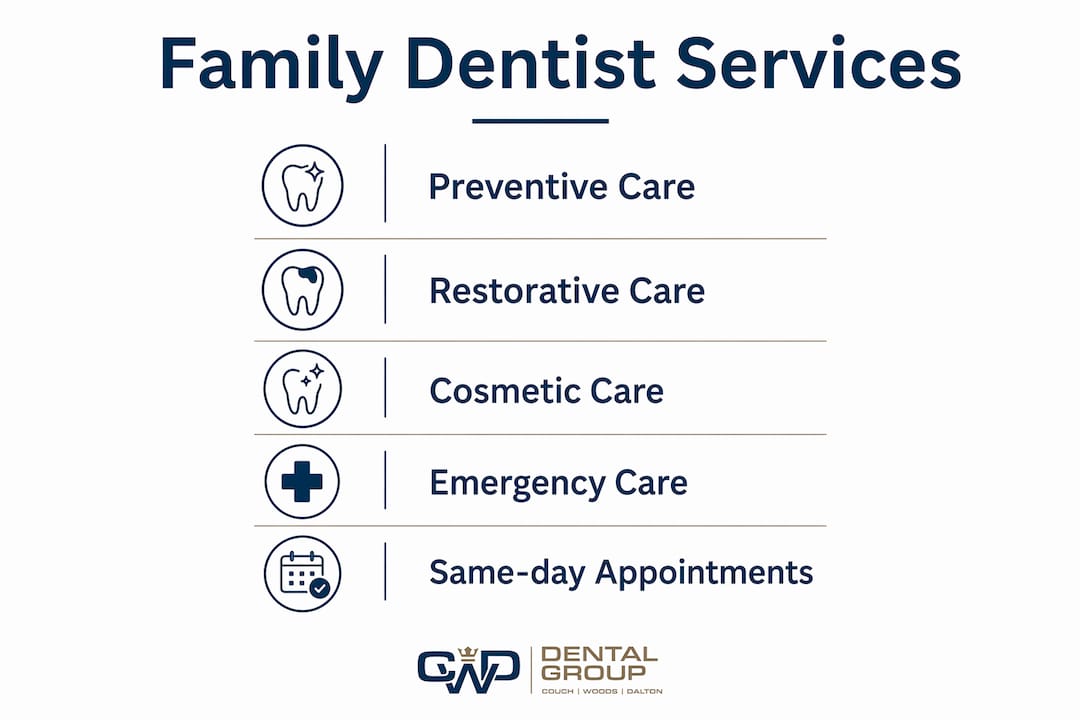
Same-day emergency appointments are a defining feature of a genuinely family-friendly clinic. A cracked tooth or knocked-out tooth cannot wait three weeks. Practices that offer same-day emergency access protect your family from gaps in urgent care.
Knowing whether advanced procedures are handled in-house or referred out is equally important. Specialty procedures like surgical extractions and root canals performed on-site mean faster treatment and fewer appointments at unfamiliar offices. Ask this question during your initial consultation.
Core services to confirm before committing to a practice:
- Preventive care: Exams, X-rays, cleanings, fluoride treatments, and sealants for children.
- Restorative procedures: Fillings, crowns, bridges, and dentures for adults and seniors.
- Orthodontic evaluation: In-house assessment or a clear referral pathway for braces or aligners.
- Cosmetic treatments: Whitening and bonding for adults who want aesthetic improvements.
- Emergency care: Same-day or next-day access for pain, trauma, or acute infection.
- Endodontics: Root canals performed in-house or a fast referral to an endodontist.
Modern family dental plans in 2026 often cover 100% of preventive services for in-network providers, with major procedures like crowns and root canals discounted 30–50% depending on plan tier. That coverage structure rewards families who choose a practice that handles everything in-house, since fewer referrals mean fewer out-of-network costs.
How do you evaluate comfort and accessibility for every patient?
Clinical skill alone does not make a great family dentist. The office environment, staff attitude, and scheduling flexibility determine whether your family actually shows up for appointments. A child who leaves a dental visit feeling scared will resist every future visit. A senior who cannot find parking or navigate stairs will skip preventive care.

Flexible scheduling and a multigenerational approach to patient care improve adherence across all age groups. Look for practices with early morning, evening, or Saturday hours. Families with school-age children and working parents cannot always make a 2:00 PM Tuesday appointment.
Assess the office environment on your first visit. Is the waiting area calm and welcoming for both children and adults? Does the staff greet patients by name? Do they explain procedures before starting them? Patient education and transparent treatment explanations are the foundation of long-term dental health for families.
- Child-friendly environment: Look for a calm, welcoming space without intimidating equipment on display in the waiting area.
- Sedation or calming options: Nitrous oxide, distraction techniques, or tell-show-do methods for anxious patients of any age.
- Accessible location: Proximity to home or school, ample parking, and ADA-compliant access for seniors or patients with mobility needs.
- Extended hours: Early morning, evening, or weekend slots that fit a working family's schedule.
- Staff communication style: Staff who explain procedures clearly and answer questions without rushing build lasting trust.
Pro Tip: Schedule a brief meet-and-greet visit before committing. Bring your youngest child. Watch how the staff interacts with them before any treatment begins. That interaction tells you more than any online review.
How to research and select the best dentist for families
Finding the right practice requires a structured approach, not just a Google search. Start with your insurance. Confirm which practices in your area are in-network for your family dental plan, and verify that preventive services for children are covered at 100%. Some 2026 plans offer no deductibles for children under age 13, which significantly reduces out-of-pocket costs for routine care.
Use review platforms like Google Reviews and Healthgrades to read patient feedback. Filter for reviews that mention children, seniors, or emergency visits. Those specific mentions reveal how the practice actually performs across age groups, not just for routine adult cleanings.
Prepare a short list of questions before your first consultation:
- What is your protocol for dental emergencies outside office hours? A practice without an after-hours contact or same-day emergency policy leaves your family without a safety net.
- Do you perform root canals and surgical extractions in-house? In-house specialty procedures reduce wait times and keep your family's care coordinated.
- How do you handle anxious or young patients? The answer reveals their behavioral management training and philosophy.
- What dental plans do you accept, and do you offer payment plans? Affordable family dentistry depends on clear financial policies upfront.
- How do you track family dental history across multiple patients? Practices that link family records can spot hereditary patterns earlier.
The first dental visit for a new family is primarily diagnostic and relational. Expect it to last 60–90 minutes and include exams, digital imaging, and a discussion of each family member's dental goals. Treatment rarely begins at that appointment. Bring a brief history of each family member's dental issues to help the dentist establish a baseline faster.
| What to check | Why it matters |
|---|---|
| Insurance network status | Determines your actual out-of-pocket cost for every visit |
| Emergency access policy | Protects your family when urgent issues arise outside business hours |
| In-house specialty procedures | Reduces referrals, wait times, and coordination gaps |
| Patient reviews mentioning children or seniors | Confirms real-world performance across all age groups |
| First visit structure | Sets expectations and builds the patient-dentist relationship |
The benefits of a family dentist extend well beyond convenience. Consolidated dental records across family members allow the dentist to identify hereditary oral health patterns, such as early-onset gum disease or bite alignment issues, before they become costly problems. That early detection is a clinical advantage no amount of separate specialist visits can replicate.
Key Takeaways
The best family dentist for all ages combines verified credentials, a full service range, accessible scheduling, and a patient-centered environment that works for toddlers and seniors alike.
| Point | Details |
|---|---|
| Verify credentials first | Confirm active state licensure, ADA membership, and experience with all age groups before booking. |
| Confirm in-house services | Practices that handle emergencies, root canals, and orthodontic evaluation on-site reduce referrals and gaps in care. |
| Check insurance compatibility | In-network providers maximize your family dental plan coverage, especially for preventive care. |
| Assess comfort and scheduling | Extended hours, child-friendly environments, and calming options determine whether your family keeps appointments. |
| Use the first visit strategically | Treat the initial appointment as a diagnostic and relationship-building session, not an expectation of immediate treatment. |
What choosing a family dentist taught me about long-term care
Most families focus almost entirely on clinical reputation when selecting a dentist. That is the right instinct, but it misses something I have seen matter just as much over time: the relational environment. A dentist who spends time explaining a seven-year-old's cavity in plain language, or who walks a nervous senior through an implant consultation without rushing, builds a level of trust that keeps families coming back for decades.
The multigenerational angle is genuinely underrated. When one practice tracks dental records across parents and children, patterns emerge that no individual specialist would ever catch. A child developing early gum inflammation may be showing the same hereditary pattern as a parent. That connection only becomes visible when the records live in the same place.
One misconception I see constantly: families expect treatment at the first visit. That first appointment is a diagnostic session. It is the dentist learning your family's history, not a cleaning assembly line. Going in with that expectation, and bringing a written summary of each family member's dental history, makes the whole process faster and more useful.
Clear communication is the final filter I apply. If a dentist or staff member cannot explain a treatment plan in plain language, that is a signal. The best family dental practices treat patient education as a clinical responsibility, not an afterthought. That commitment to transparency is what separates a good practice from one your family will trust for life.
— Kayle
Cwddentalgroup: family dental care for every age in Tallahassee
Cwddentalgroup serves families across every stage of life, from a toddler's first exam to a senior's restorative procedure, all under one roof in Tallahassee.

The practice offers same-day emergency dental care alongside routine preventive visits, cosmetic treatments, and advanced restorative procedures. Patients consistently highlight the staff's warmth and the practice's commitment to explaining every step of their care. Scheduling is flexible, with options designed to fit busy family calendars. When you are ready to find a dental home that works for every member of your household, book your visit with Cwddentalgroup and start building a long-term relationship with a team that knows your family by name.
FAQ
What age should a child first visit a family dentist?
The first dental visit should happen by age 1 or when the first tooth appears. Early visits establish a dental baseline and help children build comfort with the office environment.
Can a family dentist treat seniors and toddlers at the same practice?
Yes. A licensed family dentist is trained to treat all ages, from infants through seniors, adjusting techniques and treatment plans to match each patient's developmental and health needs.
What should I ask about emergency dental care when choosing a practice?
Ask whether the practice offers same-day emergency appointments and whether they have an after-hours contact. Knowing their emergency care policy before a crisis protects your family from urgent care gaps.
How do family dental plans affect which dentist I choose?
Choosing an in-network provider maximizes your coverage. Many 2026 family dental plans cover preventive services at 100% for in-network dentists, with major procedures discounted significantly depending on your plan tier.
How does a family dentist help detect hereditary dental issues?
Tracking dental records across family members allows the dentist to identify shared patterns like early gum disease or bite problems. That consolidated history enables earlier diagnosis and more targeted preventive care.