
Dental bonding is one of the fastest, most affordable ways to fix a chipped, gapped, or discolored tooth without drilling away healthy enamel. A dentist applies tooth-colored composite resin directly to the surface, shapes it by hand, and cures it with a light in a single appointment. For most localized cosmetic or minor restorative concerns, it delivers same-day results at a fraction of the cost of veneers or crowns.
At a glance, the biggest advantages of dental bonding are:
- Completed in one visit, usually under an hour per tooth
- Minimally invasive with little to no enamel removal
- No anesthesia required in most cases
- Significantly lower upfront cost than porcelain alternatives
- Fully repairable without replacing the entire restoration
If you have a single chipped tooth, a small gap, or mild surface discoloration, a bonding consultation is the logical first step.
Table of Contents
- What dental bonding actually is
- What happens during a bonding appointment
- The concrete benefits of dental bonding, explained
- How long dental bonding lasts
- What dental bonding costs and how insurance works
- The real downsides of dental bonding
- Dental bonding vs. veneers vs. crowns: which one fits your situation?
- Who is a good candidate for dental bonding?
- Aftercare and maintenance for bonded teeth
- Key Takeaways
- A dentist's perspective on when bonding is the right call
- Ready to see what bonding can do for your smile?
- Useful sources
What dental bonding actually is
Dental bonding uses a tooth-colored composite resin applied directly to the tooth surface to repair chips, fill gaps, or change a tooth's shape and color. Unlike veneers or crowns, it requires minimal or no enamel removal, which means the procedure is reversible and leaves your natural tooth structure intact.
Dentists use bonding for both cosmetic and restorative purposes:
- Cosmetic: chips, small gaps, minor staining, reshaping, or lengthening short teeth
- Restorative: small fractures, exposed root surfaces, and sealing cracks that cause sensitivity
- Interim: a temporary fix while saving for a more permanent restoration
Pro Tip: The composite resin comes in dozens of shades. An experienced dentist will layer multiple shades to match the translucency of your natural enamel, not just pick the closest single color. That layering step is what separates a result that looks real from one that looks patched.
What happens during a bonding appointment
Most patients are surprised by how quick and comfortable the process is. Anesthesia is usually not required because the procedure rarely involves removing enamel, which means there is nothing to numb.
Here is what a typical appointment looks like, step by step:
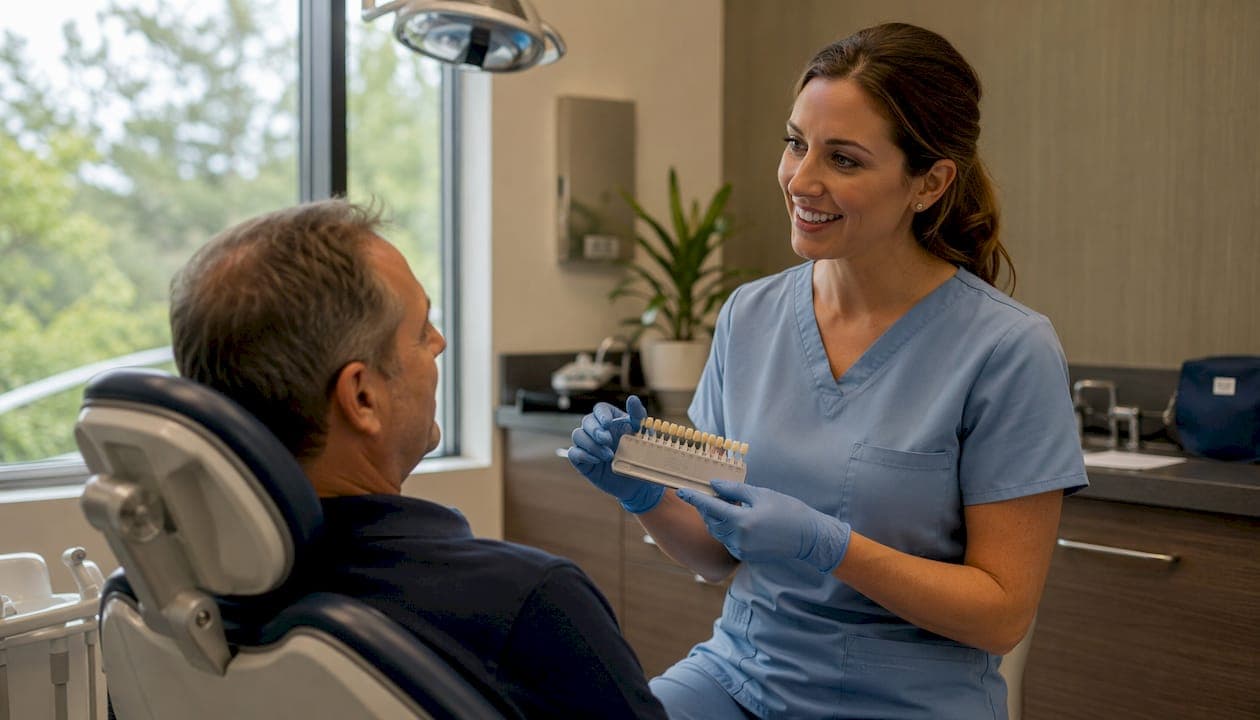
- Shade selection. The dentist matches the resin color to your surrounding teeth using a shade guide.
- Surface preparation. The tooth is lightly etched with a mild conditioning liquid to help the resin bond securely.
- Resin application. The putty-like composite is applied, then molded and shaped by hand to the desired contour.
- Curing. A blue ultraviolet light hardens the resin in seconds.
- Sculpting and polishing. The dentist trims any excess, refines the shape, and polishes the surface to match the sheen of adjacent teeth.
The whole process takes roughly 30–60 minutes per tooth and is almost always finished in a single visit. Most patients walk out the same day with a noticeably improved smile and no recovery period.
The concrete benefits of dental bonding, explained
This is where bonding earns its reputation. The cosmetic dental bonding benefits go beyond just aesthetics.
Cosmetic repairs bonding handles well:
- Chipped or cracked front teeth
- Small gaps between teeth (diastema)
- Mild to moderate surface discoloration that whitening cannot fix
- Teeth that look too short or slightly misshapen
- Uneven edges that catch the eye in photos
Restorative and protective uses:
- Covering exposed root surfaces to reduce sensitivity and slow plaque buildup
- Sealing hairline cracks before they deepen
- Replacing small areas of decay as an alternative to amalgam fillings
The practical advantages are just as compelling. Same-day results mean no temporary restorations, no second appointment, and no waiting weeks for a lab to fabricate something. Because enamel stays intact, future treatment options remain open. And if a bonded tooth chips years later, a dentist can repair it in a short appointment by adding fresh composite rather than replacing the whole restoration.
Bonding is also the smarter choice for younger patients who are still growing or for anyone who wants a reversible fix before committing to something permanent. For localized cosmetic concerns on otherwise healthy teeth, it is hard to beat.
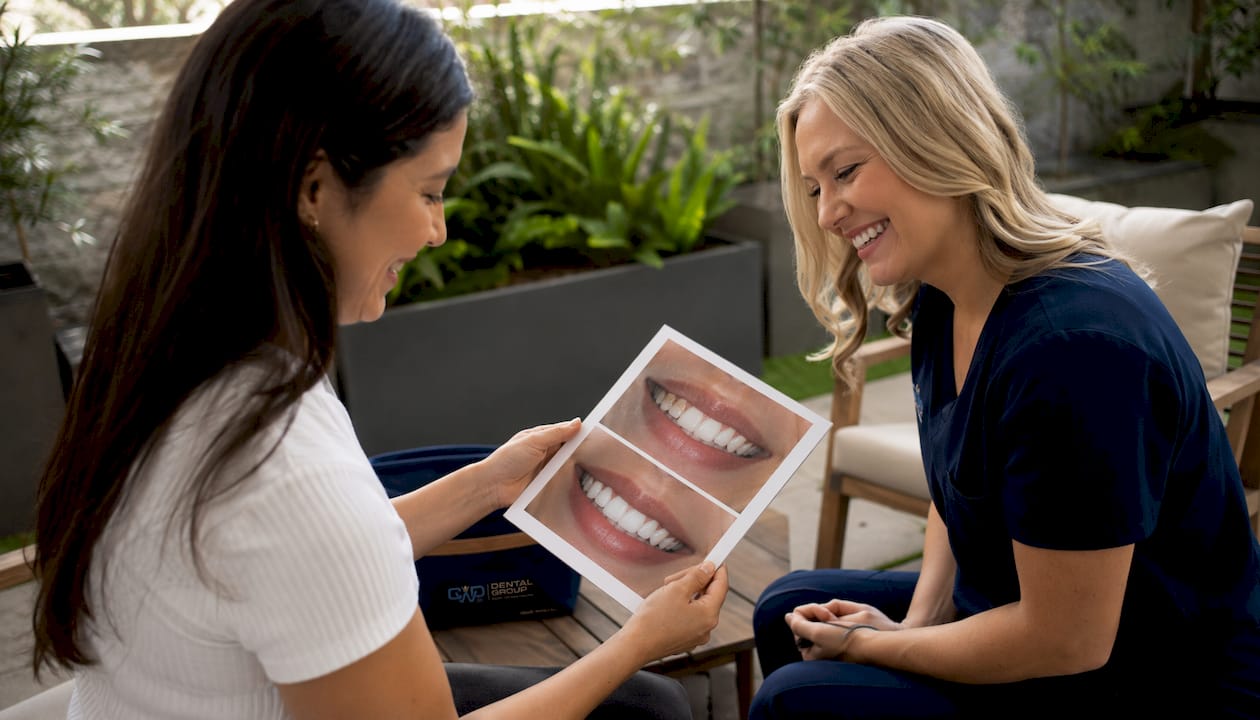
Pro Tip: Ask to see before-and-after photos of bonding cases your dentist has completed. Shade layering, micro-texture, and final polish are the three technical factors that determine whether the result looks natural or obvious. Good photos tell you whether your provider has mastered all three.
How long dental bonding lasts
Realistic expectations matter here. Composite bonding typically lasts about 3 to 10 years, with most patients seeing 5–7 years under normal conditions and good oral hygiene.
- Bruxism (grinding or clenching) puts high stress on the resin
- Biting hard objects like ice, pens, or fingernails
- Placement on chewing surfaces rather than front teeth
- Heavy consumption of coffee, red wine, or tobacco
What extends it:
- Consistent brushing and flossing
- Wearing a night guard if you grind
- Avoiding hard or crunchy foods in the first 24–48 hours after placement
- Scheduling periodic professional polishing
Timeline to know: Minor chips or surface staining on bonded teeth can usually be addressed with a quick touch-up appointment. Full replacement typically becomes necessary after several years, depending on location and patient habits. Front teeth used for biting may need attention sooner than teeth in lower-stress positions.
For a deeper look at what affects bonding longevity, including how it compares to veneers over time, the factors above are the ones that move the needle most.
What dental bonding costs and how insurance works
Cost is one of the strongest arguments for bonding. It is generally more affordable per tooth than porcelain veneers or crowns, often by a wide margin.
Cost range to expect: Dental bonding typically runs a moderate cost per tooth nationally, though prices vary based on provider experience, geographic location, and the complexity of the case. Veneers and crowns generally start significantly higher.
Why the final number varies:
- Number of teeth being treated
- Complexity of the repair (a small chip vs. reshaping an entire tooth)
- Provider's experience and geographic market
- Whether the case is restorative or purely cosmetic
On the insurance side, the distinction between restorative and cosmetic matters a lot. When bonding addresses a chip or decay, insurance may cover a substantial portion of the cost. Purely cosmetic bonding is usually excluded. Always call your insurer before the appointment to confirm coverage and get the procedure code from your dentist.
For patients paying out of pocket, cosmetic dental financing options can spread the cost across manageable monthly payments. Ask your dental office for a written treatment plan with a cost breakdown and their policy on repairs or replacements before you commit.
The real downsides of dental bonding
Bonding is not the right answer for every situation. Knowing the limits helps you make a smarter decision.
Main drawbacks:
- Less durable than porcelain veneers or crowns
- More prone to staining over time, especially with coffee, wine, and tobacco
- May chip under heavy biting force
- Requires periodic touch-ups that add up in cost over years
Clinical limitations:
- Not suitable for large restorations or teeth with significant structural damage
- Difficult to achieve perfectly uniform shade across multiple adjacent teeth
- High-force bite areas (molars) are poor candidates
"Bonding is best suited for localized cosmetic concerns on otherwise healthy teeth; large smile makeovers often require veneers for shade stability and durability." — Legacy Dental
When your dentist will recommend something else:
- Veneers: multiple front teeth needing a uniform, stain-resistant result
- Crowns: a tooth with significant structural damage or after a root canal
- Orthodontics: gaps or misalignment that bonding would only partially mask
- Implants: a missing tooth rather than a damaged one
Dental bonding vs. veneers vs. crowns: which one fits your situation?
| Feature | Composite Bonding | Porcelain Veneers | Dental Crowns |
|---|---|---|---|
| Invasiveness | Minimal, no enamel removal | Moderate, thin enamel layer removed | High, significant tooth reduction |
| Durability | 3–10 years (typically 5–7 with good care) | Longer lifespan | Extended lifespan |
| Stain resistance | Moderate | High | High |
| Repairability | Easy, add fresh composite | Difficult, usually full replacement | Difficult, usually full replacement |
| Number of visits | 1 | 2–3 | 2–3 |
| Relative cost | Lowest | Higher | Highest |
| Best for | Single chips, gaps, minor stains | Multiple teeth, full-smile uniformity | Structural damage, post-root canal |
How to decide:
- Choose bonding when the concern is isolated, the tooth is structurally healthy, and you want a reversible, same-day fix.
- Choose veneers when you want consistent shade across several front teeth and are ready for a longer-lasting, less repairable solution.
- Choose a crown when the tooth has significant decay, fracture, or has undergone a root canal and needs full structural protection.
For a broader look at how these options fit into cosmetic dental procedures, the comparison above covers the most common decision points. You can also explore the bonding vs. veneers breakdown from an independent dental perspective.
Who is a good candidate for dental bonding?
Bonding works best for a specific type of patient. Knowing whether you fit that profile saves time and sets realistic expectations.
Good candidates:
- Healthy teeth with one or two localized cosmetic concerns
- Patients who want a quick, reversible fix before committing to veneers
- Younger patients whose teeth are still developing or who want to preserve enamel
- Anyone with a chipped, slightly gapped, or mildly discolored tooth
- Patients using bonding as an interim solution while saving for permanent restorations
Less ideal candidates:
- Patients with extensive enamel loss or deep structural damage
- Anyone needing uniform shade across four or more front teeth
- Heavy grinders without a plan for a night guard
- Patients with very dark intrinsic staining (tetracycline staining, for example) that composite cannot fully mask
Questions to bring to your consultation:
- How long do you expect bonding to last on my specific tooth?
- What is your repair and replacement policy if it chips?
- How will you match the shade to my surrounding teeth?
- Am I a better candidate for bonding or veneers given my goals?
- Do I need a night guard to protect the restoration?
Aftercare and maintenance for bonded teeth
The good news: there is no real recovery period. Most patients leave the office and go about their day normally. A little sensitivity for the first 24 hours is common and fades on its own.
Short-term (first 48 hours):
- Avoid very hard or crunchy foods that could stress the fresh resin
- Skip heavily pigmented foods and drinks like coffee, red wine, and berries if possible
- Do not use the bonded tooth to bite into hard objects like crusty bread or ice
Daily maintenance:
- Brush twice daily with a non-abrasive toothpaste (avoid whitening formulas with harsh abrasives)
- Floss daily, paying attention to the margins where resin meets tooth
- Limit staining foods and habits when you can, or rinse with water after consuming them
Periodic care:
- Schedule professional polishing at your regular cleanings to restore surface luster
- Address chips or rough edges promptly before they worsen
- Wear a night guard if you grind, and replace it when it shows wear
For more detailed tips on long-lasting bonding, the maintenance habits above are the ones that consistently extend the lifespan of composite restorations.
Key Takeaways
Dental bonding is the most practical option for isolated cosmetic or minor restorative concerns on healthy teeth, delivering same-day results at a lower cost than any porcelain alternative.
| Point | Details |
|---|---|
| Single-visit convenience | Most bonding appointments finish in under an hour with no recovery time needed. |
| Realistic lifespan | Composite bonding typically lasts about 3 to 10 years (most commonly 5–7) with normal conditions and good oral hygiene. |
| Cost and insurance | Restorative bonding may be covered 50–80% by insurance; cosmetic cases are usually out of pocket. |
| Know the limits | Bonding is not ideal for multiple adjacent teeth, heavy grinders, or significant structural damage. |
| Cwddentalgroup | CWD Dental Group offers same-day cosmetic bonding in Tallahassee with an experienced team focused on natural-looking results. |
A dentist's perspective on when bonding is the right call
The conventional wisdom around dental bonding tends to undersell it in one direction and oversell it in another. Patients read that it "only lasts a few years" and assume it is a throwaway fix. Others assume it can do everything veneers do at a lower price. Neither is quite right.
What gets lost in most of these conversations is the role of provider technique in the outcome. Shade layering, micro-texture, and final polish are not finishing touches. They are the difference between a result that photographs naturally and one that looks like a patch. A dentist who rushes the polish step or applies a single flat shade will produce a result that looks fine in the chair and obvious in sunlight. That is not a bonding problem. It is a technique problem.
The cases where bonding genuinely shines are the ones where patients come in with a single chipped front tooth or a small gap that has bothered them for years. One appointment, no drilling, no temporaries, and they leave looking like the chip never happened. That is a hard outcome to argue with.
Where patients get into trouble is treating bonding as a substitute for orthodontics or as a way to avoid the conversation about veneers when multiple teeth are involved. Closing a large gap with composite on two teeth works short-term. But the forces involved, and the difficulty of matching shade across multiple restorations over time, mean those patients often spend more in cumulative touch-ups than a veneer case would have cost upfront.
The honest answer to "is dental bonding worth it?" is: yes, for the right case. A good consultation will tell you whether your situation is that case.
Ready to see what bonding can do for your smile?
CWD Dental Group offers same-day cosmetic bonding appointments in Tallahassee, with a team experienced in shade matching, layering technique, and the kind of final polish that makes the result look completely natural.
Whether you have a chip that has been bothering you for months or a small gap you have learned to hide in photos, the first step is a straightforward evaluation. The team at CWD Dental Group will assess your tooth, walk you through realistic expectations for longevity and cost, and give you a clear picture of whether bonding or another option fits your goals better.
Same-day appointments are available, including for urgent dental concerns that need immediate attention. Book your consultation and find out exactly what bonding can fix for you.
Useful sources
- Cleveland Clinic: Dental Bonding — Clinical overview of the procedure, materials, and what to expect; used to support the definition, procedure steps, and staining risk sections.
- World Health Organization: Oral Health — Authoritative global context on oral health priorities; useful background on why accessible, minimally invasive treatments matter.
- Legacy Dental: Is Dental Bonding Worth It? — Clinician-written analysis of bonding's strengths, limits, and technique factors; cited throughout the benefits, comparison, and perspective sections.
- Sonoran Desert Dentistry: Pros and Cons of Dental Bonding — Patient-focused breakdown of anesthesia expectations and comfort during the procedure.
- Serenity Dental: Complete Patient Guide — Covers insurance coverage scenarios for restorative vs. cosmetic bonding; cited in the costs and insurance section.
- CWD Dental Group: Dental Bonding in Tallahassee — Local practice guide with service details, case examples, and scheduling information for Tallahassee patients.