
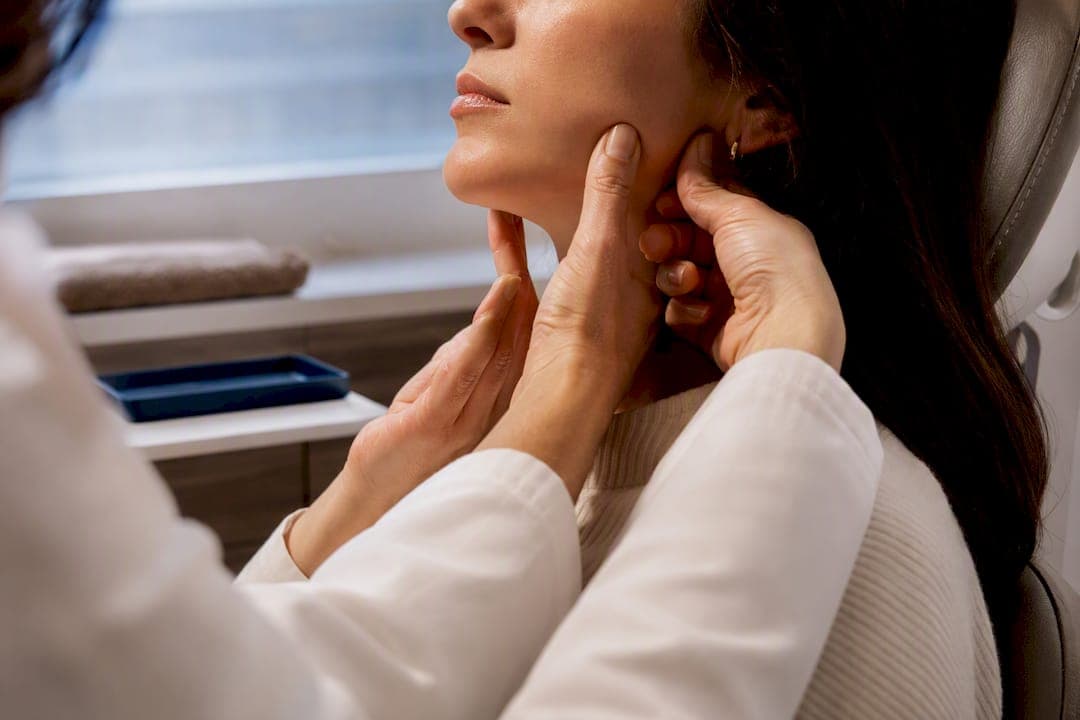
Masseter Botox reduces muscle activity and pain for many people with symptomatic bruxism, and randomized trial data backs that up. Injections start working within days, become measurable by around 2 weeks, and typically peak between 4 and 12 weeks before wearing off by 3 to 6 months. It isn't a cure. Proper candidates need a dental exam and screening for obstructive sleep apnea before treatment, and grinding often returns once the toxin wears off.
TL;DR:
- Most clinical studies show that masseter Botox reduces muscle activity and pain for about 12 weeks, with effects fading by 6 months, necessitating repeat treatments for sustained relief.
- The optimal dosing varies: lower doses around 10 MU per side minimize side effects and last approximately 3-4 months, while higher doses in the range of 20 to 30 units extend the effect but increase the risk of side effects like chewing fatigue.
- Proper candidate screening must include dental assessment and sleep apnea evaluation to prevent masking underlying airway issues, as Botox does not address neurological or airway-triggered bruxism.
- Side effects are generally minor and temporary, with chewing fatigue being the most common, and complications like bulging or asymmetry stemming from improper injection technique.
- Botox relaxes the masseter temporarily by blocking acetylcholine release, but it does not treat the neural or sleep-related causes of bruxism, making it a symptom management tool rather than a cure.
Table of Contents
- What Does the Clinical Evidence Say About Masseter Botox Grinding Relief?
- How Does Botox Reduce Jaw Clenching and Grinding?
- What Happens During a Masseter Botox Appointment?
- What Are the Side Effects and Risks of Masseter Botox?
- Who Is a Good Candidate for Masseter Botox Grinding Treatment?
- Are Night Guards or Splints Better Than Botox for Grinding?
- What CWD Dental Group Sees in Practice
- The Gap Between Botox Marketing and Bruxism Reality
- Ready to Talk to a Dentist About Your Grinding?
- Key Studies Behind Masseter Botox for Grinding
- Sources
- FAQ
What Does the Clinical Evidence Say About Masseter Botox Grinding Relief?
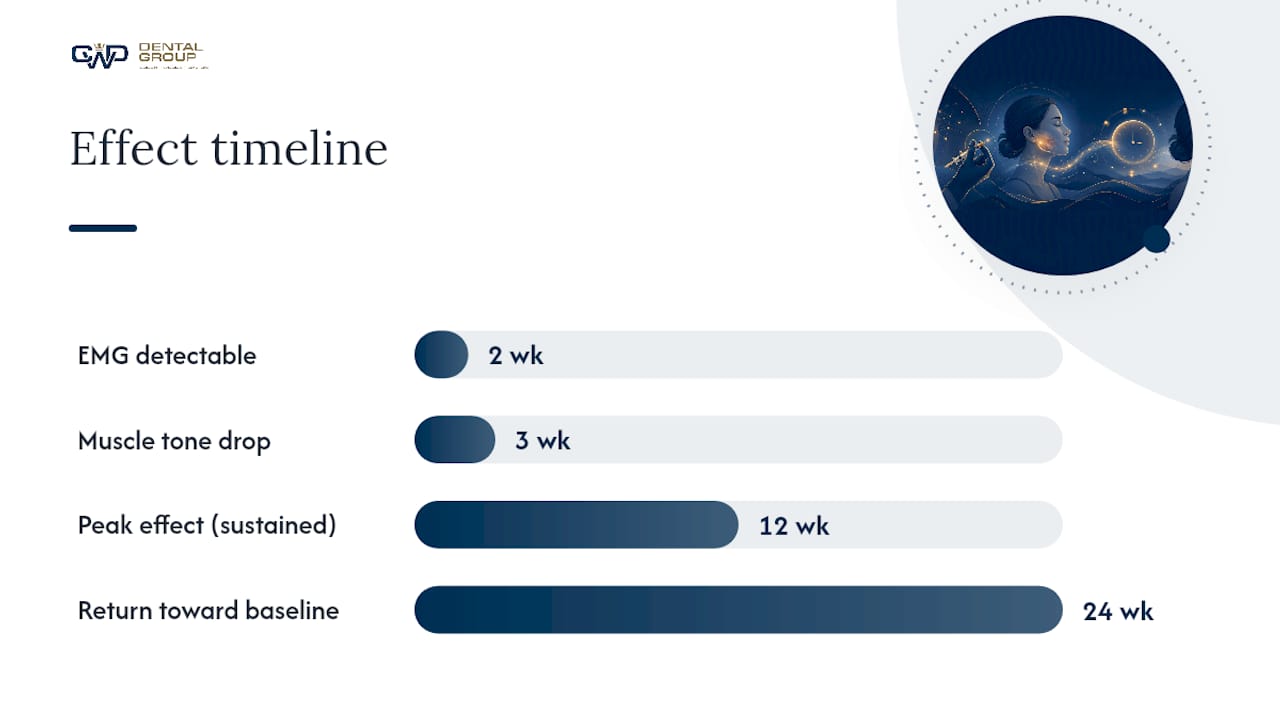
The strongest data point comes from a randomized controlled trial that injected 10 MU of botulinum toxin type A per side into the masseter muscle of patients with nocturnal bruxism. Researchers tracked electromyography (EMG) readings, which measure electrical activity in the muscle during clenching and grinding episodes, alongside patient-reported pain on a Visual Analog Scale (VAS). The trial found significant reductions in both EMG activity and VAS pain scores, with the effect showing up by 2 weeks, holding steady around 12 weeks, and drifting back toward baseline by 6 months.
That timeline matters because it tells you what to expect, not just whether the treatment "works." A single round of injections buys you roughly a season of relief, not a permanent fix.
A separate longitudinal study looked at this from a different angle. Instead of EMG or pain scores alone, researchers used myotonometry, a device that measures muscle tone and stiffness directly through the skin. In a group of 57 patients, masseter tone and stiffness dropped significantly at both 3 weeks and 3 months post-injection. The interesting wrinkle: patients who started with higher baseline muscle tension saw the biggest improvements. If your masseters are working overtime every night, you likely have more room to gain.
Here's how the outcome measures stack up across the available trial data:
- EMG muscle activity: Significantly reduced, detectable by 2 weeks, sustained through roughly 12 weeks.
- VAS pain scores: Meaningful improvement paralleling the EMG changes.
- Bite force: Reduced in the weeks following injection, generally recovering as the toxin wears off.
- Muscle tone and stiffness (myotonometry): Significant drops at 3 weeks and 3 months, more pronounced in patients with higher starting tension.
By the numbers: In the primary RCT, a 10 MU per-side dose produced measurable EMG and pain improvements within 2 weeks, held for about 12 weeks, and returned toward baseline by 6 months.
None of this makes masseter Botox a settled science with a single agreed-upon protocol. The trials behind these findings share real limitations. Sample sizes are small, often in the dozens rather than the hundreds, which limits how confidently the results generalize to every type of bruxism patient. Dosing protocols vary from study to study, so a 10 MU low-dose trial and a clinical practice using 25 units per side aren't directly comparable. Outcome measures differ too. Some studies lean on EMG, others on patient-reported pain, others on mechanical muscle testing, which makes it hard to build a single unified picture of "how well" the treatment works across the board.
What the evidence does support consistently, across different measurement methods and research teams, is the core pattern: injected masseters relax, patients report less pain, and the effect fades over months rather than lasting indefinitely.
How Does Botox Reduce Jaw Clenching and Grinding?
Botulinum toxin type A works by blocking the release of acetylcholine, the chemical messenger that tells your muscle fibers to contract, at the neuromuscular junction. Without that signal, the masseter can't clench as forcefully. The muscle isn't destroyed or permanently altered. It's temporarily quieted, and the effect fades as your nerve endings regenerate their signaling capacity.
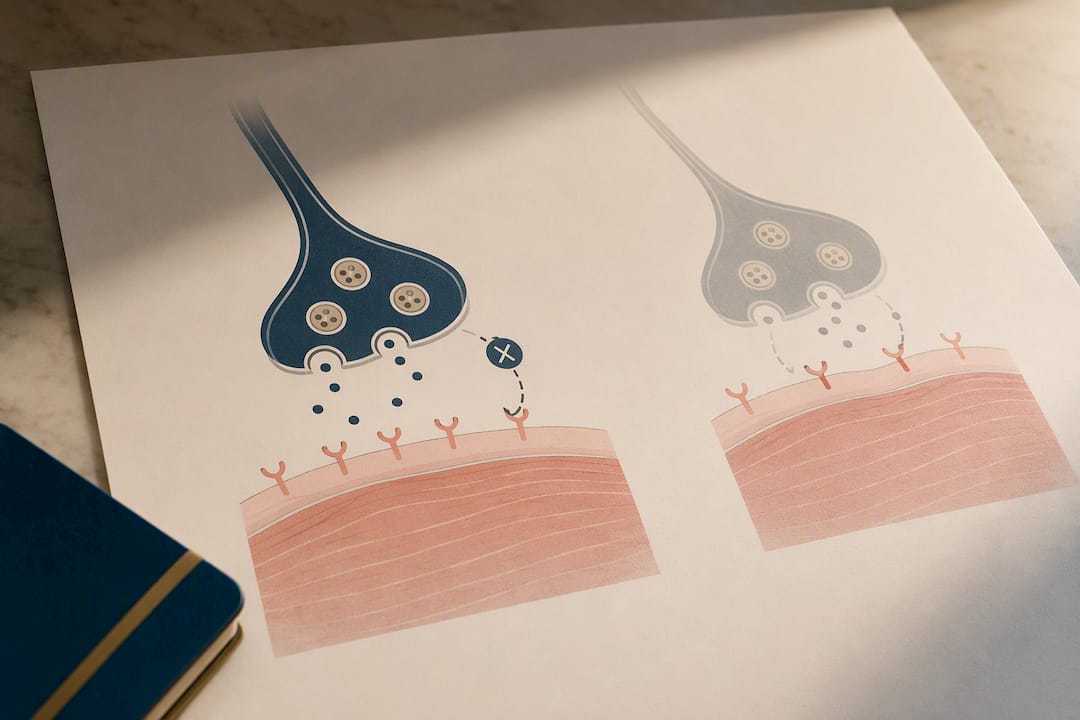
This is a critical distinction for anyone hoping Botox will "cure" bruxism. Grinding often originates in the central nervous system, tied to sleep arousal patterns, stress, and airway physiology, not the masseter muscle itself. Botox treats the downstream muscular consequence, the clenching and grinding force, without touching whatever is triggering the brain to send that signal in the first place. That's why stabilization splints and sleep evaluations still matter even for patients getting injections.
Dosing varies more than most patients expect. The low-dose RCT discussed above used 10 MU per side, a conservative amount chosen specifically to minimize functional side effects while still measuring a clinical benefit. Many practices treating bruxism or pursuing jawline slimming use higher amounts, commonly in the range of 20 to 30 units per side, particularly when the goal includes both symptom relief and visible reduction of masseter bulk.
The dose you receive shapes both the strength and the duration of the effect:
- Onset: Typically begins within a few days as acetylcholine transmission slows.
- Measurable effect: Detectable around 2 weeks, matching the RCT's EMG and pain findings.
- Peak effect: Usually falls between 4 and 12 weeks post-injection.
- Return of function: Grinding and clenching intensity commonly return between 3 and 6 months.
That trade-off between dose and function drives a lot of clinical decision-making. A higher dose gives you a slimmer jawline and a longer-lasting reduction in muscle bulk, but it also raises the odds of noticeable chewing fatigue, especially with tough foods, in the first few weeks. A conservative dose aimed purely at bruxism relief keeps more of your normal bite force intact, at the cost of a shorter window before you need a repeat treatment. Neither approach is objectively better. It depends on whether you're chasing symptom control, facial contouring, or both at once.
What Happens During a Masseter Botox Appointment?
A proper evaluation starts before any needle comes out. A clinician reviews your symptom history, checks for occlusal wear (the flattened, chipped, or shiny patches grinding leaves on tooth surfaces), and often screens for obstructive sleep apnea (OSA) using tools like the Epworth Sleepiness Scale and questions about snoring and witnessed pauses in breathing. Skipping that step is a genuine safety issue, since untreated OSA and bruxism frequently overlap, and masking clenching symptoms without addressing an airway problem can leave the underlying issue unmanaged.
If you notice new tooth sensitivity, unexplained jaw soreness, or visible wear when you look in the mirror, that's worth a dental evaluation on its own, independent of any Botox decision.
Once a patient is cleared, the injection technique itself follows a fairly consistent pattern across experienced providers:
- Marking the safe zone. The clinician palpates the masseter while you clench, identifying the muscle's borders and avoiding the parotid gland and facial nerve branches nearby.
- Selecting injection points. Most protocols use 2 to 4 points per side, distributed across the muscle belly rather than concentrated in one spot.
- Targeting depth. Injections go into the deep muscle belly, not the superficial layer. Superficial placement is the leading cause of complications like paradoxical bulging, where uninjected muscle fibers compensate and create an unwanted bulge.
- Aspiration and delivery. The provider aspirates to confirm the needle isn't in a blood vessel, then delivers the measured dose slowly.
- Baseline documentation. Photos and, in more thorough practices, functional measures like bite force or a pain scale score get recorded before you leave, giving both patient and provider something concrete to compare at follow-up.
Aftercare instructions are simple but matter more than patients expect. Avoid pressing on or massaging the treated area for about 4 hours to reduce the chance of the toxin migrating to nearby muscles. Stick to a softer diet for the first 2 weeks while the muscle adjusts to reduced strength. Most clinics schedule a follow-up around 4 to 6 weeks to assess results and address any asymmetry, with maintenance treatments typically timed to the 3 to 6 month mark as the effect fades.
What Are the Side Effects and Risks of Masseter Botox?
Most side effects from masseter Botox are minor and temporary. Bruising and soreness at the injection sites are common in the first few days, similar to any injection. A more distinctive side effect is chewing fatigue, a sense that tough foods like steak or raw vegetables take more effort than usual, which tracks directly with the reduced bite force the muscle now generates.
That bite-force reduction follows a fairly predictable pattern. Literature reviewing adverse effects after masseter injections describes force reduction typically appearing within 1 to 4 weeks of treatment, with most patients seeing their chewing strength recover by around 12 weeks as the toxin's effect fades. If you've got a physically demanding job that involves a lot of talking or a diet heavy on chewy foods, that window is worth planning around.
Less common complications carry more visible consequences, and they're almost always tied to technique rather than the drug itself:
- Paradoxical bulging: Uninjected superficial fibers compensate for the weakened deep muscle, creating an unexpected bulge, particularly when clenching. This traces back to injections placed too superficially.
- Smile asymmetry: Diffusion of the toxin toward the risorius or zygomaticus muscles, usually from injections placed too anterior or too shallow, can pull one side of the smile differently than the other.
- Sunken or hollow cheeks: More often seen with higher, cosmetically driven doses over repeated treatment cycles, as sustained muscle atrophy changes the lower face's contour.
By the numbers: Reported bite-force reduction after masseter Botox commonly emerges within 1 to 4 weeks and resolves by around 12 weeks in multiple studies reviewing post-injection complications.
If paradoxical bulging shows up, it typically appears 4 to 8 weeks after the original treatment, once the deep fibers have relaxed enough for the compensating superficial fibers to stand out. The fix isn't repeating the original dose. A small touch-up, often just 5 to 10 units placed more precisely into the bulging superficial fibers, tends to correct it without over-treating the muscle.
Contact your provider promptly if you notice difficulty swallowing, trouble speaking, or drooping that extends beyond mild asymmetry. Those symptoms are rare but signal that the toxin has spread further than intended and need clinical evaluation, not a wait-and-see approach.
Who Is a Good Candidate for Masseter Botox Grinding Treatment?
The best candidates share a specific profile: symptomatic bruxism causing real jaw pain, visible tooth wear, or headaches, especially in patients who've already tried a night guard without adequate relief. Interestingly, patients who start with higher baseline masseter tension, measured objectively through tools like myotonometry, tend to see larger improvements than those with milder muscle overactivity. If your grinding is severe enough that your dentist has flagged significant enamel loss, you're likely in the group most likely to benefit.
Certain situations call for caution or outright avoidance. These include:
- Pregnancy or breastfeeding, where botulinum toxin hasn't been adequately studied for safety.
- Neuromuscular diseases like myasthenia gravis, where blocking neuromuscular transmission further carries added risk.
- Active infection or skin issues at the planned injection site.
- Known allergy to any component of the botulinum toxin formulation.
Screening for obstructive sleep apnea deserves its own emphasis. Clinicians often use the Epworth Sleepiness Scale, a short questionnaire measuring daytime drowsiness, alongside direct questions about snoring, gasping, or witnessed breathing pauses during sleep. The concern is straightforward: masseter Botox reduces jaw-closing force, and treating grinding without ruling out OSA first risks masking a sleep-disordered breathing problem that needs its own management, not muscle relaxation.
Botox for bruxism generally sits as a second or third step in a stepped-care pathway, after conservative options like night guards and behavioral changes, and sometimes alongside referral to a TMD specialist or sleep medicine physician when pain or airway concerns run deeper than a straightforward muscle issue.
Are Night Guards or Splints Better Than Botox for Grinding?
Stabilization splints, the custom-fitted night guards a dentist provides, remain the standard first-line defense against bruxism, and for good reason. They physically protect your teeth from the wear and fracture risk that grinding causes, and the evidence base for that protective role is well established. What splints don't do is stop the neurological signal driving the grinding in the first place. Comparative reviews describe splints and Botox as playing complementary roles rather than competing ones. One protects the teeth; the other reduces the muscle force behind the damage.
Behavioral approaches round out the foundation. Stress management, physical therapy targeting jaw and neck tension, and biofeedback techniques all address contributing factors that a splint or an injection can't touch directly. For patients whose grinding ties into sleep-disordered breathing, treating the underlying OSA often reduces bruxism episodes as a side effect of better sleep quality overall.
Clinicians typically add Botox when conservative measures haven't fully solved the problem: persistent jaw pain despite consistent splint use, or visible masseter hypertrophy that a night guard was never going to address since it's a muscle size issue, not a dental one.
A quick way to weigh the options:
- Night guards: Protect teeth directly, no systemic side effects, require nightly compliance, don't reduce muscle overactivity itself.
- Behavioral therapy and sleep medicine: Address root causes, no injection risk, slower to show results, requires ongoing effort.
- Masseter Botox: Reduces pain and muscle activity measurably, effects fade in 3 to 6 months, carries injection-related risks and cost, doesn't stop the neurological grinding trigger.
What CWD Dental Group Sees in Practice
Patients who come in asking about masseter Botox usually fall into one of two camps: they're in real pain from grinding, or they're curious about the jawline-slimming side benefit and mention the grinding almost as an afterthought. The practice treats both starting points the same way, with a full dental evaluation first. That means checking for occlusal wear, discussing symptom history, and asking the sleep-related questions that too many providers skip.
Same-day emergency access matters here more than people expect. A patient with acute jaw pain from an overloaded masseter shouldn't have to wait weeks just to get assessed for options, including Botox as one treatment path among several.
Baseline photos and symptom notes are documented before treatment, with follow-up visits scheduled around the 4 to 6 week mark, and a longer-term check near 3 months. That rhythm mirrors what clinical data shows: change by 2 weeks, a plateau through roughly 12 weeks, and a conversation about maintenance once the effect starts fading. If tooth wear or sensitivity shows up alongside grinding symptoms, that can be addressed as part of the same visit rather than treated as a separate problem.
- Full dental exam and symptom history before any injection discussion.
- Screening questions related to sleep quality and airway symptoms.
- Baseline photo documentation for objective before-and-after comparison.
- Follow-up scheduling aligned with when clinical effects typically peak and fade.
Booking an initial evaluation can be a practical next step for anyone weighing masseter Botox against a night guard or wondering whether their grinding has already caused dental damage worth addressing first.
The Gap Between Botox Marketing and Bruxism Reality
Most of what circulates online about masseter Botox treats it like a grinding cure. It isn't. The trial data is genuinely encouraging, real reductions in EMG activity, real pain relief, measurable within weeks, but every study also shows the effect fading by 6 months. That's not a flaw in the treatment. It's just what botulinum toxin does. Anyone marketing it as a permanent fix is overselling a temporary muscular intervention for what is often a neurological or airway-driven habit.
The part conventional advice underplays is the OSA screening step. It gets mentioned in passing on most patient-facing pages, if at all, yet it's arguably the single most consequential piece of the pre-treatment workup. Masking clenching force in someone with undiagnosed sleep apnea doesn't just miss the point. It could delay recognition of a condition with real cardiovascular and cognitive stakes.
If you're evaluating this treatment, prioritize the screening conversation over the dosing conversation. Ask what your provider checks for before discussing dosing options.
— Kayle
Ready to Talk to a Dentist About Your Grinding?
If jaw pain, tooth wear, or morning headaches have you wondering whether masseter Botox makes sense for you, the first move is a proper evaluation, not a guess based on what you've read online. Some dental practices offer same-day emergency appointments alongside a full range of services, so you're never stuck waiting weeks just to get a professional opinion on grinding-related damage or jaw pain.
A typical visit starts with a dental exam to check for wear patterns and bite issues, a conversation about your symptoms and sleep habits, and a discussion of whether Botox, a night guard, or a combination of both fits your situation. Bring a list of your symptoms, note how long you've noticed grinding or jaw soreness, and mention any prior dental work on affected teeth. From there, Cwddentalgroup can walk you through its full range of services, including Botox, restorative care for worn teeth, and follow-up scheduling built around when treatment effects are actually measurable. Book an assessment and get a straight answer about what's driving your grinding, not just a prescription for it.
Key Studies Behind Masseter Botox for Grinding
The clinical claims throughout this guide trace back to a small set of primary sources worth knowing if you want to read further:
- Evaluation of the Efficacy of Low-Dose Botulinum Toxin Injection Into the Masseter Muscle for the Treatment of Nocturnal Bruxism: A Randomized Controlled Clinical Trial, the primary RCT behind the EMG and VAS pain findings.
- Functional Effects of BoNT-A Application in Masseter Muscle in Patients with Symptoms of Bruxism, the 57-patient longitudinal study using myotonometry.
- The Use of Low-Dose Botulinum Toxin Injection Into the Masseter Muscle to Treat Sleep Bruxism, the clinical trial registration outlining dosing protocol and inclusion criteria.
- Literature review analyzing adverse effects associated with botulinum toxin injection in the masseter muscle, covering complication rates and timing.
This article is general information, not a substitute for advice from a qualified doctor. Consult a qualified healthcare professional about your own circumstances before acting on anything here.
Sources
- Evaluation of the Efficacy of Low-Dose Botulinum Toxin Injection Into the Masseter Muscle for the Treatment of Nocturnal Bruxism: A Randomized Controlled Clinical Trial
- Functional Effects of BoNT-A Application in Masseter Muscle in Patients with Symptoms of Bruxism
- Literature review analyzing adverse effects associated with botulinum toxin injection in the masseter muscle
- The Use of Low-Dose Botulinum Toxin Injection Into the Masseter Muscle to Treat Sleep Bruxism
FAQ
Will Insurance Cover Masseter Botox for Teeth Grinding?
Coverage depends heavily on your specific plan and how the treatment is coded, since many insurers still classify masseter Botox as cosmetic even when it's prescribed for bruxism pain. Some plans cover it when documented medical necessity, like TMJ-related pain or failed conservative treatment, is on file. Check directly with your insurer and ask your provider's office to confirm current pricing, since Cwddentalgroup's Botox pricing is listed on its services page rather than standardized across all cases.
Does Your Face Go Back to Normal After Masseter Botox?
Yes, the effect is temporary and facial appearance returns to its pre-treatment state as the toxin wears off, typically within 3 to 6 months. Muscle activity gradually returns as nerve signaling regenerates, and any jawline slimming or muscle relaxation fades along with it, which is why many patients opt for maintenance treatments on a recurring schedule.
Can Jaw Botox Be Used to Treat Grinding?
Yes, injecting botulinum toxin into the masseter muscle is a documented treatment for bruxism, with randomized trial data showing reduced EMG activity and pain scores within 2 weeks of treatment. It reduces the muscle's grinding force rather than addressing whatever neurological or sleep-related trigger causes the grinding itself.
What's the Downside of Masseter Botox?
The main downsides are temporary chewing fatigue and reduced bite force in the weeks following injection, along with the fact that the effect fades within 3 to 6 months, requiring repeat treatments for ongoing relief. Less common risks include paradoxical bulging or smile asymmetry, which usually result from injections placed too superficially and can often be corrected with a small, targeted touch-up.