
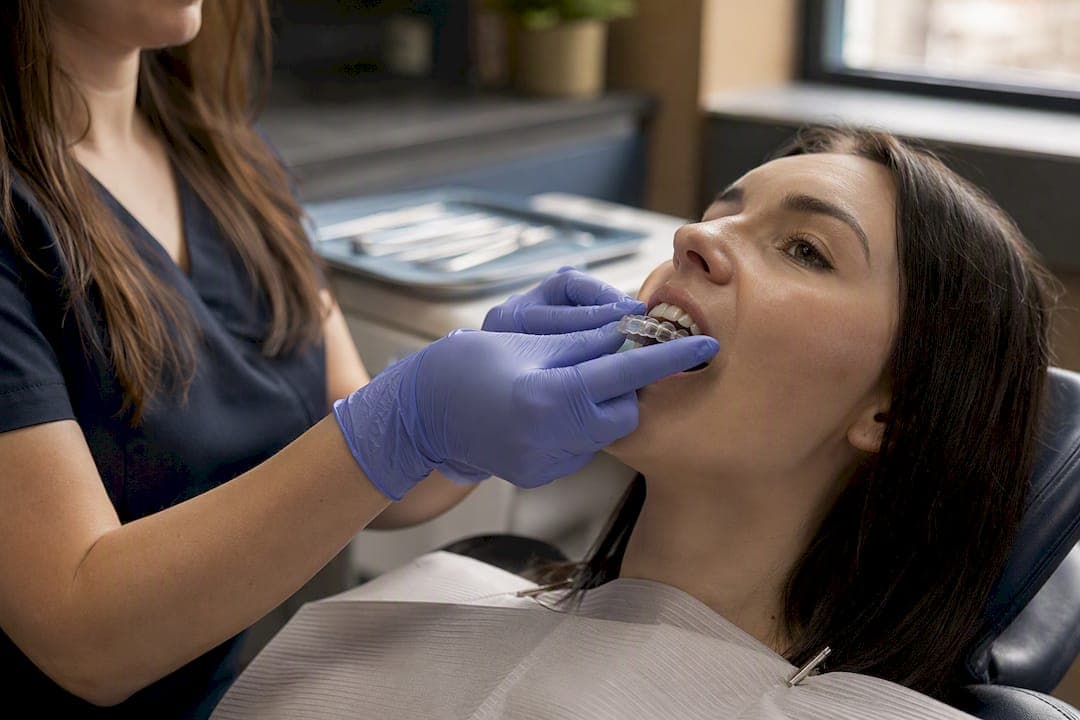
Invisalign refinements are an extra set of aligners ordered near the end of treatment to fine-tune teeth that didn't quite land where the original plan predicted. They're common, not a sign your treatment failed, and most patients close out treatment faster once this final round runs its course. The rest of this guide covers why refinements happen, what the process looks like, how long it adds, what it costs, and how to lower your odds of needing one.
TL;DR:
- Most patients require only one refinement round, which usually adds two to four months to the total treatment time.
- Refinements are based on a new scan of your teeth, highlighting small adjustments needed for issues like minor rotations or bite misalignments.
- A study shows that after three refinements, the chance of further improvement drops to zero, especially in complex cases.
- Proper wear time, timely checkups, and avoiding sticky or crunchy foods can significantly reduce the need for additional refinements.
- Refinements should be a clinical judgment and clearly explained upfront, not an automatic step, to prevent unnecessary treatment prolongation.
Table of Contents
- What Are Invisalign Refinements, Exactly?
- Why Do Invisalign Refinements Happen?
- Signs You Might Need a Refinement
- How the Refinement Process Actually Works
- How Long Do Refinements Take, and What Do They Cost?
- How to Lower Your Odds of Needing Extra Aligners
- What Happens After Your Refinement Round Ends
- Why Supervision Matters More Than the Trays Themselves
- Get a Refinement Assessment Without the Guesswork
- The Part Nobody Tells You About Refinements
- Sources
What Are Invisalign Refinements, Exactly?
A refinement is an additional round of custom aligners built from a fresh scan of your mouth, ordered after you've finished your original series of trays. Where your first set of aligners handled the bulk of tooth movement, refinements exist to finish the job: closing a lingering gap, correcting a tooth that rotated less than planned, or dialing in how your upper and lower teeth meet.
The reason refinements start with a new scan rather than reusing old data is simple. Your teeth have moved since your treatment began, sometimes substantially, and any new aligner set has to be built from where your teeth actually sit today, not where a computer predicted they'd be months ago. An orthodontist or dentist reviews that updated scan and decides which movements still need work.
Most refinement rounds handle small, specific problems rather than a full redo. A tooth that's 2 degrees off its planned rotation, a molar that needs another quarter millimeter of movement, a bite that closes slightly off. These are precision adjustments, not corrections for a treatment gone wrong.
Why Do Invisalign Refinements Happen?
Teeth don't move on a perfectly predictable schedule, and that's the core reason refinements exist. Bone density, ligament elasticity, and age all affect how fast and how accurately a tooth responds to aligner pressure, and no software model captures every patient's biology with total precision.
Wear time is the biggest controllable factor. Aligners are designed for 20 to 22 hours of daily wear, and consistent wear time correlates strongly with better tracking and fewer finishing problems. Skip a few hours here and there, and trays stop fitting snugly against teeth that haven't moved as planned. That mismatch, called poor "tracking," is the single most common trigger for a refinement.

Certain tooth movements are also just harder to pull off with clear aligners than others. Rotations of round teeth like canines, extrusions (pulling a tooth down into position), and torque adjustments to root angulation all resist aligner force more than simple tilting does. Complex cases lean on these difficult movements more heavily, which is exactly why they need more finishing work.
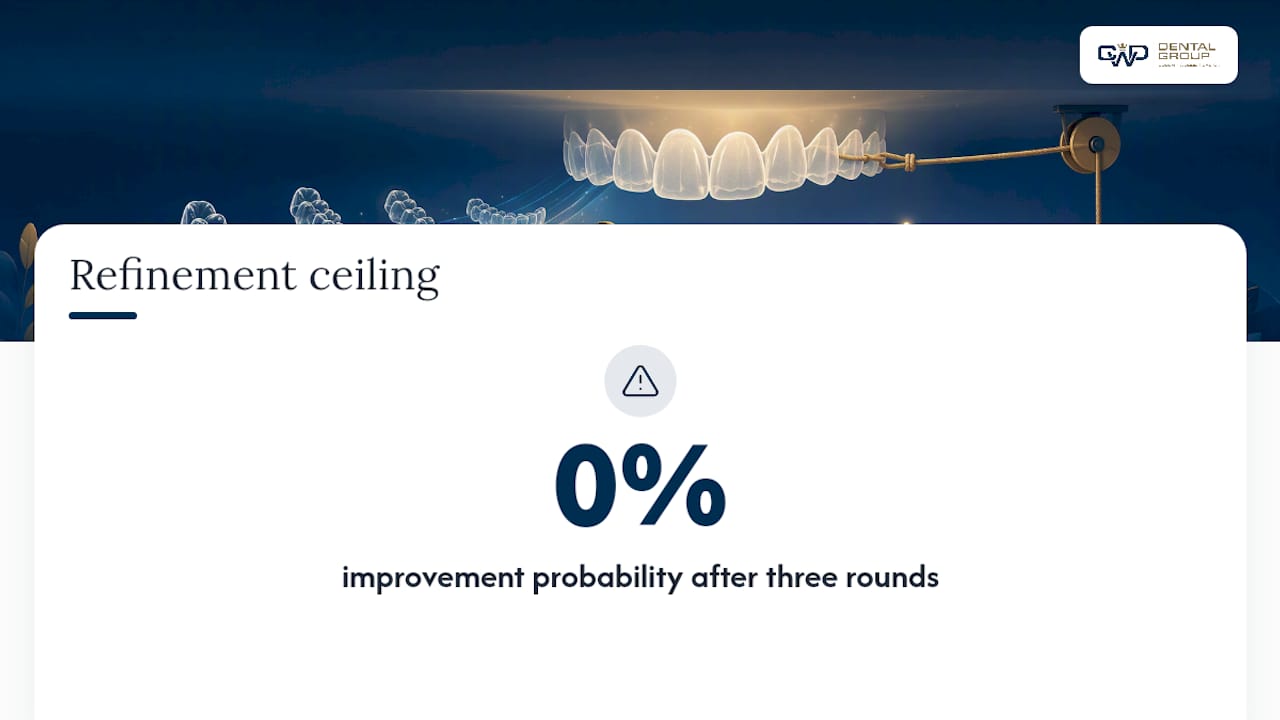
Here's a number worth knowing before your consultation: a study of 355 Invisalign patients found that treatment duration climbed alongside the number of refinements ordered, and once a case passed three refinement rounds, the probability of any further occlusal improvement dropped to zero. More complex starting cases needed more refinements. That's not a reason to worry if your case is complex. It's a reason to trust your clinician's judgment about when to stop.
Signs You Might Need a Refinement
Most patients notice something is off before their provider even brings up refinements. Watch for these signals as you approach the end of your original tray sequence:
- A visible gap between teeth that your treatment plan was supposed to close
- A tooth that still looks rotated or crooked compared to its neighbors
- Your bite feels "high" on one side, or your back teeth touch unevenly when you clench
- Your final tray fits loosely, or you can see daylight between the tray edge and your gumline
- New pressure or soreness in a spot that wasn't tender earlier in treatment
- Your bite feels different when chewing, especially new contact points you didn't notice before
None of these mean anything went wrong. They mean it's time to call your provider's office and get a check. Waiting too long between your last original tray and a rescan can let teeth drift further from plan, which sometimes means more refinement work than if you'd caught it early.
How the Refinement Process Actually Works
The refinement workflow follows a set sequence, and knowing it in advance makes the whole thing feel far less mysterious.
- Clinical evaluation. Your provider examines your bite, checks tooth positions against the original plan, and documents what still needs to move.
- A fresh intraoral scan. Most offices use an iTero scanner rather than the old-school putty impression, capturing your teeth's exact current position in a few minutes.
- Revised ClinCheck review. The scan feeds a new digital treatment plan, and your clinician reviews and approves the revised staging before anything gets manufactured, adjusting attachment placement if certain movements need more help.
- Manufacturing turnaround. New trays typically take about two to four weeks to arrive, and many providers have you keep wearing your final original tray during that gap so teeth don't shift while you wait.
- New wear schedule and monitoring. You start the new trays on the same 20 to 22 hour schedule, with a follow-up visit or two to confirm tracking is on target.
Pro Tip: Ask your provider to show you the revised ClinCheck simulation before you commit to a refinement round. Seeing the exact movements planned, tooth by tooth, makes it much easier to judge whether the round is worth the added weeks.
If attachments need repositioning to help a stubborn tooth move correctly, that happens during the same office visit where your new trays get fitted.
How Long Do Refinements Take, and What Do They Cost?
A single refinement round typically includes 5 to 15 trays and adds roughly two to four months to your total treatment time, depending on how many teeth need adjusting and how far they have to travel. Most patients need only one round. Clinical experience suggests a large majority of Invisalign patients require at least one refinement, so if your provider brings it up, you're in the majority, not an outlier.
The number that actually affects your wallet is the plan tier you were sold, not the refinement itself. Invisalign's Comprehensive package commonly includes unlimited refinements within a five-year treatment window at no extra aligner cost, while Lite and Express plans, designed for minor corrections, often cap how many refinement trays are included and may require an upgrade fee if your case needs more.
Insurance rarely treats refinements as a separate line item; they're usually bundled into your overall orthodontic benefit, but HSA and FSA funds can typically cover any out-of-pocket difference. The smartest move is asking directly at your consultation which plan tier you're being quoted and whether refinements are baked in. A smile consultation is exactly where that question belongs, before you sign anything.
How to Lower Your Odds of Needing Extra Aligners
You can't control your bone biology, but you control almost everything else that drives refinements.
- Wear your aligners 20 to 22 hours a day, every day, without exception during meals and cleaning.
- Keep every in-person checkup, and call your office the moment a tray feels loose or a tooth looks stalled.
- Follow attachment care instructions closely, and avoid crunchy or sticky foods that can pop an attachment loose.
- Skip interproximal reduction (IPR) appointments only if your provider explicitly says it's optional for your case.
- Ask about remote monitoring tools if your provider offers them; they catch tracking issues between visits.
- Ask upfront, before treatment starts, whether refinements are included in your quoted plan.
Pro Tip: Take a photo of your teeth in each new tray during week one of every set. If a tooth clearly isn't tracking by the second or third day in a tray, you'll spot it fast instead of discovering the mismatch three trays later.
What Happens After Your Refinement Round Ends
Once your refinement trays finish their job, your provider does a final clinical check, comparing your bite and tooth alignment against the treatment goals set at the start. If everything lines up, you move straight into retention.
Most patients get either a clear removable retainer, a fixed wire bonded behind the front teeth, or both, and most providers recommend wearing a removable retainer nightly indefinitely since teeth can drift for years after any orthodontic treatment. Expect a follow-up visit or two in the months after finishing to confirm nothing has shifted. If you do notice movement later, don't panic. A quick clinic visit can usually catch and correct minor relapse before it becomes a bigger problem.
Why Supervision Matters More Than the Trays Themselves
A refinement isn't really a manufacturing step. It's a diagnostic decision, and the clinician's judgment about which movements are still biomechanically realistic matters more than the software that generates the trays. At Cwddentalgroup, that supervision runs through same-day availability for the checkups that catch tracking problems early, and through in-office scanning technology that gives an accurate picture of where your teeth actually sit before any refinement gets ordered.
Refinements should be spelled out in your treatment agreement from day one, not introduced as a surprise near the finish line. That transparency, paired with a clinician who reviews every revised plan personally, is what separates a well-managed finish from a frustrating one.
Get a Refinement Assessment Without the Guesswork
If your trays are starting to feel loose, your bite seems off, or you're just not sure whether what you're seeing is normal, Cwddentalgroup can check your progress with the same intraoral scanning technology used to build refinement plans, review any revised ClinCheck staging with you directly, and handle attachment adjustments or retainer fitting in the same visit.

Because same-day appointments are part of how the practice operates, you don't have to wait weeks for a tracking problem to get looked at, which matters when a stalled tooth needs attention before it drifts further from plan. Before you commit to any additional aligners, it's worth confirming exactly what your original quote covers. A cosmetic dentistry consultation is the right place to ask those questions plainly. If you're near the end of your tray sequence and something doesn't look right, schedule a consultation with Cwddentalgroup and get a straight answer about whether you need a refinement.
The Part Nobody Tells You About Refinements
Here's what gets lost in most explanations of refinements: the AJODO data showing zero improvement probability past three rounds isn't a footnote, it's the whole story. Somewhere out there, patients are being talked into a fourth or fifth refinement round because it feels like more trays equal more progress. The research says otherwise. Past a certain point, you're not fine-tuning anymore, you're chasing diminishing returns on a case that may have reached its realistic ceiling.
That's an uncomfortable thing for a patient to hear, and an easy thing for a provider to avoid saying. But a clinician who tells you "this is probably as good as this tooth is going to get with aligners" after two rounds is giving you more useful information than one who quietly orders a third scan without that conversation. The refinement itself is never the risk. A provider who orders one without weighing whether it will actually move the needle is.
If there's one thing worth remembering from all of this, it's that a refinement is a clinical judgment call, not a default next step. Ask your provider why they're recommending one, not just when it'll be ready.
— Kayle
This article is general information, not a substitute for advice from a qualified doctor. Consult a qualified healthcare professional about your own circumstances before acting on anything here.
Sources
- Association between initial complexity, frequency of refinements, treatment duration, and outcome in Invisalign orthodontic treatment - American Journal of Orthodontics and Dentofacial Orthopedics
- Invisalign refinements explained
- Invisalign refinements explained by Limestone Hills Orthodontics
- Invisalign refinements: cost, process, and treatment time length