
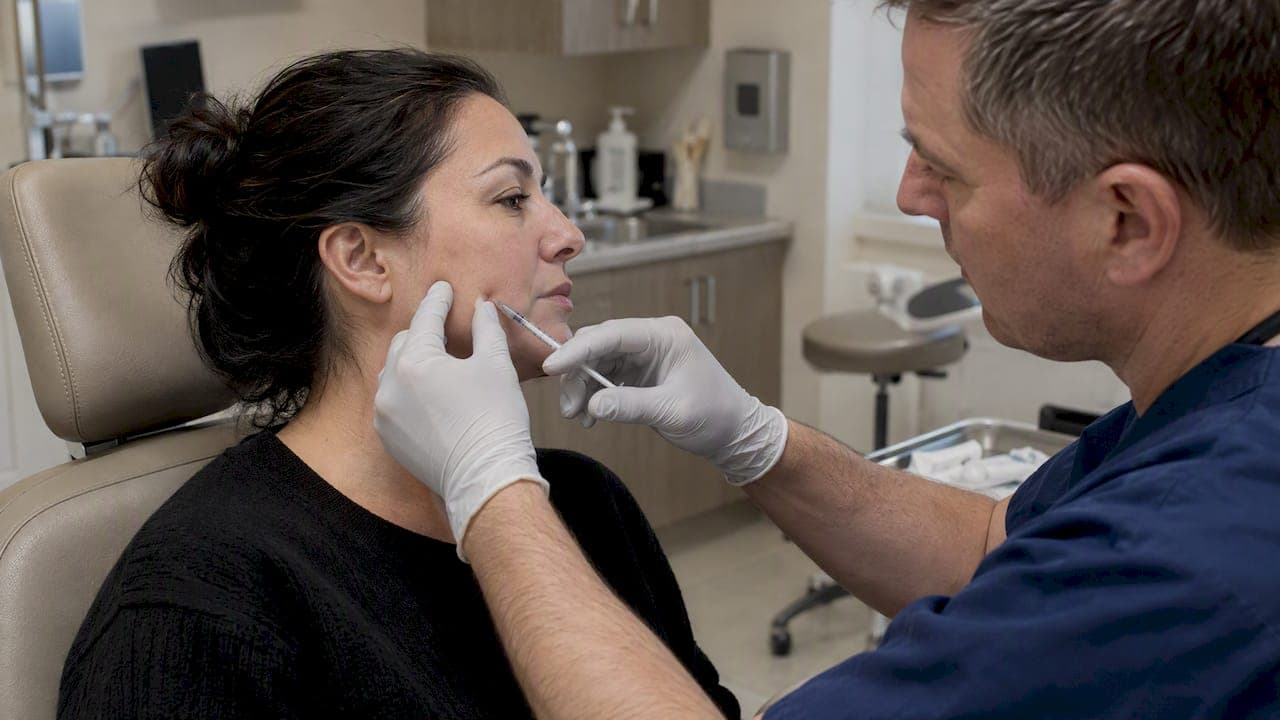
Botox can ease muscle-driven TMJ pain for some patients, but it is an off-label, adjunct treatment, not a cure, and it is typically tried after splints, physical therapy, and medication have fallen short. Relief, when it happens, usually lasts a few months before it fades. Because the effect involves injecting a neurotoxin near muscles close to the airway and swallowing structures, we recommend working with an experienced orofacial or TMJ-trained provider who reviews the safety warnings with you before treatment.
TL;DR:
- A 2024 pooled analysis of 15 randomized trials involving 504 participants found pain reductions at one and six months, while another review found evidence inconclusive.
- Botox is most relevant when pain comes from overactive jaw muscles and persists despite splints, physical therapy, or medication, rather than from a joint problem.
- Trials linked bilateral doses of 60 to 100 units across the masseter and temporalis with stronger later pain reductions; peak relief arrives within four weeks.
- Avoid treatment during pregnancy or breastfeeding, and discuss neuromuscular disease, swallowing difficulty, or breathing problems first because toxin spread can cause dangerous weakness.
- Insurance often denies coverage because the FDA has not approved TMJ use, though documented failed conservative care may support an exception; verify coverage first.
Table of Contents
- What Botox for TMJ is and how it works
- Clinical evidence: RCTs, meta-analyses, and umbrella reviews
- Who may benefit and how clinicians decide
- What to expect during treatment and afterward
- Safety, side effects, and regulatory status
- How Botox fits into an overall TMJ care plan
- How a responsible dental practice evaluates and delivers Botox for TMJ
- Comparing Botox with other minimally invasive TMJ treatments
- What Botox for TMJ costs and what drives the price
- Long-term outcomes: what happens if Botox stops working
- Our take: treat Botox as a tool, not a verdict on your jaw pain
- If you want an evaluation: how CWD Dental Group can help
- FAQ
- Sources
What Botox for TMJ is and how it works
Botox is a brand name for botulinum toxin type A, a protein that blocks the release of acetylcholine at the nerve endings that signal a muscle to contract. For TMJ-related jaw pain, the target is not a joint problem but an overactive muscle problem: when the masseter and temporalis muscles clench or grind excessively, they create the deep, aching pain many people describe as TMJ pain. Weakening that contraction with Botox can calm the overactivity and, for some patients, reduce the pain cycle.
Clinicians commonly inject these muscles:
- Masseter: the primary jaw-closing muscle along the cheek, often the main source of clenching-related pain and sometimes visible muscle bulk.
- Temporalis: the fan-shaped muscle at the temple that contributes to headaches and jaw fatigue when overused.
- Lateral pterygoid (less often): a deeper muscle sometimes targeted for referred pain patterns, though it carries more technical risk.
Onset is gradual rather than immediate. Most people notice softening of muscle tension within a few days to two weeks, with peak effect by about two to four weeks. The Cleveland Clinic notes that relief typically lasts three to four months, though this varies by dose, muscle mass, and how the individual metabolizes the toxin. Botox for TMJ is not FDA-approved for this use. It's prescribed off-label, which means a qualified provider is using clinical judgment and published evidence to apply an approved drug to an unapproved indication, a common and legal practice in medicine but one that deserves an informed conversation before you proceed.
Clinical evidence: RCTs, meta-analyses, and umbrella reviews
The research picture on Botox for TMJ is genuinely mixed, and that nuance matters more than any single headline statistic. A 2024 PLOS ONE systematic review of randomized controlled trials found the current evidence inconclusive: several trials reported no statistically significant pain reduction compared with placebo for certain outcomes, and the review called for more high-quality studies before drawing firm conclusions.
At the same time, other analyses find a benefit, particularly at specific doses and timepoints. A 2024 systematic review and meta-analysis by Li and colleagues pooled data from 15 randomized controlled trials covering 504 participants and found significant pain reductions at both one and six months following injection.
The meta-analysis found that bilateral doses in the 60-100 unit range, covering the masseter and temporalis muscles, were associated with the largest pain reductions at later follow-up points. That dose-response signal is one of the more consistent findings in the literature and helps explain why outcomes vary so much between studies and between patients.
Why do reviews disagree? Largely because of how differently the trials are designed:
- Injection sites vary: some protocols treat only the masseter, others add the temporalis or pterygoid, changing both effect and risk.
- Dosing ranges differ widely: trials have used everything from low single-muscle doses to the higher bilateral totals linked to stronger results.
- Outcome measures aren't standardized: pain scales, jaw function scores, and quality-of-life measures are not consistently reported across studies, making pooled comparisons imprecise.
This heterogeneity is the central reason you'll see headlines claiming Botox "works" for TMJ and others calling the evidence weak. Both are describing real data, just from different slices of a fragmented research base. On safety, the reviewed RCTs and meta-analyses generally report that adverse events are mostly mild and localized (temporary chewing weakness, asymmetry, bruising), though the evidence base for long-term safety with repeated injections remains limited. The practical takeaway: Botox has real, measurable effects in some trials, at specific doses, over specific timeframes, but it is not a uniformly proven therapy, and a provider who understands this literature should be tailoring your treatment rather than applying a one-size protocol.
Who may benefit and how clinicians decide
Not every jaw pain complaint is a good match for Botox, and a thoughtful provider will screen for the right profile before recommending it.
- Persistent myofascial pain: pain centered in the jaw muscles themselves (not primarily in the joint) that has not improved with splints, physical therapy, or medication over a reasonable trial period.
- Visible or palpable muscle hypertrophy: often from chronic clenching or grinding, where the masseter has become enlarged and overworked.
- Failed conservative care: a documented history of trying night guards, stretching or physical therapy, anti-inflammatories, or stress-reduction strategies without adequate relief.
Certain conditions call for caution or rule Botox out entirely. Neuromuscular diseases such as myasthenia gravis or Lambert-Eaton syndrome increase the risk of toxin spread and muscle weakness beyond the injection site. Pregnancy and breastfeeding are typically contraindications. Anyone with existing swallowing difficulty or respiratory compromise needs a careful risk discussion, since the muscles involved sit close to structures that control both functions.
Before agreeing to treatment, it's worth asking your provider direct questions: What functional trade-offs should I expect, such as changes in chewing strength? What specific, measurable goal are we targeting, pain score, headache frequency, or jaw opening? What is the retreatment policy if the first round doesn't help enough, or if it works well and wears off?
Pro Tip: Bring a two-week pain and symptom log to your consultation. It gives your provider concrete data to judge whether Botox, or a different approach, fits your case.
What to expect during treatment and afterward
A typical Botox for TMJ appointment follows a predictable sequence, even though the specifics vary by provider and case.
- Assessment first: the clinician evaluates jaw function, muscle tenderness, range of motion, and sometimes bite force before deciding on injection sites.
- Marking the muscles: the masseter and temporalis are located by palpation, sometimes while you clench, to pinpoint the most active areas.
- Injection: several small injections are placed across each target muscle, usually taking only a few minutes total.
- Brief observation: most clinics have you wait a short period afterward to watch for any immediate reaction.
Dosing in the published literature varies, but the meta-analysis by Li and colleagues found that bilateral totals in the 60 to 100 unit range, split across the masseter and temporalis, produced the strongest results at later follow-up. Individual providers adjust this based on muscle mass, prior response, and treatment goals. Retreatment intervals commonly follow a roughly 12-week cadence, though some clinicians space injections individually based on how long relief lasts for that patient.
Aftercare is simple: avoid vigorous massage of the treated area for the first day, skip strenuous exercise for a few hours, and stay upright for a period afterward. Relief is gradual, not instant. Most people notice softening of muscle tension within the first one to two weeks, with the fullest effect by around the one-month mark, consistent with Cleveland Clinic's description of the treatment timeline.

Safety, side effects, and regulatory status
Most people tolerate Botox injections for TMJ well, with side effects limited to the injection site. Common, mild effects include temporary bruising, soreness, and mild asymmetry in the smile or jawline if the toxin affects a slightly larger area than intended. Some patients notice a temporary reduction in chewing strength, which usually resolves as the effect wears off.
The more serious risks relate to how the toxin can migrate beyond the injection site. The FDA prescribing information for Botox carries a boxed warning, the agency's strongest safety alert, about this exact concern:
Distant spread of toxin effect has been reported, and symptoms are consistent with the mechanism of action of botulinum toxin. These symptoms have been reported hours to weeks after injection. Swallowing and breathing difficulties can be life threatening, and there have been reports of death.
That warning is not unique to jaw injections, but it is especially relevant here because the masseter and temporalis sit close to muscles involved in swallowing and breathing. Practical risk mitigation includes:
- Choose a provider trained in orofacial injections, not just cosmetic Botox technique, since muscle targeting and depth differ.
- Start with conservative dosing, especially for a first treatment, rather than maximizing units upfront.
- Report any swallowing or breathing changes immediately, even if they seem minor, and seek urgent care if symptoms worsen.
- Keep follow-up appointments so your provider can document your response and adjust future dosing accordingly.
How Botox fits into an overall TMJ care plan
Botox is rarely, if ever, a first-line treatment for TMJ pain, and the National Institute of Dental and Craniofacial Research outlines the conservative therapies that typically come first: oral splints or night guards, physical therapy and jaw exercises, behavioral changes like stress management and avoiding gum chewing, and short-term use of anti-inflammatory medication.
Botox tends to enter the picture when these measures help only partially or not at all. Rather than replacing conservative care, it often works alongside it: by temporarily reducing muscle hyperactivity, Botox can make physical therapy more effective and give a painful jaw a break long enough for other interventions to take hold.
A typical stepwise pathway looks like this:
- Start with a night guard, jaw exercises, and lifestyle changes for several weeks to months.
- Add physical therapy or short-term medication if symptoms persist.
- Consider Botox as an adjunct if muscle-driven pain remains significant despite consistent conservative care.
- Reassess regularly, combining Botox with ongoing physical therapy or behavioral strategies rather than relying on injections alone.
How a responsible dental practice evaluates and delivers Botox for TMJ
At CWD Dental Group, we treat Botox for TMJ as part of a broader evaluation, not a quick fix offered in isolation. Because we provide same-day emergency dental appointments alongside ongoing TMJ treatment and therapeutic Botox, we can see patients quickly when jaw pain flares and still take the time to document a proper baseline before recommending injections.
A responsible consultation includes a review of your pain history and prior treatments, a functional exam of jaw movement and muscle tenderness, and a clear discussion of realistic goals, whether that is fewer headaches, less clenching-related soreness, or improved range of motion. We document this baseline so we can judge, honestly, whether a treatment is working at your follow-up visit.
Comparing Botox with other minimally invasive TMJ treatments
Botox is one of several minimally invasive options for muscle-driven jaw pain, and it is worth understanding how it differs from the alternatives. Trigger point injections, which typically use a local anesthetic or saline injected directly into a tender muscle knot, work faster (often within minutes) but tend to wear off sooner than Botox, sometimes requiring more frequent repeat visits. Dry needling, which inserts a thin needle into the trigger point without injecting medication, relies on a mechanical disruption of the muscle knot rather than a chemical one, and some patients find it effective as a lower-cost, drug-free option.
Compared with both, Botox's advantage is duration: a single treatment can calm an overactive muscle for three to four months rather than days or weeks. Its downside is cost, the delayed onset of a week or two before full effect, and the small but real risk of toxin spread discussed earlier. Trigger point injections and dry needling carry fewer systemic risks since they don't involve a neurotoxin, but they generally address symptoms more locally and temporarily. For many patients, these approaches aren't mutually exclusive. Clinicians sometimes use trigger point injections or dry needling for acute flare management while considering Botox for longer-term muscle control.
What Botox for TMJ costs and what drives the price
CWD Dental Group does not publish a fixed price for Botox treatment, since the cost depends on factors specific to each patient, and pricing is available on request through our services page. In general, across the field, the main cost drivers include the number of units used (higher bilateral doses in the 60 to 100 unit range reported in recent meta-analyses cost more than a smaller single-muscle treatment), the number of muscles treated (masseter alone versus masseter plus temporalis), and whether the injection is billed as a cosmetic procedure or a therapeutic one.
Insurance coverage is inconsistent. Because Botox is not FDA-approved for TMJ, many dental and medical insurance plans classify it as a cosmetic or elective treatment and decline to cover it, though some plans make exceptions when a provider documents medical necessity, such as failed conservative treatment and a clear myofascial pain diagnosis. It's worth asking your insurer directly about their policy for temporomandibular disorder treatment before scheduling, and asking your provider's office whether they offer documentation support for an insurance appeal.
Long-term outcomes: what happens if Botox stops working
Because Botox's effect is temporary, by design, most patients eventually find it wears off and requires repeat treatment to sustain relief. For many, consistent retreatment every three to four months, combined with ongoing physical therapy and a night guard, maintains stable improvement over time. For others, effectiveness can diminish with repeated use, and some reviews flag long-term concerns worth discussing with your provider, including reduced bite force and muscle atrophy with frequent, ongoing injections.
If Botox stops delivering meaningful relief, the right move is not simply increasing the dose. Revisit the full picture with your provider: confirm the pain is still primarily muscular rather than joint-related, reassess whether conservative measures like splint fit or physical therapy routine need adjustment, and discuss whether a different muscle combination or injection technique might help. For some patients, cycling off Botox for a period and leaning more heavily on physical therapy and behavioral changes is the better long-term strategy than indefinite repeat injections.
Our take: treat Botox as a tool, not a verdict on your jaw pain
The evidence on Botox for TMJ doesn't support treating it as either a miracle or a gimmick. It's a real option with a real, if inconsistent, evidence base, and the honest reading is that it helps a meaningful subset of patients with muscle-driven pain while doing little for others, particularly those whose pain originates in the joint rather than the muscles.
What gets overlooked most often is how much the outcome depends on patient selection and provider skill, not just the drug itself. The dose-response signal in recent meta-analyses suggests technique and dosing matter as much as whether Botox is used at all. Our advice: don't chase Botox as a first step. Exhaust conservative care, get a precise diagnosis of where your pain originates, and if you proceed, choose a provider who treats this as a documented, measured trial rather than a one-time fix.
— Kayle
If you want an evaluation: how CWD Dental Group can help
If conservative care hasn't resolved your jaw pain and you're weighing Botox as a next step, we offer TMJ evaluation and therapeutic Botox as part of comprehensive dental services.
- Same-day appointments mean we can see you quickly if jaw pain flares while you're weighing treatment options.
- Individualized evaluation includes a review of your symptom history and prior treatments before any injection is discussed.
- Clear follow-up plan so we can judge, with you, whether treatment is meeting your specific goals.
To start, visit our Botox services page or explore our full range of dental services to book a consultation.
This article is general information, not a substitute for advice from a qualified doctor. Consult a qualified healthcare professional about your own circumstances before acting on anything here.
FAQ
Does Botox for TMJ really work?
The evidence is mixed: some randomized trials and meta-analyses report significant pain reduction at one to six months, particularly with bilateral dosing, while a 2024 systematic review found inconsistent results against placebo. It appears to help a subset of patients with muscle-driven pain rather than working reliably for everyone.
Will insurance cover Botox for jaw clenching?
Coverage varies by insurer and plan, and many classify Botox for TMJ as cosmetic or elective because it isn't FDA-approved for this use. Some plans make exceptions with documentation of failed conservative treatment and a clear medical necessity, so it's best to check directly with your insurer.
Why isn't Botox approved for TMJ?
Botox is FDA-approved for specific conditions like chronic migraine and certain muscle spasticity disorders, but not for temporomandibular disorders. Use for TMJ remains off-label because the existing clinical trial evidence, while promising in some studies, has not met the threshold regulators require for a formal approval.
Where is the danger zone for TMJ Botox injections?
The main risk area involves the muscles near the airway and swallowing structures, since toxin that spreads beyond the injection site can affect breathing or swallowing. The FDA's boxed warning specifically flags this risk, which is why injection technique and provider experience matter.
Sources
- Botox for TMJ Pain: What To Expect — Cleveland Clinic
- Effect of botulinum toxin type A on muscular temporomandibular disorder: A systematic review and meta‐analysis (Li et al., 2024)
- Systematic review on botulinum toxin for TMD — PLOS ONE (2024)
- BOTOX Cosmetic prescribing information (FDA label, 2024)