
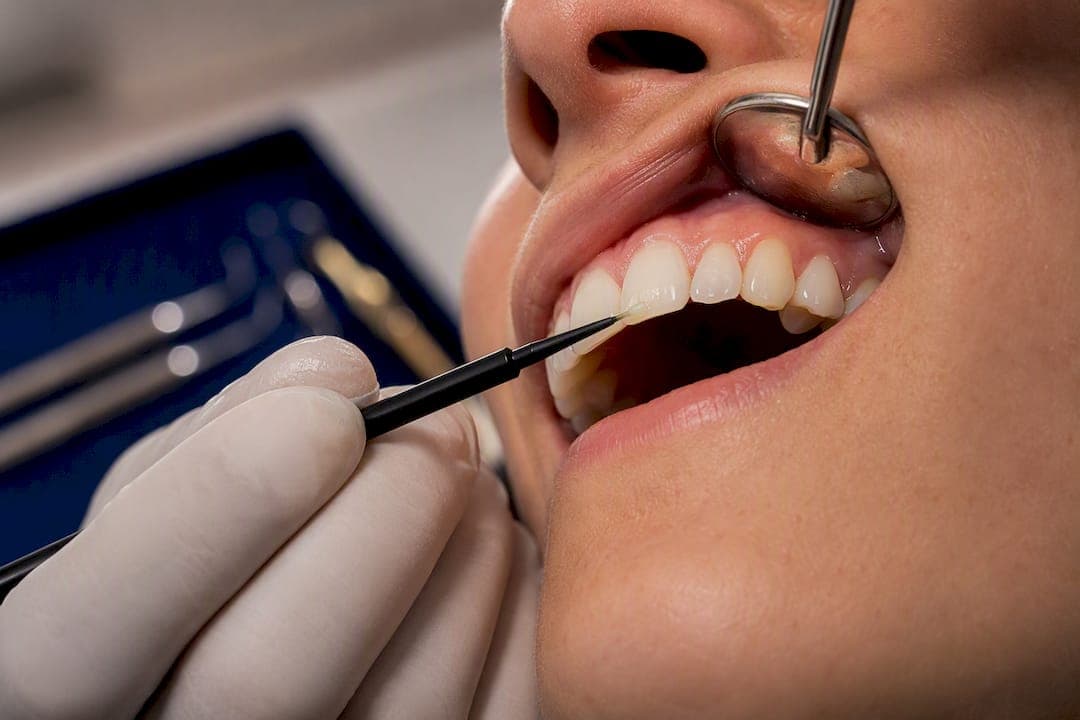
Most white spots on teeth can be improved, and several respond to treatment without drilling or shots. Lesions caused by early demineralization often reverse with fluoride and remineralizing pastes, while fluorosis or enamel hypoplasia usually need masking rather than reversal. For most people, resin infiltration paired with fluoride varnish or CPP-ACP is the strongest first move. If a spot is growing, hurts, or you're not sure what caused it, get it checked before choosing a fix.
TL;DR:
- Remineralization with fluoride and CPP-ACP can improve early demineralized spots within weeks, but it does not fix fluorosis or enamel hypoplasia.
- Resin infiltration is most effective for shallow to moderate lesions and can often mask white spots in a single visit, especially if the spots are not deep or pitted.
- Whitening treatments can worsen the contrast on white spots if used alone before infiltration or microabrasion, making conservative options more suitable initially.
- Combining infiltration with fluoride varnish or CPP-ACP enhances aesthetic masking and mineral gain, with evidence supporting improved results over single treatments.
- Home care with fluoride toothpaste, interdental cleaning, and avoiding acid or sugar-rich foods helps preserve treatment results and prevent new spots.
Table of Contents
- What Causes White Spots and How Dentists Diagnose Them
- Treatment Options, From Least to Most Invasive
- How to Choose the Right Treatment for Your Spots
- Does Combining Treatments Work Better Than One Alone?
- Preventing New Spots and Supporting Treatment at Home
- What Realistic Outcomes Actually Look Like
- Getting Your White Spots Evaluated in Tallahassee
- Sources
- FAQ
What Causes White Spots and How Dentists Diagnose Them
White spots aren't one condition. They're a visual symptom with several distinct causes, and the cause determines whether the spot can be reversed or only masked.
- Demineralization or early caries. Acid from plaque strips minerals out of enamel, often around brackets or gumlines, leaving a chalky patch that can still be reversed early on.
- Fluorosis. Too much fluoride during tooth development creates mottled white patches, usually across multiple teeth, and it's typically permanent.
- Enamel hypoplasia. Enamel that didn't form correctly during childhood, from illness, nutrition gaps, or genetics, leaves thin or pitted white areas.
- Post-orthodontic decalcification. Plaque trapped around braces brackets for months creates classic square-shaped white marks once the brackets come off.
- Trauma. A hard knock to a tooth can disrupt enamel formation or mineralization even if the injury happened years earlier.
Dentists narrow down the cause with a visual exam, sometimes scored using the ICDAS system to rate lesion depth and activity, and occasionally a fluorescence device like DIAGNOdent to detect subsurface demineralization invisible to the eye. Photos and, if needed, X-rays round out the picture. This step matters because a reversible early lesion and a permanent fluorosis patch can look almost identical, but they call for completely different white spot enamel treatments.
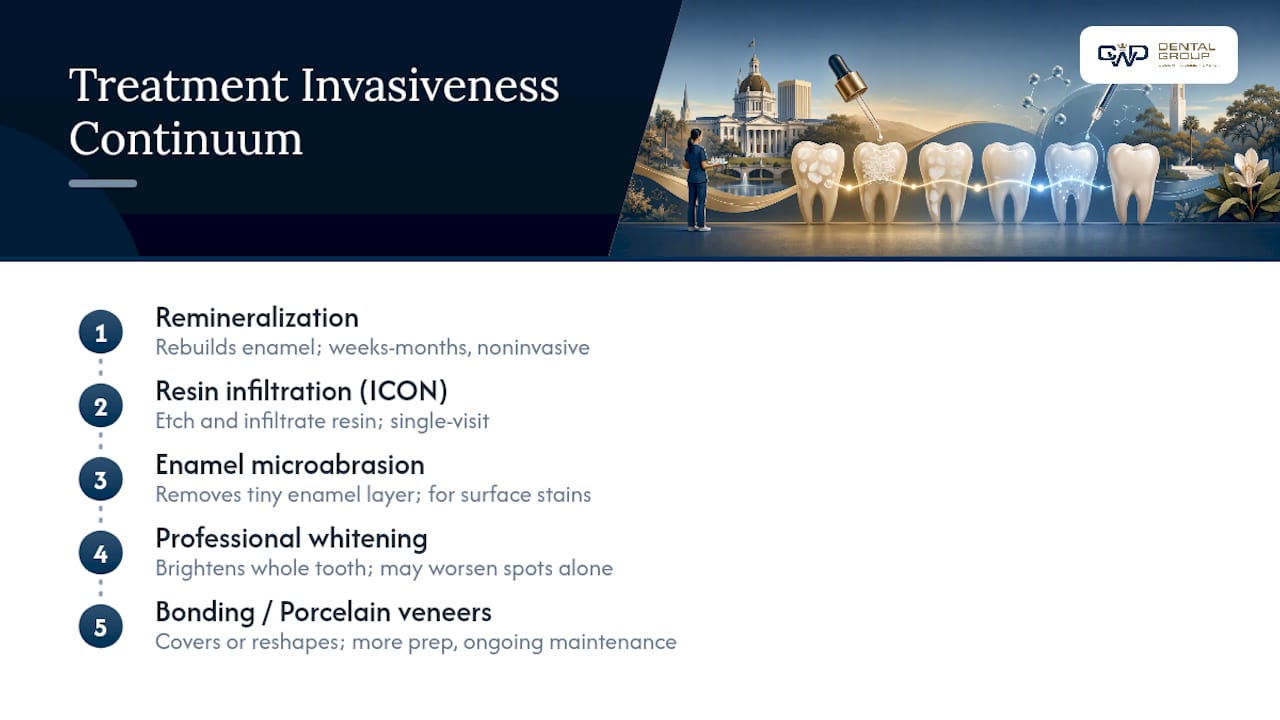
Treatment Options, From Least to Most Invasive
Treating white spots on teeth works best when the approach matches the lesion's depth and cause, not just its appearance.
Remineralization is the gentlest option and the right starting point for active, early-stage demineralization. Fluoride varnish, high-fluoride toothpaste, and CPP-ACP pastes (sold under names like MI Paste) work by rebuilding mineral content in the enamel over weeks to months. Results depend heavily on how consistently the patient uses the product, and this approach won't touch fluorosis or hypoplasia scars.
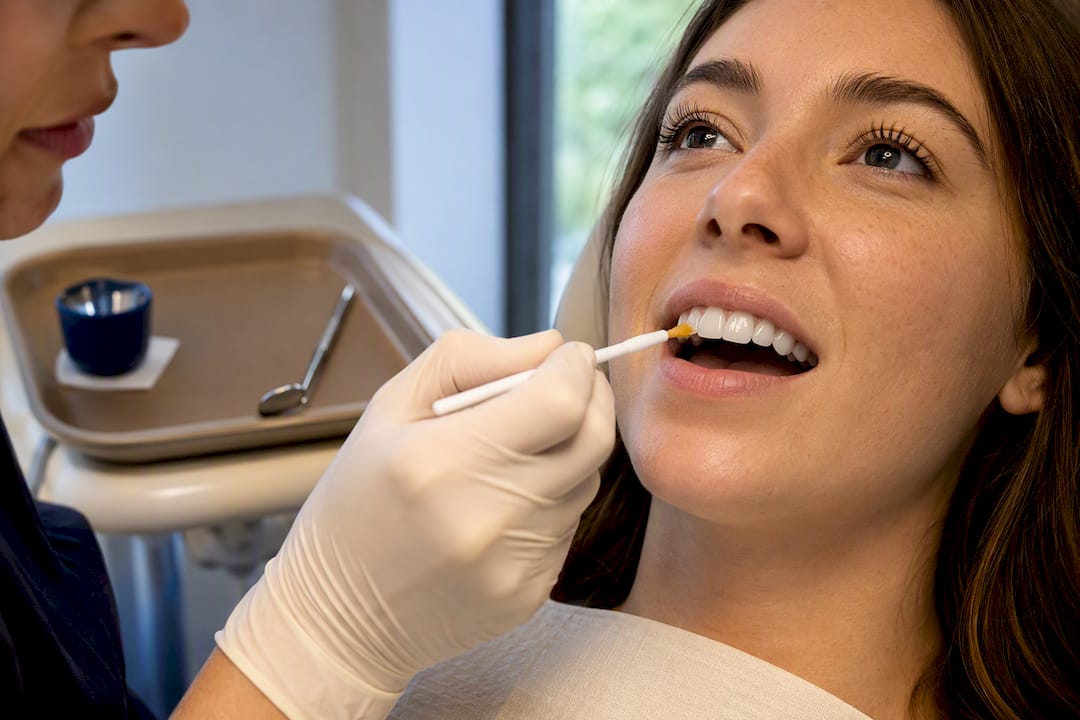
Resin infiltration (the ICON technique) is the standout minimally invasive option for masking. The dentist etches the lesion's surface with a mild acid gel, then infiltrates the porous enamel with a low-viscosity resin that matches light refraction to the surrounding tooth, and cures it with light. Many patients see the spot visibly fade in a single visit. It works best on shallow to moderate subsurface lesions; deep or heavily pitted defects don't respond as well.
Enamel microabrasion physically removes a very thin layer of surface enamel with an abrasive paste, which works well for shallow surface discoloration. It's often paired with whitening for a more even result.
Professional teeth whitening brightens the whole tooth, but used alone on white spots it can backfire. Whitening lightens healthy enamel faster than a mineral-deficient spot, which can temporarily make the contrast worse. It tends to work best layered after infiltration or microabrasion, not before.
Composite bonding and porcelain veneers are the fallback when conservative options don't fully resolve a stubborn or large defect. Bonding reshapes the tooth surface with tooth-colored resin; veneers cover the whole front surface with a thin porcelain shell. Both require more enamel preparation and longer-term maintenance than infiltration.
Pro Tip: If your white spots showed up after braces came off, ask specifically about resin infiltration before whitening. Whitening first can make post-orthodontic spots stand out more, not less.
How to Choose the Right Treatment for Your Spots
The right choice comes down to five factors: what caused the spot, how deep it goes, where it sits on the tooth, your age and hygiene habits, and how fast you want results.
- Cause and depth decide reversibility. Active demineralization can improve with remineralization alone; fluorosis and hypoplasia usually need masking.
- Immediacy matters if you have an event or photos coming up. Infiltration and microabrasion give same-visit or near-immediate change; remineralization takes weeks to months.
- Cost tends to run low for remineralizing products, moderate for infiltration and microabrasion, and higher for bonding or veneers, though your dentist can give you an exact quote based on your case.
- Durability favors infiltration and restorations over remineralization, which needs ongoing maintenance to hold gains.
Before committing, ask your dentist how they'll confirm the diagnosis, what result to realistically expect, whether the treatment carries any warranty or follow-up plan, and what maintenance it demands. Treat ongoing pain, a spreading lesion, or a diagnosis you don't understand as reasons to pause and get a second look.
Does Combining Treatments Work Better Than One Alone?
The clinical literature increasingly points to combination therapy as the better bet. A 2025 systematic review found that pairing resin infiltration with fluoride varnish, or CPP-ACP with fluoride, produced better aesthetic masking and stronger remineralization than either approach used alone. Separate clinical evidence backs this up, showing enhanced masking and mineral gain when infiltration is layered with fluoride varnish rather than varnish by itself.
Newer materials like NovaMin and self-assembling peptides show promising results in network meta-analyses, but the long-term durability data on these is still thin, so they're worth discussing rather than assuming they'll outperform established options.
Resin infiltration is technique-sensitive. Etching and infiltrating a lesion incorrectly can alter the enamel surface or irritate soft tissue, which is why skill and experience behind the handpiece matter as much as the material itself. Our approach leans conservative first: assess the lesion, try remineralization or infiltration before anything that removes tooth structure, and only escalate to bonding or veneers when the conservative route genuinely won't get the result needed.
Preventing New Spots and Supporting Treatment at Home
Whatever treatment you choose, home care determines whether the result holds.
- Brush twice daily with fluoride toothpaste, and ask your dentist about a 5,000 ppm prescription-strength version if you're at high risk for new lesions.
- Clean between teeth daily with floss or interdental brushes to keep plaque from sitting on enamel long enough to demineralize it.
- Use a fluoride mouth rinse if your dentist recommends one, especially during orthodontic treatment.
- Apply CPP-ACP paste or a hydroxyapatite cream on your dentist's advice if you have active white spots or wear braces.
- Limit frequent sugar and acid exposure (soda, candy, citrus) between meals, since it's the frequency of acid attacks, not just the amount, that drives demineralization.
- Call your dentist promptly if a treated spot changes color, a new spot appears, or you notice sensitivity.
What Realistic Outcomes Actually Look Like
Remineralization takes weeks to months of consistent use before you'll notice a difference; infiltration can change how a tooth looks in one visit. We favor the conservative route first because it preserves enamel and rarely closes off better options later. Same-day appointments let us triage a new white spot quickly instead of making someone wait weeks just to find out whether it's urgent.
— Kayle
Getting Your White Spots Evaluated in Tallahassee
A drugstore whitening kit can't tell the difference between a reversible early lesion and permanent fluorosis, but a dentist can, and that distinction changes everything about which treatment actually works. Same-day diagnosis for this kind of aesthetic concern is available, so patients are not stuck guessing for weeks while a spot sits untreated.

Your first visit typically includes a visual exam, photos to document the lesion, and sometimes fluorescence scanning to gauge depth, followed by a treatment plan that starts with the least invasive option that fits your case. That might mean fluoride varnish and CPP-ACP, resin infiltration, or a combination of the two. If you're dealing with a spot that appeared suddenly, is spreading, or just won't budge, book a same-day evaluation and ask about insurance or financing options before your visit so there are no surprises at checkout.
This article is general information, not a substitute for advice from a qualified doctor. Consult a qualified healthcare professional about your own circumstances before acting on anything here.
Sources
- PMC12178995 (clinical evidence on combined therapies)
- Treatment Options for White Spot Lesions: A Systematic Review (MDPI, 2025)
- White Spots on Teeth: What Causes Them and How to Treat It — Colgate
FAQ
Can I Treat Dental Fluorosis at Home?
Not effectively. Fluorosis changes enamel structure during tooth development, so it's permanent, and home remedies won't reverse it. Masking options like resin infiltration, microabrasion, or bonding require a dentist.
Will White Spots Go Away on Their Own?
Only if they're caused by active demineralization caught early. In that case, better hygiene and fluoride exposure can remineralize the enamel over weeks to months. Fluorosis and hypoplasia-related spots don't fade on their own.
Are White Spots on Teeth Serious?
Cosmetically, no, they're not dangerous. But an active demineralized lesion can progress to a cavity if left untreated, so it's worth having a dentist check whether the spot is active or stable.
What Toothpaste Is Best for White Spots?
A fluoride toothpaste is the baseline for everyone. For active lesions or high caries risk, dentists often add a prescription-strength fluoride toothpaste or a CPP-ACP remineralizing paste alongside it.