
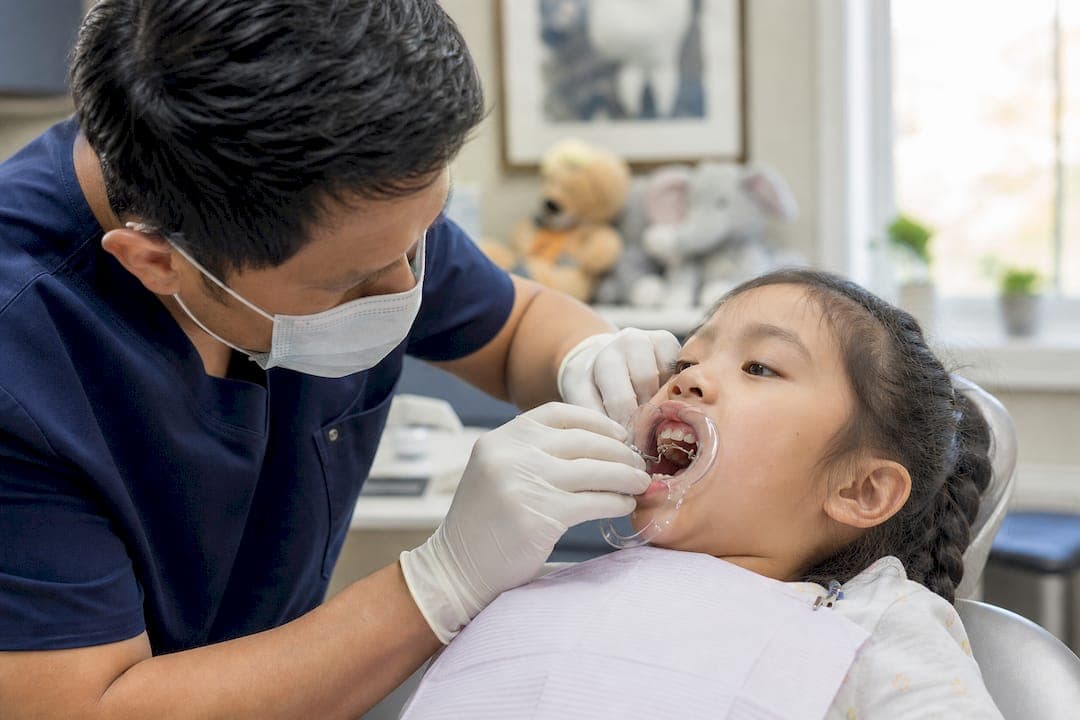
A space maintainer is a small dental device that holds open the gap left by a baby tooth that fell out too soon so the permanent tooth underneath has room to come in straight. If your child lost a primary molar early, from decay or an accident, get them in front of a pediatric dentist right away. The American Academy of Pediatric Dentistry treats this as a timing issue: whether a maintainer makes sense depends almost entirely on how long how long the permanent tooth still has before it erupts.
Key Takeaways
A space maintainer works because it holds open the gap left by an early lost primary molar until the permanent tooth is ready to erupt on its own schedule.
| Point | Details |
|---|---|
| Timing drives the decision | A maintainer is more likely needed if the permanent tooth is more than six months from erupting. |
| Fixed types vary by case | Band-and-loop, crown-and-loop, distal shoe, and lingual holding arch each fit different loss patterns. |
| 3D-printed options show better durability | Trial data found 77.4% survival at nine months versus 51.6% for conventional appliances. |
| Hygiene prevents most complications | Poor cleaning around bands and wires is the leading cause of gum inflammation and loosening. |
| Cwddentalgroup offers same-day evaluation | Same-day emergency appointments and itemized treatment plans help families act before crowding sets in. |
This article is general information, not a substitute for advice from a qualified doctor. Consult a qualified healthcare professional about your own circumstances before acting on anything here.
Table of Contents
- When Dentists Actually Recommend a Space Maintainer
- The Different Types of Space Maintainers, Explained
- How Long Space Maintainers Stay In, and How They're Monitored
- Keeping the Appliance Clean and Avoiding Problems at Home
- Warning Signs Parents Shouldn't Ignore
- What to Expect From an Evaluation and Fitting at CWD Dental Group
- The Gap Between What Gets Recommended and What Actually Gets Explained
- Get Your Child Evaluated Without the Wait
- Sources
When Dentists Actually Recommend a Space Maintainer
Not every lost baby tooth needs an appliance. Front teeth rarely do, since neighboring teeth don't drift into that space quickly. Primary molars are a different story. They act as placeholders for premolars that may not erupt for years, and the teeth on either side start tilting into the gap almost immediately.
Dentists generally lean toward a maintainer when the permanent successor is still more than about six months from erupting. If the tooth is close to breaking through anyway, waiting it out is often the smarter, cheaper call.
Skipping a needed maintainer lets neighboring teeth migrate, which can cause:
- Crowding that pushes permanent teeth out of alignment
- Impaction, where the permanent tooth gets blocked from erupting at all
- Crossbite from teeth drifting into a lopsided position
- More complex, more expensive orthodontic work later
Catching the problem early is the whole point. Interceptive treatment like this can meaningfully cut down the complexity, duration, and cost of later orthodontic care compared with letting the gap close on its own.
The Different Types of Space Maintainers, Explained
Space maintainers fall into two broad camps: fixed appliances that stay cemented in place, and removable ones a child takes out for cleaning. Which one a dentist picks depends on how many teeth are missing, where they're located, and honestly, how reliable your child is going to be about wearing something removable.
- Band-and-loop. A metal band wraps around the tooth next to the gap, with a wire loop extending across to the other side. This is the workhorse option for a single missing molar and has decades of clinical use behind it.
- Crown-and-loop. Same concept, but the anchor tooth gets a full crown instead of a band. Dentists reach for this when the abutment tooth already has a large filling or some decay that a band alone wouldn't hold onto well.
- Distal shoe. Used when a first permanent molar hasn't erupted yet but its primary predecessor is already gone. A small metal extension slips just under the gum to guide the incoming molar into position.
- Lingual holding arch (LLHA). A wire runs along the inside of the lower front teeth, anchored on molars on both sides. It's the go-to when multiple lower primary molars are lost on both sides of the mouth.
- Nance or transpalatal arch. Similar idea, adapted for the upper jaw, often anchored with an acrylic button against the palate for bilateral upper losses.
- Removable acrylic appliances and flippers. These come out for cleaning and work best when several teeth are missing or when a fixed appliance isn't practical. They demand more cooperation, since a child has to actually wear the thing.
Materials have shifted in recent years, too. A clinical review of space maintainers in dentistry found that fiber-reinforced composite designs, brands like Ribbond and Everstick, let dentists place an appliance in a single visit with better aesthetics, though the long-term data on their durability is thinner than what exists for conventional metal designs. 3D-printed band-and-loop maintainers are the newer development worth knowing about: a randomized trial found they held up at a 77.4% survival rate at nine months, versus 51.6% for conventional maintainers. That's a real durability gap, not a marginal one.
Pro Tip: Ask your dentist directly whether a 3D-printed option is available for your child's case. The evidence increasingly favors it for short-term durability, and it's a fair question to raise before agreeing to a conventional band-and-loop by default.
How Long Space Maintainers Stay In, and How They're Monitored

Most kids wear a space maintainer for a stretch of months up to a couple of years, however long it takes the permanent tooth to work its way up and through the gum. There's no fixed timeline. It depends entirely on your child's own eruption schedule, which a dentist tracks with periodic exams and, when needed, X-rays.
A few things dentists watch for at follow-up visits:
- Whether the appliance is still fitting snugly against the anchor tooth
- Early signs of the permanent tooth pushing up underneath
- Gum irritation or plaque buildup around the bands or wires
- Any loosening, bending, or breakage of the wire loop
The clearest sign it's time to remove a maintainer is the permanent tooth actually breaking through. If the appliance starts interfering with that eruption, gets damaged, or keeps irritating the gum tissue despite good cleaning, that's also a removal trigger, not something to wait out. The 9-month survival numbers cited above matter here: even a well-placed conventional band-and-loop has roughly a coin-flip's chance of needing attention or replacement before the permanent tooth is ready, which is exactly why the monitoring visits aren't optional extras.
Keeping the Appliance Clean and Avoiding Problems at Home
A space maintainer doesn't require exotic care, but it does require more attention than a normal tooth. Bands and wires give plaque extra surfaces to cling to, and kids aren't naturally thorough brushers to begin with.
For daily hygiene:
- Brush around the band and loop at the gumline, angling the brush to reach under the wire
- Use floss threaders or interdental brushes to clean where the wire meets the anchor tooth
- Stick with a fluoride toothpaste, the same one your dentist already recommends for your child's age
On food and habits, steer clear of sticky candy, chewy snacks like taffy or gummies, and hard foods such as ice or hard pretzels, all of which can bend the wire or pop the band loose. Discourage chewing on pens, fingernails, or anything else that puts pressure on the appliance.
If the maintainer feels loose, causes ongoing pain, or gets swallowed, don't panic, but don't ignore it either. A swallowed appliance almost always passes through without incident, though it's worth a call to confirm. A loose band, on the other hand, needs a dentist visit soon since it can trap food and irritate the gum until it's re-cemented.

Pro Tip: Keep a small mirror handy and do a quick visual check of the appliance once a week. Catching a loose band early is a lot easier than dealing with gum inflammation two weeks later.
Warning Signs Parents Shouldn't Ignore
Most complications with space maintainers are minor and fixable, but a few patterns deserve prompt attention rather than a "wait and see" approach.
Poor cleaning around bands and wires lets plaque build up fast, and that shows up as red, swollen, or bleeding gum tissue near the appliance. Left unchecked, it becomes gingivitis. The trial comparing 3D-printed and conventional maintainers flagged this exact risk, which is why routine follow-ups matter as much as the appliance itself.
Mechanical failures happen too:
- De-cementation, where the band separates from the anchor tooth
- Broken solder joints or a snapped wire loop
- Decay developing under the band on the anchor tooth itself
Call for an emergency visit if you notice a loose or missing appliance, a sharp edge poking the cheek or tongue, or any new decay forming near the band. None of these are dramatic emergencies, but delaying them tends to make the eventual fix more involved.
What to Expect From an Evaluation and Fitting at CWD Dental Group
CWD Dental Group offers same-day emergency appointments for exactly this kind of situation, a tooth lost unexpectedly and a family that doesn't want to wait weeks for an evaluation. A typical visit includes a clinical exam, an X-ray to check the eruption timeline of the permanent tooth, and a written treatment plan before any appliance gets placed.
A few things worth asking about before you commit to treatment:
- Whether the quote separates the appliance fee from any bundled orthodontic monitoring visits
- What the billing code covers, since preventive coding and orthodontic coding aren't the same thing
- Whether a 3D-printed option is available given its stronger short-term durability data
Cost guidance from patient-facing pricing resources puts band-and-loop appliances in the $200 to $500 range and lingual arches between $400 and $800, though your actual quote depends on the specific appliance and how many teeth are involved. Many dental insurance plans cover space maintainers as preventive care, so it's worth confirming that before assuming out-of-pocket costs.
The Gap Between What Gets Recommended and What Actually Gets Explained
Most advice on space maintainers stops at "get one if your child loses a tooth early," which is true but not especially useful. The more important question is whether the six-month eruption window applies to your specific case, and that's a clinical judgment call, not something a parent can eyeball from a gap in a smile.
The evidence on 3D-printed appliances deserves more attention than it currently gets. Parents rarely know to ask about this, and plenty of practices default to conventional band-and-loop designs simply because that's what they've always done, not because it's the better option for a given child.
The other place conventional advice falls short is billing transparency. An itemized plan that separates the appliance fee from monitoring visits isn't a nice extra, it's the only way to know what you're actually paying for. If a quote lumps everything into one number, ask it to be broken out before you agree to anything.
— Kayle
Get Your Child Evaluated Without the Wait
Cwddentalgroup gives families in Tallahassee something most practices don't: same-day emergency scheduling when a tooth comes out unexpectedly, so your child isn't sitting on a gap for weeks while you wait for an opening elsewhere.

That speed matters here specifically because space maintainer timing is the whole clinical decision. A delayed evaluation can mean the difference between a simple band-and-loop and a more involved fix once neighboring teeth have already started drifting. Cwddentalgroup's pediatric and family dental team handles the exam, X-ray, and itemized treatment plan in one visit, so you know exactly what the appliance costs before committing to anything. If your child recently lost a baby tooth ahead of schedule, schedule a same-day emergency evaluation and get a clear answer on whether a maintainer is needed and which type fits your child's situation.
Sources
- Interceptive Orthodontics (NIH/NLM resource)
- Space maintainers in dentistry: past to present (PMC review)
- Space maintainers & palatal expanders cost 2026 (RealDentalCosts)
Recommended
- Happy Teeth, Happy Kids Top Dental Tips Every Parent Needs — CWD Dental Group
- Advanced Cosmetic & Family Dentistry: 2025 Future Smile — CWD Dental Group
- Happy Teeth, Happy Kids: Discovering a Great Children's Dentist — CWD Dental Group
- Dental care for infants: Essential 1st for healthy smiles — CWD Dental Group