
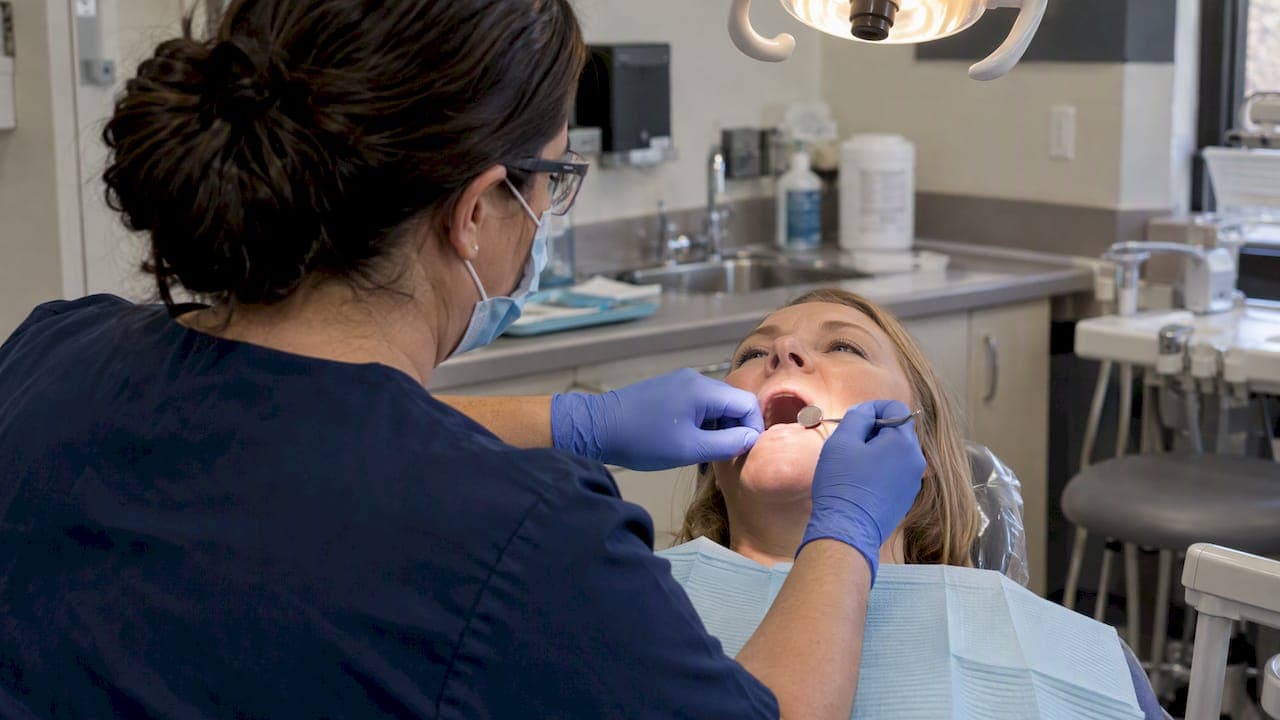
Yes, most dentists include a quick visual and tactile oral cancer screening during routine visits. The exam is painless and often takes under five minutes, covering your face, neck, lips, cheeks, gums, tongue, and the floor and roof of your mouth. See a dentist if a sore or a white or red patch lasts more than two weeks.
TL;DR:
- Localized oral cancer has about an 85% five year relative survival rate, compared with about 40% after the disease has spread.
- No standardized screening program has been proven to lower mortality in adults without symptoms, and rigorous trials of dental screening remain limited.
- A sore, red or white patch, or other lesion that lasts more than two weeks should be checked; only a tissue biopsy can confirm cancer.
- Tell your dentist about tobacco and alcohol use, HPV infection, sun exposure on your lips, and prior lesions; oral cancers occur most often after age 40.
- Before chemotherapy, radiation, or a stem cell transplant, arrange a dental evaluation at least four weeks beforehand so needed treatment can heal first.
Table of Contents
- Why dentists check for oral cancer
- How the oral cancer examination works
- Who is at higher risk and what to tell your dentist
- What happens if your dentist finds something suspicious
- Adjunctive tests and what expert guidelines say
- How to prepare and what to ask
- Why routine visits deserve more credit
- Book a dental appointment with us in Tallahassee
- FAQ
- Sources
Why dentists check for oral cancer
The goal of an oral cancer checkup is simple: find suspicious spots or potentially malignant changes early, while they are easier to diagnose and treat. In the U.S., this happens opportunistically. There is no standardized population program that invites everyone in for screening. Instead, your dentist or hygienist looks during a routine exam or cleaning.
That opportunistic approach still matters. The National Cancer Institute notes that no standardized screening program has been proven to reduce mortality in adults without symptoms, yet experts still recommend regular clinical oral exams because stage at diagnosis changes outcomes so much.
The 5-year relative survival rate for oral cancer is about 85% when it is found at a localized stage, compared with about 40% once it has spread. That gap is the whole argument for looking early.

Reviews of the research add some honesty here. High-quality trials tying dental screening to lower death rates are limited, and work on risk-based approaches continues.
How the oral cancer examination works
The exam follows a set order, so nothing gets skipped. A professional guide from the NIH describes a standardized extraoral and intraoral sequence that should take no more than five minutes. Here is what happens in the chair:
- Face and neck: Your clinician looks for swelling or asymmetry, then feels the lymph node areas under your chin, along your jaw, and down the sides of your neck.
- Lips and inner lips: Both the outside and the moist inner surfaces get checked.
- Cheeks and gums: The inside of each cheek and all gum tissue are inspected, and felt where appropriate.
- Tongue: The top, both side borders, and the underside are examined. Your clinician may gently hold the tongue with gauze to see the sides.
- Floor and roof of the mouth: The soft tissue under the tongue, the hard palate, and the soft palate are checked.
You will see a bright light, a mouth mirror, gauze, and gloves. That is the whole toolkit.
Pro Tip: Tell your hygienist about any sore, rough spot, or patch you have noticed before the cleaning starts, so they know exactly where to look.
Hygienists often spot the first signs. Dental hygienists are frequently the first to identify signs of oral squamous cell carcinoma during routine exams, and they pass findings to the dentist when something looks off. For a fuller picture of a standard visit, see our guide to the comprehensive dental exam.
Who is at higher risk and what to tell your dentist
Anyone can develop an oral lesion. Tell your dentist about relevant health and social history:
- Tobacco use: Tell your dentist about any tobacco use.
- Alcohol use: Tell your dentist about your alcohol use.
- Age: Oral cancers are diagnosed most often in people over 40.
- HPV infection: Human papillomavirus, notably type 16, is linked to cancers in the back of the mouth and throat.
- Sun exposure on the lips: Mention any concerns about sun exposure to your lips.
If you have a higher-risk profile, say so plainly. It helps your clinician look more carefully and decide how closely to follow any change they see.
One more situation deserves attention. If you are about to begin chemotherapy, radiation, or a stem cell transplant, the National Cancer Institute recommends a dental evaluation at least four weeks before treatment so any needed dental work can be done and healed first.
What happens if your dentist finds something suspicious
A suspicious spot is not a diagnosis. The only way to confirm or rule out cancer is a tissue sample. The American Dental Association's living guideline confirms that biopsy remains the definitive diagnostic standard for a suspicious mucosal abnormality.
Many small sores are harmless and heal on their own. The NIH guide says lesions that persist beyond 10 to 14 days should be re-evaluated and considered for biopsy or referral, and NIDCR advises seeing a professional when a problem lasts more than two weeks. Here is how the process usually unfolds:
- Your dentist examines the spot and may recommend monitoring it to see whether it heals.
- If it persists or looks worrisome, your dentist either takes a biopsy or refers you to an oral surgeon, oral medicine specialist, or ENT.
- The specialist evaluates the area and, if needed, removes a small tissue sample.
- A pathologist examines the sample in a lab.
- You receive the results and a plan, which may be monitoring, further treatment, or reassurance.
Adjunctive tests and what expert guidelines say
You may have seen special lights, dye rinses, or saliva tests advertised as add-ons. They exist, but they are not what the guidelines rely on. The ADA does not support routine use of salivary or light-based adjuncts in regular practice, and says a thorough visual and tactile exam remains the standard of care.
Biopsy remains the diagnostic reference standard, and no adjunct replaces it.
Adjuncts are limited to research settings or selected triage situations, such as a patient who declines a biopsy or cannot get timely specialist access. Even then, they only help decide what to do next. They do not diagnose anything.
Research on salivary biomarkers and risk-based screening is active, and that work may change practice someday. Today, a thorough visual and tactile examination is the standard clinical approach.
How to prepare and what to ask
You do not need to prepare much, but a few questions make the screening more useful:
- Ask: "Do you include an oral cancer check with my cleaning?"
- Ask: "If you find a lesion, will you biopsy it or refer me?"
- Ask: "How long should I wait to see if a sore heals before I come back?"
- Share: Your tobacco and alcohol use, any sore lasting more than two weeks, prior mouth lesions, and your HPV vaccination status if relevant.
- Book promptly: If a symptom is persistent or worrying, contact a dentist or doctor promptly instead of waiting for your next cleaning.
Our guide to signs you need a dental check-up can help you decide when a symptom is worth a call.
Why routine visits deserve more credit
Most people think of a dental visit as a cavity check. We think that undersells it. A routine exam gives a trained clinician an opportunity to look at the soft surfaces in your mouth, feel your neck, and ask about your health history. Although there is no standardized screening program proven to reduce mortality in asymptomatic adults, regular clinical oral exams can help identify suspicious changes. Use that time. Report anything that lingers, ask about risk reduction, and talk about HPV vaccination if it applies to you. When something feels urgent, contact a dentist or doctor promptly. Easy scheduling can help you get an assessment.
— Kayle
Book a dental appointment with us in Tallahassee
You should not have to wait for your next routine checkup to have a worrying spot looked at. We provide routine checkups, and you can contact us to ask about appointment availability. If something needs a biopsy or specialist opinion, we can discuss next steps with you. See our full list of services, or book a visit and ask us to walk you through your screening.
This article is general information, not a substitute for advice from a qualified doctor. Consult a qualified healthcare professional about your own circumstances before acting on anything here.
FAQ
Is oral cancer screening at the dentist worth it?
Yes. Experts recommend regular clinical oral exams because cancers found at a localized stage have a much higher 5-year relative survival rate, about 85% versus about 40% once spread. The exam is quick and painless, so the cost to you is minimal.
Do all dentists do oral cancer screenings?
Dentists commonly perform them as part of regular checkups, but it helps to confirm. Ask whether an oral cancer check is included with your exam or cleaning, and mention any spot that worries you.
How does a dentist do an oral cancer screening?
Your dentist or hygienist looks at and gently feels your face, neck, lips, cheeks, gums, tongue, and the floor and roof of your mouth. NIDCR says the exam typically takes only a few minutes.
Can my dentist check for mouth cancer?
Yes, your dentist can spot suspicious changes and decide whether to monitor them, biopsy them, or refer you to a specialist. A biopsy is what confirms or rules out cancer.
Sources
- Oral Cancer | NIDCR
- Oral Cavity and Nasopharyngeal Cancers Screening (PDQ®) - NCI
- Adanews
- Detecting Oral Cancer: A Guide for Health Care Professionals
- Oral Cancer Screening: Past, Present, and Future - PMC